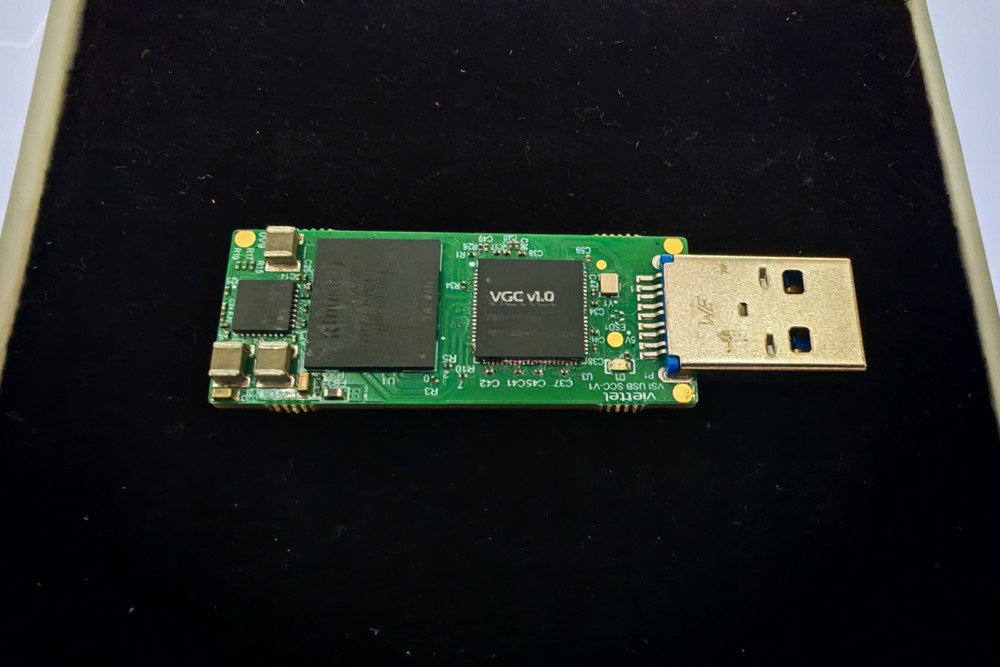
The VGC v1.0 chip marks a significant milestone in the country's semiconductor and cryptographic security industries, demonstrating its growing capacity to develop homegrown technologies to protect national digital infrastructure and sensitive information.
Measuring 10 × 10 millimeters in its packaged form, the chip contains 300 million transistors and is manufactured using 28-nanometer complementary metal-oxide-semiconductor (CMOS) technology. Test results show that it performs encryption and decryption approximately 15 times faster than software-only solutions for the same tasks.
Beyond processing performance, Vietnamese engineers have also developed technical safeguards to protect chip designs before they are sent to fabrication facilities, reducing the risk of intellectual property leaks and reverse engineering.
The project brought together the Government Cipher Committee's M2 Factory, which defined security requirements, developed algorithms and established evaluation criteria, and Viettel's Semiconductor Center, which handled chip design and translated the designs into physical products.
In the first quarter, the initial batch of VGC v1.0 chips passed technical testing and received certification for use in socioeconomic applications.
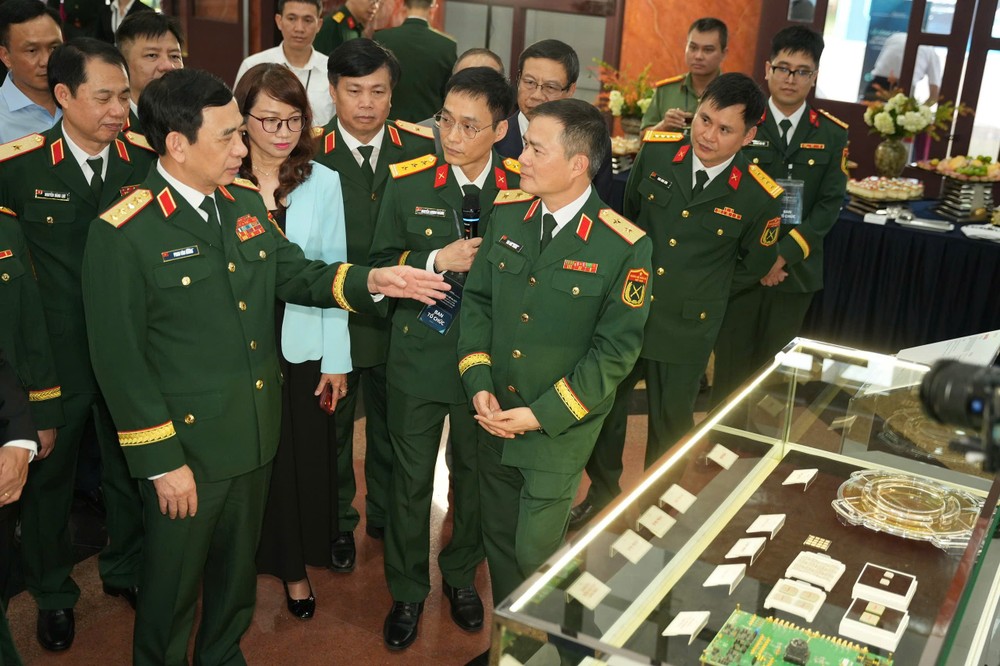
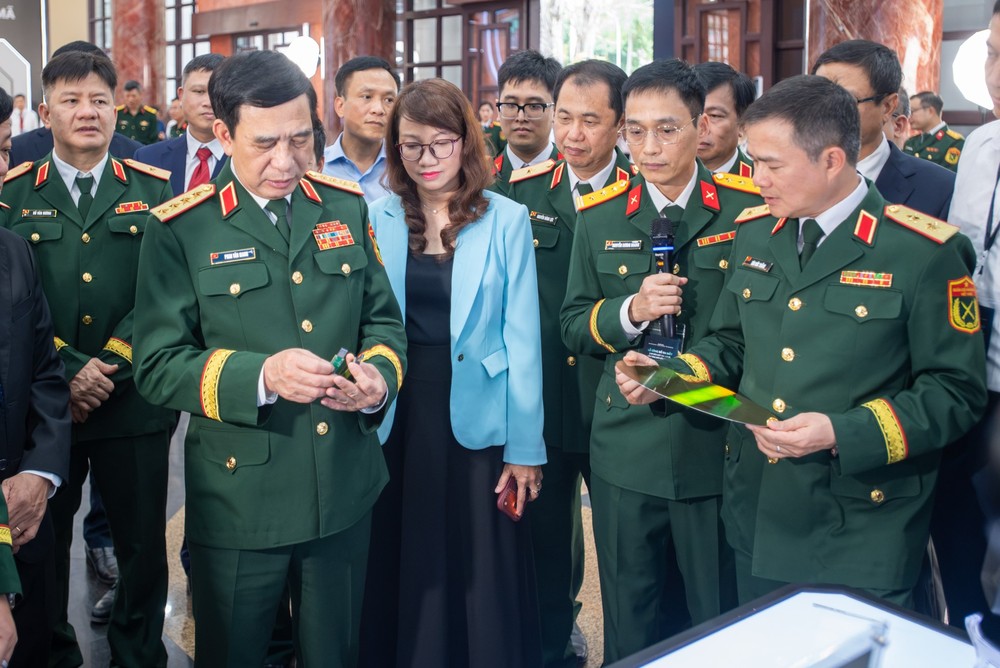
Speaking at the launch ceremony in Hanoi, Deputy Prime Minister and Minister of National Defense General Phan Van Giang described semiconductors as a strategic national resource.
Chips are the "heart" of digital devices, while cryptography serves as a "shield" for information and a core tool for data protection, he said. Without control over chip technologies, it would be difficult to achieve full autonomy in cryptography. Likewise, without control over cryptographic capabilities, the country would struggle to safeguard its digital sovereignty and national security.

Developing sovereign secure semiconductor technologies is therefore not merely a scientific and technological undertaking but also a political mission directly linked to protecting national sovereignty in cyberspace and strengthening national defense, General Phan Van Giang said.
"This is a driving force, a determination and a spirit of daring to tackle difficult challenges and venture into uncharted territory. We may have started later, but we will not move slowly. We are moving forward to catch up and surpass," he added.
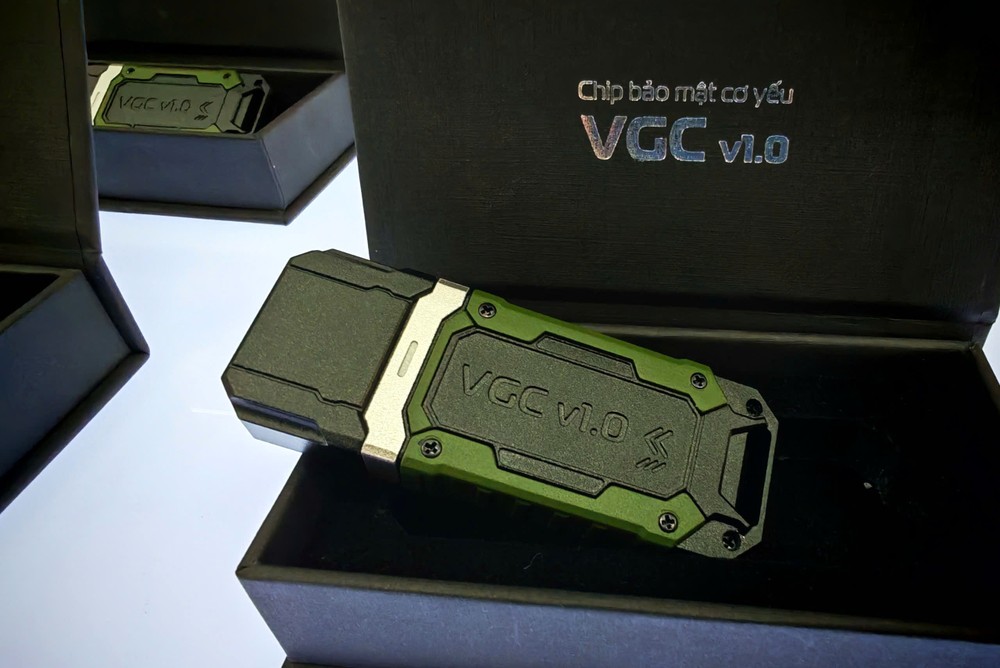
Viettel Chairman and CEO Lieutenant General Tao Duc Thang said VGC v1.0 was initially being deployed in secure USB storage devices for Party, State, and defense agencies.
Its potential applications extend beyond national defense and security to digital signature authentication, protection of financial records, contracts and customer data in banking and finance, and cybersecurity for connected devices such as surveillance cameras, environmental sensors and monitoring stations.
The chip could also help protect information systems supporting critical national infrastructure in the electricity, water, oil and gas, and telecommunications sectors.
However, Lieutenant General Vu Ngoc Thiem, Head of the Government Cipher Committee, stressed that VGC v1.0 was only the starting point. The chip and its applications must undergo further development, testing, evaluation, and certification tailored to their intended operating environments. Products designed to protect state secrets must fully comply with applicable technical standards and regulatory requirements.
At the ceremony, the two organizations signed a cooperation agreement covering four priorities: scaling up VGC v1.0 production for the committee's secure devices; developing a multicore secure semiconductor platform integrating dedicated cryptographic components for large-scale applications; training specialists in chip design, cryptography and hardware security; and conducting real-world product trials, testing and certification before deployment.