Following the preliminary findings issued by the Office of the United States Trade Representative (USTR) regarding an investigation into excess capacity, the Ministry of Industry and Trade has stated that it will continue to provide information, participate in hearings, and engage in discussions with the U.S. side.
Some countries disagree with the USTR’s allegations
Vietnam will continue submitting information and feedback to the U.S. regarding the Office of the United States Trade Representative’s (USTR) preliminary findings on structural excess capacity, Deputy Minister of Industry and Trade Luong Hoang Thai announced at a Hanoi press conference on the afternoon of November 26. The USTR findings stem from a Section 301 investigation under the Trade Act of 1974 examining production levels across the manufacturing and processing sectors.
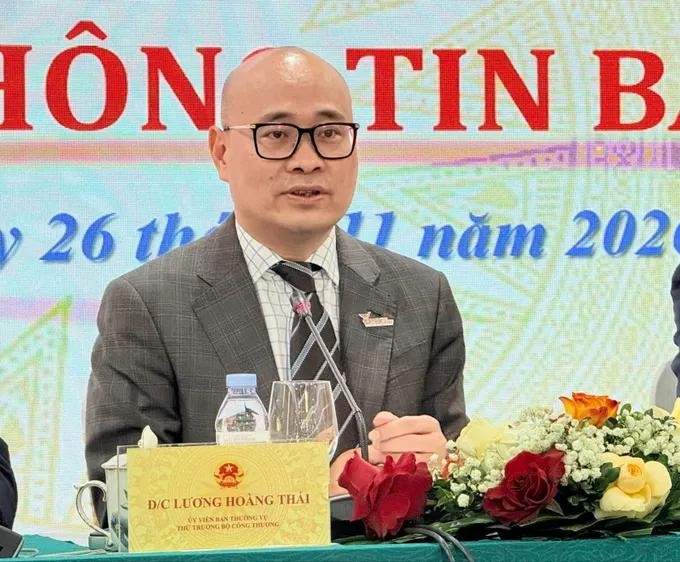
According to Deputy Minister Luong Hoang Thai, the Ministry of Industry and Trade has prepared responses to be sent to the U.S. side. The Ministry also intends to participate in public hearings, coordinate with relevant agencies and industry sectors, and continue exchanging information throughout the investigative process.
Representatives from countries targeted by the U.S. investigation, including members of the Comprehensive and Progressive Agreement for Trans-Pacific Partnership (CPTPP), ASEAN, and the European Union (EU), have pushed back against USTR allegations of global excess production capacity, Deputy Minister Luong Hoang Thai said following a recent multilateral meeting.
Previously, the Ministry of Industry and Trade reported that on the evening of November 25 (Vietnam time), the Office of the United States Trade Representative (USTR) issued preliminary findings concerning 14 of the 16 economies under investigation. In these findings, the USTR proposed a maximum additional tariff of 35 percent on goods imported from Vietnam. This rate could be adjusted downward to 20 percent should Vietnam and the United States reach a reciprocal, fair, and balanced trade agreement.
Deputy Minister Luong Hoang Thai emphasized that the final tariff rate will be determined by the United States. The outcome will depend on various factors, including information provided by the involved parties and the discussions that will take place between Vietnam and the United States in the coming period.
Businesses must take a proactive approach to risk management
Deputy Minister Luong Hoang Thai stressed that businesses must develop tailored risk management strategies rather than relying on a 'one-size-fits-all' approach, as exposure varies significantly across industries, sectors, and localities. He also noted that preliminary findings from the Office of the United States Trade Representative (USTR) propose a list of tariff exemptions covering 2,121 items classified under 8-digit HS codes.
Products included in this list may be subject to different treatment compared to those that are not exempt. Consequently, businesses should carefully review their specific export items to identify potential risks.
Deputy Director Chu Thang Trung of the Trade Remedies Authority under the Ministry of Industry and Trade noted that the Government issued a resolution on November 21, 2026 outlining a comprehensive plan for managing trade surpluses and mitigating risks in international trade for the 2026–2030 period. Businesses may refer to this resolution to gain a better understanding of the strategic direction and solutions for risk management.
The Ministry of Industry and Trade, in coordination with other ministries and agencies, will support businesses in implementing measures to minimize risks. In particular, companies should focus on diversifying their export markets, proactively monitoring alerts regarding trade remedies, and remaining vigilant against the risk of their goods being investigated for the circumvention of trade remedy measures.
Deputy Minister Luong Hoang Thai added that U.S. businesses operating in Vietnam, along with other relevant stakeholders, may also provide input during the public comment period initiated by the Office of the United States Trade Representative (USTR). This is a standard part of the consultation process that precedes any final decision by the United States.
Mr. Chu Thang Trung stated that, according to the current schedule, the USTR will hold public hearings beginning on January 25, 2027. A final decision is expected to be reached no earlier than February 2027 and no later than March 11, 2027. Throughout this period, Vietnam and the United States will continue negotiations toward a reciprocal, fair, and balanced trade agreement.