Transportation stands as a leading contributor to greenhouse gas emissions, fine particulate matter, and toxic pollutants detrimental to public health, with surging vehicle ownership intensifying demand on regulators to bolster emissions control.
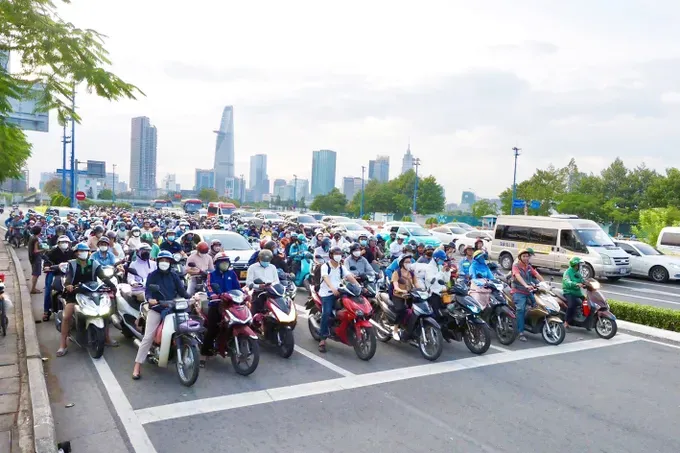
Data from the Traffic Police Department at the Ministry of Public Security showed that Vietnam now counts over 7.2 million registered automobiles and 80.6 million motorcycles and mopeds. A substantial share of these, especially motorcycles in use for years without routine checks or upkeep, are aging fleets that rank among the biggest emitters. Yet emissions control, particularly in densely trafficked cities, has proven inadequate
To curb vehicular pollution, the Prime Minister has rolled out a series of key policy decisions, including Decision No 876/QD-TTg, dated July 22, 2022, endorsing an action plan for green energy transition and cuts to carbon and methane output; Decision No 19/2024/QD-TTg, dated November 15, 2024, on roadmap for imposing stricter emissions standards on imported and locally built vehicles; and Directive No 20/CT-TTg, dated July 12, 2025, laying out urgent tasks to combat environmental pollution.
Drawing on these directives, the Ministry of Public Security has equipped traffic police with thousands of advanced specialised vehicles and tools to detect and deal with violations related to vehicle exhaust fumes.
In the first three months after Directive No 20/CT-TTg took effect, officers nationwide cited thousands of non-compliant vehicles, helping curb environmental harm.
Relevant agencies have been directed to amend and enact legal frameworks and targeted incentives to clear regulatory hurdles, arming enforcement teams with robust tools for swift action against polluters.
Enforcement muscle needs bolstering via upgraded patrol and inspection protocols, coupled with stricter accountability for units and officers tolerating persistent breaches. Adequate vehicles and gear tailored to real-world inspection demand remain critical.
Authorities should fast-track digital transformation in monitoring and violation processing, including data centre construction, big data analytics upgrades, artificial intelligence deployment, and interconnected databases to flag vehicles at risk of non-compliance or overdue checks.
For a smooth shift to greener mobility, policymakers are urged to roll out public incentives such as tax and fee waivers or cuts, installment plans for low-emission vehicles, higher levies on new fossil-fuel registrations, and elevated parking charges in urban areas. Speeding up the construction of charging networks and green vehicle infrastructure, together with expanding public transport systems, in key cities is also deemed vital.