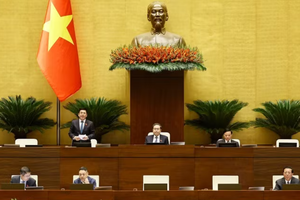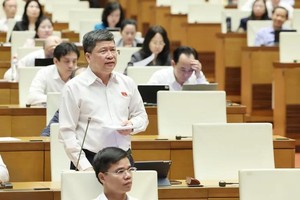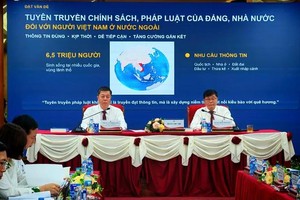
Deputy Prime Minister Le Thanh Long mentions increasing spending for development investment. For the 2026-2030 period, the budget structure will be adjusted towards sustainable development, aiming for approximately 40 percent in development investment spending and nearly 51 percent in regular one. Notably, the 2026 state budget estimates a record 11.1-percent increase in domestic revenue from production and business, surpassing the 10-percent economic growth target.
To meet these requirements, the Government identifies effective public investment disbursement as a key political task, holding agency heads directly responsible. At the same time, the authorities will promote comprehensive decentralization across 12 areas and shift investment management from pre-checks to post-checks. Vietnam aims to consolidate public investment projects to fewer than 3,000 during this period, prioritizing substance and tangible results.
Moving forward, the Government will focus on directing ministries and localities to improve legal regulations, accelerate site clearance and construction progress, and remove administrative obstacles. These measures are designed to successfully implement socio-economic development goals and state budget tasks, firmly guiding the country toward realizing its aspiration for prosperity, power, and happiness by 2045.
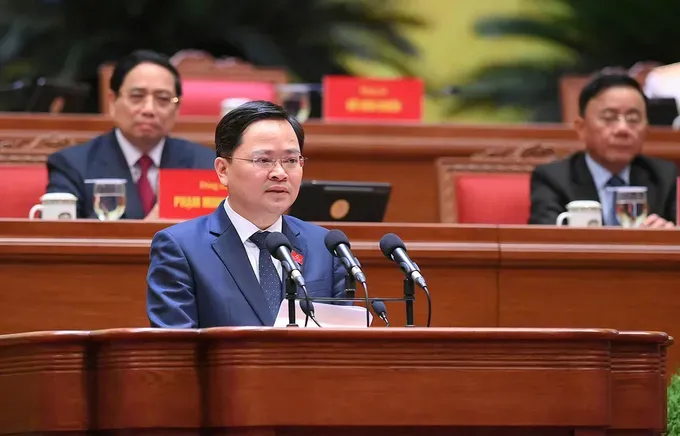
Deputy Head Nguyen Anh Tuan of the Central Commission for Policy and Strategy emphasizes that Vietnam currently faces a precious opportunity to rise up and transform its global standing. He argues that the requirement for high, sustainable double-digit growth in the coming period is an urgent necessity that cannot be delayed.
This acceleration is critical to successfully completing the nation’s strategic development goals for 2030 and realizing the ambitious vision set for 2045. He asserts that despite significant challenges in the domestic and international contexts, Vietnam possesses sufficient conditions, potential, and confidence to narrow the development gap.
To achieve this, the Commission proposes a strategic framework focused on maintaining macroeconomic stability while simultaneously renewing traditional growth drivers and forcefully exploiting new ones. A core component involves accelerating economic restructuring associated with industrialization and modernization. This approach prioritizes science, technology, innovation, and digital transformation as the main engines of progress, specifically targeting the data, digital, green, and circular economies.
Furthermore, the strategy calls for balancing effective international market exploitation with building the domestic market into a solid pillar for growth. Mr. Tuan underscores that Vietnam’s advantage of a population exceeding 100 million, a rapidly expanding middle class, and the remaining time of the “golden population” structure are vital factors for accelerating the country’s development.
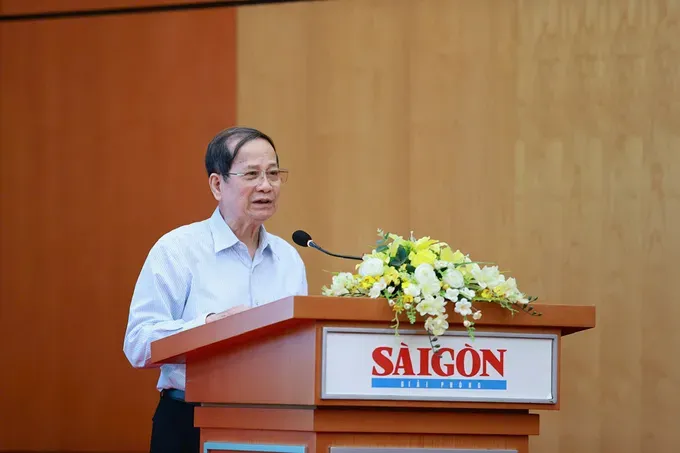
Economic expert Assoc Prof Dr Ngo Tri Long asserts that HCMC’s vitality relies not merely on economic flow, but on the “flow of trust.” He identifies this trust in stability, fairness, and governance as the metropolis’s most critical “soft infrastructure.” Without it, national aspirations remain slogans; with it, they transform into sustainable momentum.
In HCMC, trust functions as a tangible economic indicator. Obviously, when citizens trust, they consume; when investors trust, they disburse. Consequently, Dr Long argues that trust must be nurtured through the three pillars of fairness in livelihood opportunities, transparency for social consensus, and service efficiency in administrative reform.
Ultimately, the aspiration for a powerful nation is constructed through daily, concrete actions, from shortened procedures and transparent projects to safer neighborhoods. He concludes that the people’s trust is the nation’s most precious capital. Preserving this trust ensures a solid, resilient foundation for the country’s future prosperity, offering hope comparable to spring itself.

Assoc Prof Dr Vo Huu Phuoc, Dean of the Faculty of Socio-Economics and Environment (Academy of Politics Region II), asserts that Vietnam’s goal of becoming a powerful, prosperous nation is feasible through breakthroughs in national and local governance. Development must rest on economic, social, and environmental pillars, supported by urgent tasks: perfecting institutions, developing linkage chains, and promoting science and technology.
Transitioning to a new growth model is mandatory. Dr Phuoc calls for comprehensive institutional breakthroughs to effectively operate international financial centers and free trade zones (FTZ). Simultaneously, Vietnam must cultivate high-quality human resources in spearhead fields like AI, semiconductors, and biotechnology, laying the foundation for the digital and quantum economies. Economic restructuring must align with modern infrastructure, smart industrial parks, and Transit-Oriented Development (TOD).
National prosperity requires public consensus and the effective mobilization of social resources. Dr Phuoc emphasizes assigning the private sector tasks it performs best, strongly promoting models such as “public leadership – private governance” and “public investment – private management.” Ultimately, improving governance capacity through close linkages between the State, schools, businesses, and the financial system remains the key to realizing Vietnam’s sustainable development goals.
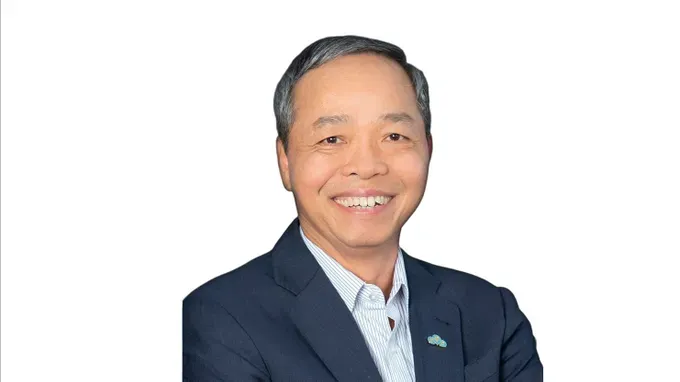
Chairman Nguyen Trung Chinh of CMC Technology Group voices a strong desire to contribute to the national growth. For Vietnam to become a developed nation, the core foundation lies not only in capital or factories but also in digital infrastructure and digital human resources. These are long-term assets and pillars helping the country build an autonomous economy with competitiveness and sufficient strength to catch up with the artificial intelligence (AI) – data trend shaping the world.
CMC wishes to contribute to the country through 3 focuses:
- building sovereign data infrastructure, including data centers, cloud computing, and AI computing capacity, creating a foundation for digital government, digital economy, and business model innovation;
- developing digital human resources through technology academies, university linkages, and AI experimental centers to contribute to forming a team of talents in this field for the country;
- jointly forming an innovation ecosystem where Vietnamese enterprises play a leading role, creating technological value, opening platforms, data, and infrastructure to support startups, small businesses, and researchers.
Effective investments in digital infrastructure and people help Vietnam to fully become a powerful nation in the AI era.