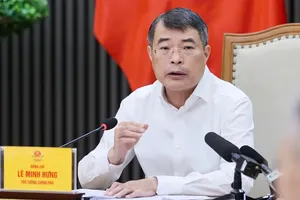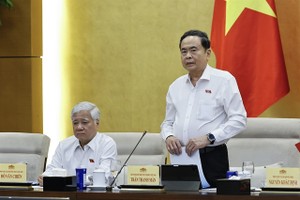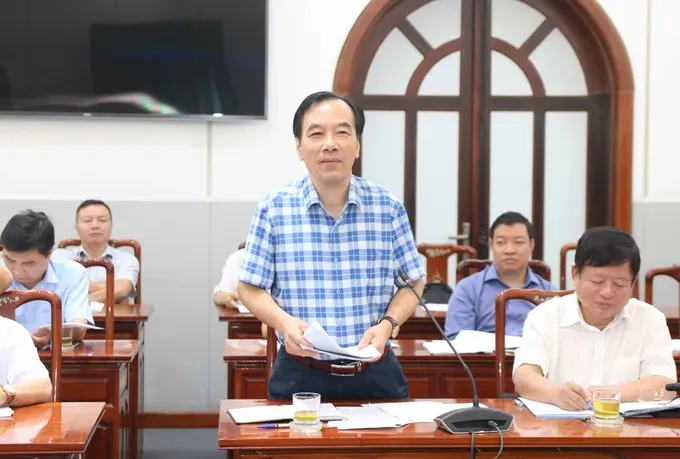
As stressed by the Central Committee of the Vietnam Fatherland Front, during the 2024-2026 period, the Vietnam Fatherland Front continues to affirm its pivotal role in promoting democracy, as well as representing and safeguarding the legitimate rights, the interests of the people.
It actively conducts social supervision and criticism, participates in building the Party and government, and engages in the fight against corruption, wastefulness, and negativity. Social supervision and criticism are established as central tasks, implemented synchronously across the Vietnam Fatherland Front system and socio-political organizations.
Nevertheless, social supervision and criticism, alongside contributions to Party and government construction, remain uneven. In certain localities, there is still operational confusion, substandard quality, and a prevalent tendency to avoid confrontation. The monitoring and urging of post-supervision recommendations are occasionally delayed and lack decisiveness.
Additionally, the reception, feedback, and resolution of these recommendations by several state agencies remain inadequate, largely due to the absence of sufficiently stringent sanctions for non-responsive or sluggish entities.
Chairman Tran Quoc Toan of the Vietnam Fatherland Front Committee of Hung Yen Province stated that the role of the Vietnam Fatherland Front in social supervision and criticism acts as a crucial “shield” to protect the public’s legitimate rights and enhance the grassroots implementation of the Party’s guidelines and the State’s legal policies.
Over the years, the Standing Board of the Hung Yen Province Vietnam Fatherland Front Committee has transitioned from case-by-case supervision to issue-based one. Instead of merely reviewing records and reports, the focus should shift to regular and unannounced inspections. This is particularly vital in sensitive sectors such as land management, environmental protection, and the public duty performance of cadres and civil servants, especially under the two-tier local governance model.
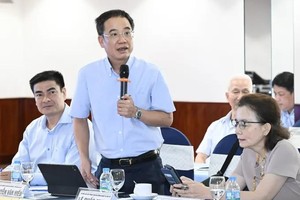
Deputy Head Pham Thi Hong of the Department of Democracy, Social Supervision and Criticism under the Central Vietnam Fatherland Front Committee emphasized that a breakthrough task for the committee in the upcoming term is to elevate the quality and efficacy of social supervision and criticism. This entails a proactive, early, remote, democratic, and objective approach, concentrating primarily on major policies and guidelines directly associated with the legitimate rights and interests of the public.
According to Vice President and Secretary General of the Central Vietnam Fatherland Front Committee Ha Thi Nga, the organization will formulate robust mechanisms to encourage and effectively mobilize experts, scientists, intellectuals, entrepreneurs, seasoned practitioners, and reputable figures among ethnic and religious communities to participate in social supervision and criticism.
The Vietnam Fatherland Front Committee will also coordinate closely with competent authorities in receiving and processing supervision results, and orchestrate direct dialogues between Party, government leaders and the populace.
Furthermore, the Vietnam Fatherland Front Committee will routinely oversee the moral cultivation and lifestyles of top leaders, key officials, and Party members according to regulations. They will participate in supervising the asset and income declarations of these figures, as well as the management and utilization of public assets, while encouraging citizens to report negative acts through the official channels of the Vietnam Fatherland Front and its member organizations.
Notably, although the projected number of members in the Central Vietnam Fatherland Front Committee for the 11th tenure (2026-2031) will not increase compared to the 10th term, the structural composition will undergo a profound shift. The fundamental innovation lies in a substantial reinforcement of experts, intellectuals, and prominent individuals from various economic sectors, especially a rise of 21 positions in fields such as science and technology, law, education, and healthcare.
Particularly, for the first time, the Vietnam Fatherland Front Committee prioritizes expanding the presence of representatives from economic corporations and private enterprises directly engaged in production across key strategic areas.
This adjustment not only aims to amplify crucial contributions to proactive, remote social supervision but also enables the Vietnam Fatherland Front Committee to meticulously grasp the practical dynamics of the economy, thereby safeguarding the people’s legitimate interests more efficaciously in this novel context.
Projected targets for the 2026-2031 tenure
The Central Vietnam Fatherland Front Committee sets an annual target for provincial-level committees to organize at least 5 social supervision programs and provide social criticism on a minimum of 5 draft documents.
Annually, grassroots committees of the Vietnam Fatherland Front at each level strive to organize at least 2 sessions to contribute feedback on Party, State agency, and government construction at their corresponding tier. Furthermore, 100 percent of provincial Vietnam Fatherland Front committees will implement a pilot model for social dialogue.