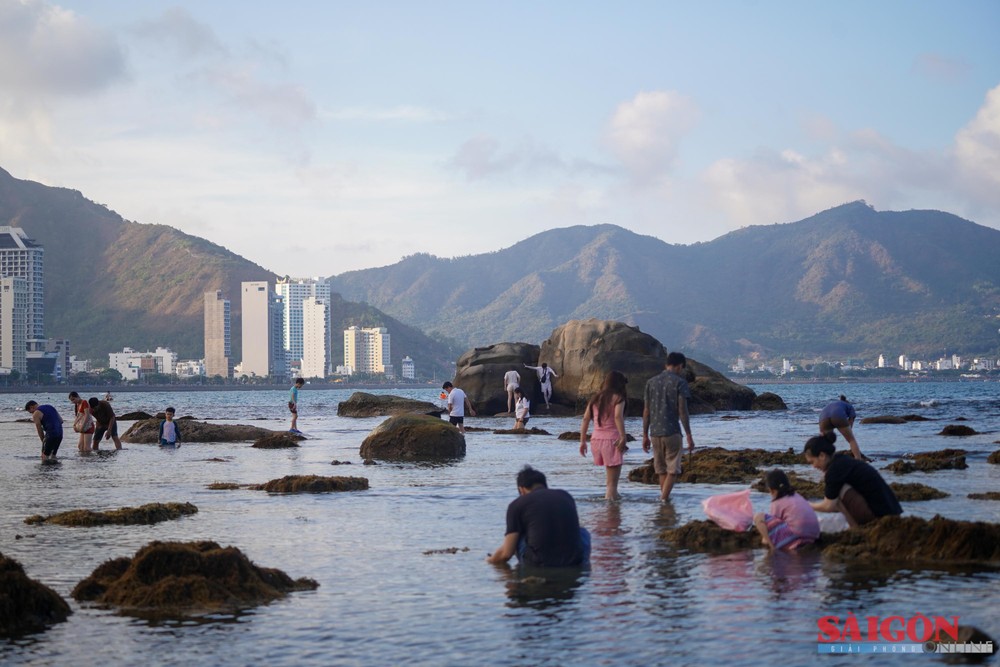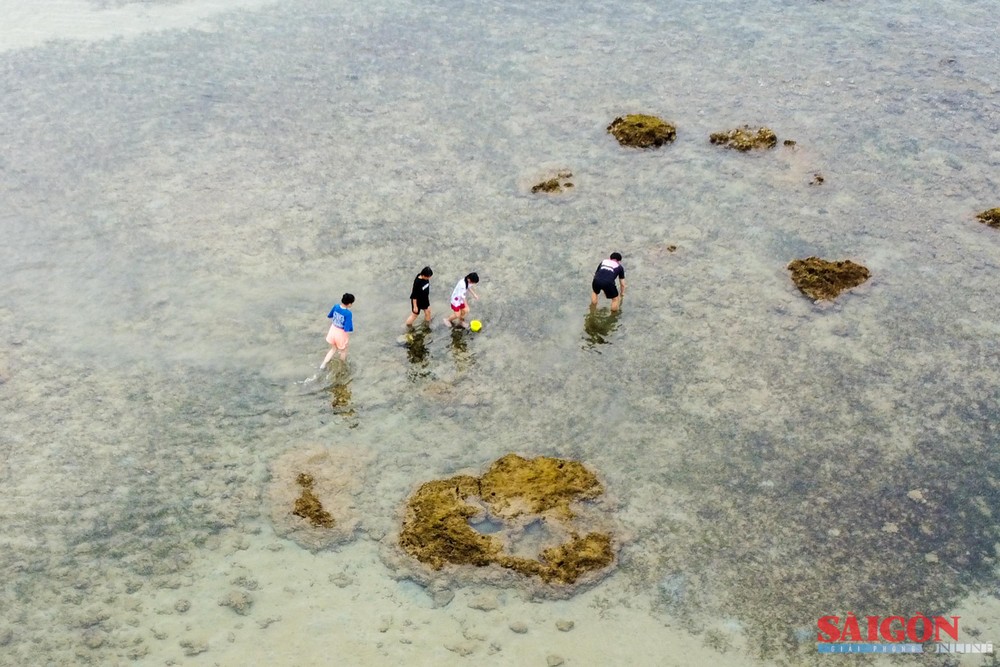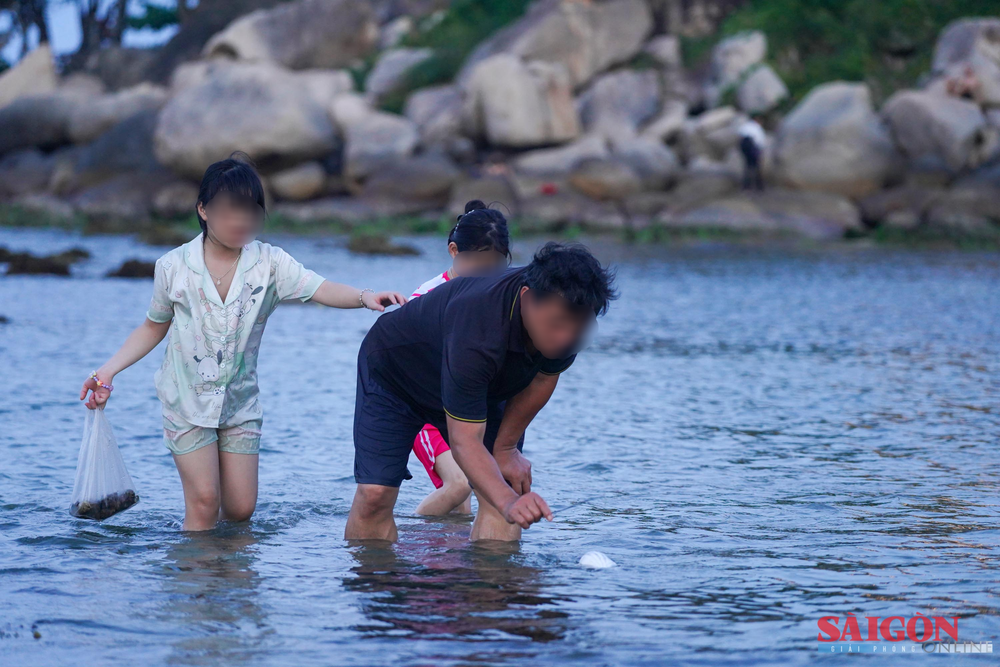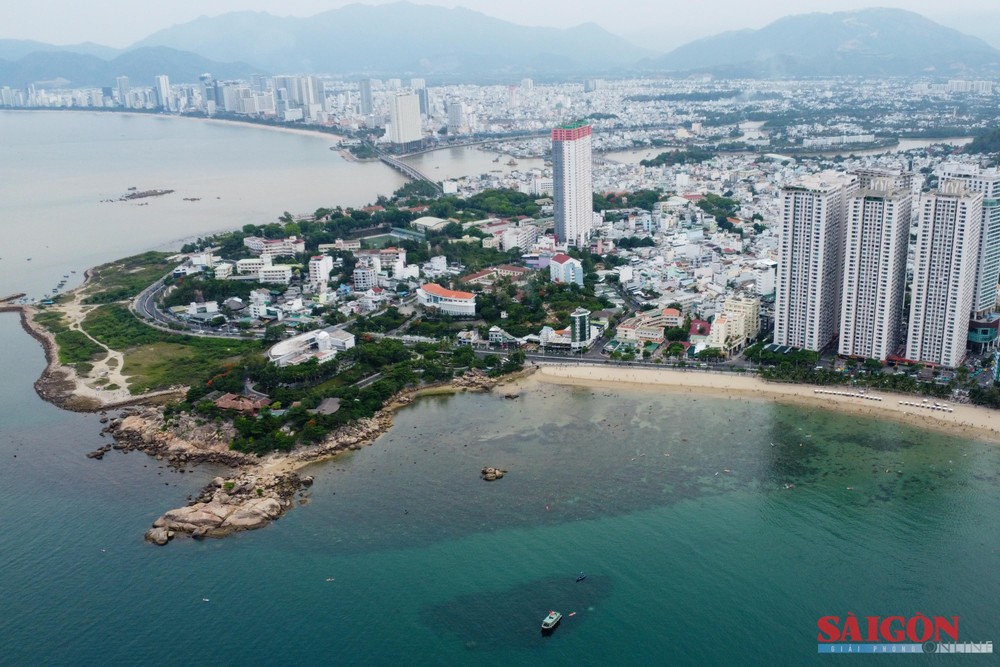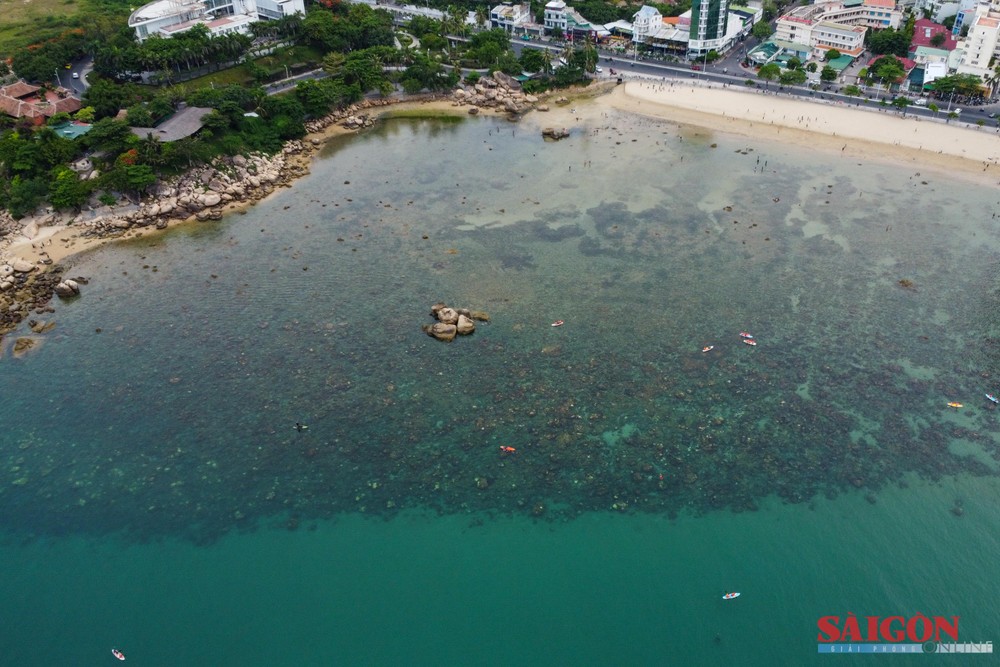
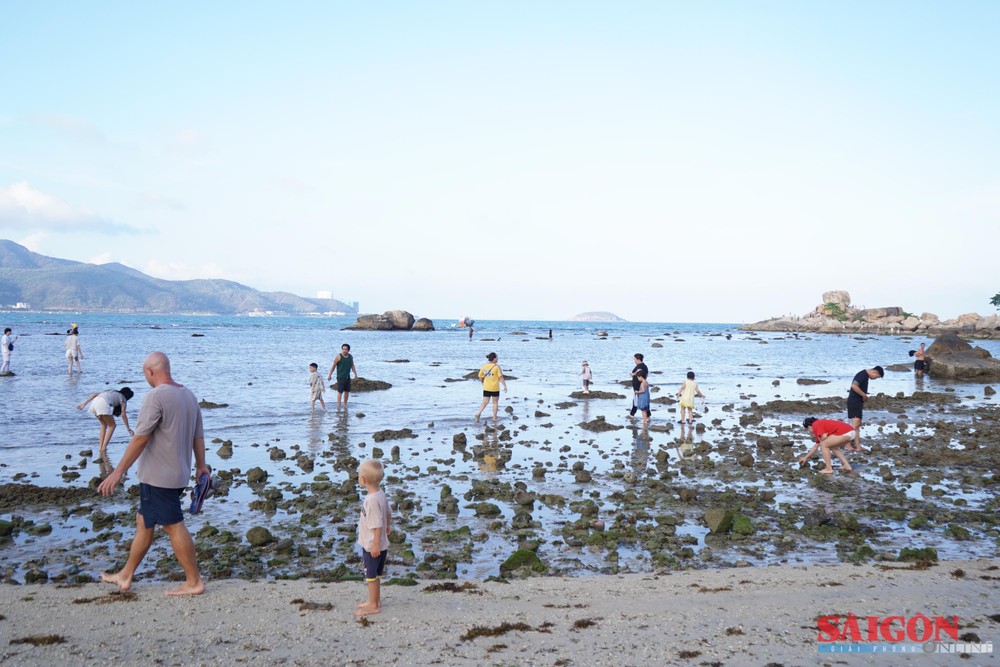
In early May, low tide exposed extensive seagrass beds, juvenile coral clusters, and nearshore coral reefs along the Hon Chong coastal area in Bac Nha Trang Ward. Large numbers of visitors entered the reef zone to collect shellfish and catch small fish, raising concerns over direct damage to the fragile marine ecosystem.
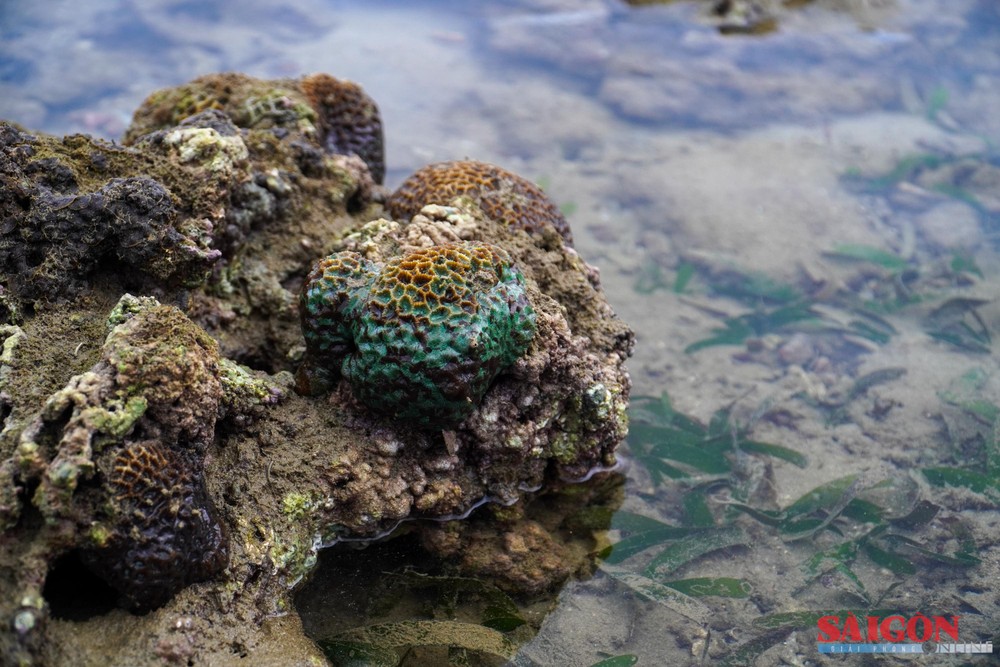
According to the Nha Trang Bay Management Board, the Hon Chong marine area contains roughly 4.8 hectares of coral reefs with 62 species belonging to 12 coral families. Brain corals dominate the ecosystem with 17 recorded species, followed by staghorn corals with 14 species and boulder corals with nine species. The reef system remains relatively healthy, with an average coral cover of 32.4 percent, while several sections reach as high as 65.7 percent.
Particularly significant is the presence of eight species of elkhorn coral, making Hon Chong one of the most biologically diverse coral habitats in Nha Trang Bay.
Beyond coral reefs, the area also supports seagrass and marine algae ecosystems distributed close to shore among rocky outcrops and reef formations.
Mr. Nguyen Duc Minh Tan, Deputy Head of the Conservation Department under the Nha Trang Bay Management Board, said the rocky shoreline serves as a natural boundary between the beach and coral reefs located more than 200 meters offshore. Between 4 p.m. and 6 p.m., when tides recede, large crowds gather in the area, increasing the risk of trampling and damaging coastal reefs.
To safeguard the marine ecosystem, authorities have intensified mobile awareness campaigns along Pham Van Dong Street and Hon Chong Beach, while patrol teams regularly remind visitors to avoid entering sensitive reef zones. Officials have also deployed mobile loudspeakers and installed eight warning signs in vulnerable areas.
Local authorities in Bac Nha Trang Ward are coordinating with universities and colleges to strengthen environmental education. In the coming period, conservation agencies will continue urging residents and tourists not to step on coral reefs or exploit marine resources within sensitive ecosystems, aiming to preserve Hon Chong’s coral habitats for the long term.