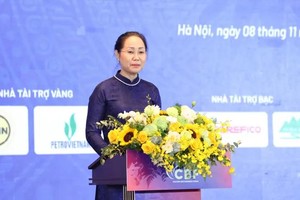
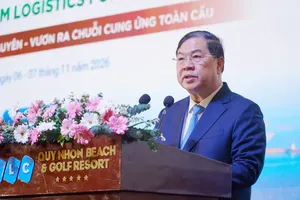
In the first 10 months of 2026, Vietnam’s total import-export turnover surpassed US$1 trillion for the first time, with exports reaching nearly US$500 billion. This milestone underscores the resilience of the country’s trade sector and the growing ability of Vietnamese goods to penetrate new markets.
However, sustaining this growth momentum requires more than simply increasing export volumes. The key challenges lie in expanding market share, increasing value added, and securing deeper integration into global supply chains.
Export growth drives Vietnam’s expanding international presence
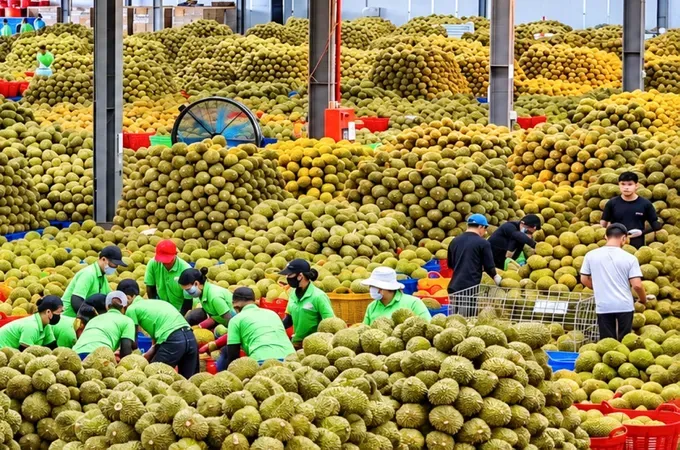
Vietnam’s exports have continued to grow strongly despite tariff pressures and volatility in international trade. However, the results do not reflect an equal level of competitiveness across different business sectors.
In the first 10 months of 2026, foreign-invested enterprises accounted for 81.2 percent of the country’s total export turnover, while domestic businesses generated US$93.93 billion, up 8.2 percent year on year. This disparity highlights the urgent need for Vietnamese enterprises to strengthen production capacity, develop their brands, and expand their international market share.
According to Jens Lottner, Chief Executive Officer of Techcombank, import-export activities were among the key drivers behind Vietnam’s GDP growth of 9.95 percent in the third quarter of 2026. However, the country’s ability to capitalize on global supply chain shifts will also depend on infrastructure quality, human resources, and the capacity of domestic businesses to meet market requirements.
In practice, many Vietnamese companies are moving beyond exporting products to building their own brands, developing distribution networks, and investing in overseas markets.
In the first nine months of 2026, Vinamilk recorded net revenue of VND12.148 trillion (US$473 million) from international markets, up 27.9 percent year on year. The company has now exported its products to 67 international markets.
Vo Trung Hieu, Vinamilk’s International Business Director, said the company places emphasis on researching consumer demand in each country, adapting its products accordingly and partnering with distributors to expand its customer base.
Meanwhile, TH Group has opted to invest in overseas production. According to Associate Professor and Doctor Su Thanh Long, Director of TH Group’s International Dairy Project, the company is expanding its operations in Russia, drawing on the technological foundation and management capabilities developed in Vietnam.
In the technology services sector, Nguyen Thi Dan Phuong, Head of Marketing and Global Customer Experience at FPT Software, said the company has established more than 90 offices in over 30 countries, generating approximately US$1.5 billion in revenue.
Despite adopting different approaches, these business models demonstrate how Vietnamese enterprises are gradually expanding their international presence, from merchandise exports to overseas manufacturing investments and technology service provision.
Against this backdrop, Vu Ba Phu, Director General of the Vietnam Trade Promotion Agency under the Ministry of Industry and Trade, said that during the 2026–2030 period, trade promotion activities would shift more decisively towards providing support tailored to businesses’ needs and the characteristics of individual markets. Priorities would include brand development, distribution network expansion, and strengthening the long-term presence of Vietnamese products in overseas markets.
According to the National Statistics Office, Vietnam’s total import-export turnover reached US$1,010.55 billion in the first 10 months of 2026, up 32.3 percent year on year. Exports totaled US$499.24 billion, an increase of 27.5 percent.
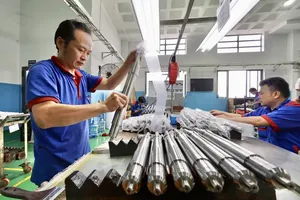
A total of 37 export product categories recorded turnover exceeding US$1 billion, including eight categories that surpassed US$10 billion. The processing and manufacturing industry accounted for 90.7 percent of total export turnover, with electronics, computers, components, machinery, and equipment serving as the main export items.
Greater focus on technology and quality management
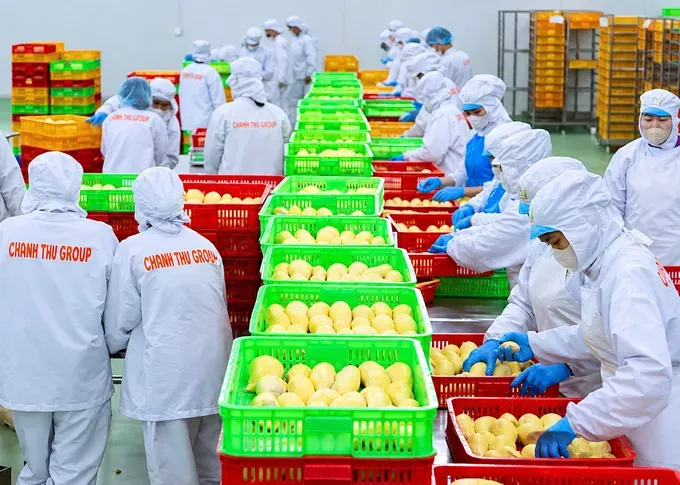
In another area of concern, Vietnamese enterprises are facing mounting pressure from trade defense measures, rules of origin, and technical standards. Additional import tariffs imposed by the United States, environmental and traceability requirements in the European Union (EU), and differing inspection regulations across markets are driving up compliance costs and squeezing profit margins.
According to Ngo Xuan Nam, Deputy Director of the Office of the Vietnam Sanitary and Phytosanitary Notification Authority and Enquiry Point (SPS Vietnam), members of the World Trade Organization (WTO) issued 30 notifications concerning food safety and animal and plant quarantine measures in October 2026 alone.
Among these developments, the EU revised its maximum residue limit for the active substance difenoconazole, while Japan sought public comments on tighter residue limits for certain agricultural products. These changes require businesses to proactively keep abreast of regulatory developments and strengthen quality control starting at the raw material production stage.
Alongside technical standards, the ability to comply with rules of origin is directly affecting the effectiveness with which businesses capitalize on free trade agreements (FTAs).
Drawing on practical experience in the fisheries sector, the Vietnam Association of Seafood Exporters and Producers (VASEP) has proposed clarifying traceability criteria and harmonizing methods for converting raw material weights into finished product weights in line with the requirements of individual markets. Accordingly, in addition to improving raw material management and documentation systems, businesses need stronger support from regulatory authorities through early warnings and consistent guidance on applicable regulations to reduce compliance costs.
According to Laurent Corpataux, an expert with the Swiss Import Promotion Program (SIPPO), the relocation of production facilities is creating new opportunities for Vietnam. However, many suppliers serving major multinational corporations remain foreign-owned. Therefore, increasing export value must begin with stronger technological capabilities, quality management, and brand development, enabling Vietnamese enterprises to integrate more deeply into global supply chains rather than remain dependent on contract manufacturing.
According to Pham Binh An, former Deputy Director of the Ho Chi Minh City Institute for Development Studies, Vietnam’s record-high import-export turnover in the first 10 months of 2026 provides a foundation for market expansion. However, sustainable growth must be driven by higher value added rather than simply increased output.
To bring about substantive improvements, trade promotion activities need to shift from merely facilitating order connections to helping businesses gain access to international distribution networks and supply chains. At the same time, greater efforts are needed to capitalize on free trade agreements (FTAs), digitalize customs procedures, and reduce logistics costs.
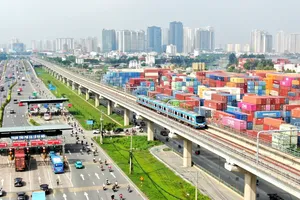
For Ho Chi Minh City, the advantages of industrial connectivity, deep-water seaports, and logistics services within the expanded economic space need to be fully leveraged through synchronized infrastructure and streamlined trade procedures.
According to Bui Ta Hoang Vu, Director of the Ho Chi Minh City Department of Industry and Trade, to accelerate growth in the final months of the year, the department is focusing on expanding trade promotion activities, organizing forums to connect businesses with international buyers, supporting partner searches, and developing new markets.
In November 2026, the department plans to organize a conference on supply chain connectivity and logistics services, with a view to promoting data integration among seaports, shipping lines, cargo owners, and container depots. In parallel, the city will expand trade promotion activities in Champasak Province, Laos, and Kandal and Takeo provinces, Cambodia, to seek distributors and develop consumer distribution networks.
The industry and trade sector is also stepping up reforms to procedures for issuing Certificates of Origin (C/O), while helping businesses meet technical standards, ensure traceability, and take advantage of preferential treatment under FTAs.
Colonel Vu Hong Hung, Director of Tan Cang-Cai Mep Thi Vai Port, said the growing size of international container ships is placing new demands on seaport operations.
Previously, many terminals in the Cai Mep port complex were designed with berths approximately 600 meters long, making them suitable for earlier generations of container vessels.
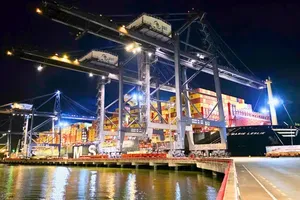
Since mid-2024, Cai Mep International Terminal (CMIT) and Tan Cang-Cai Mep Thi Vai Terminal (TCTT) have implemented a joint berth operation model. By early October 2026, the two ports had officially begun operating as a shared facility, featuring a continuous 1,200-meter berth capable of accommodating three large mother vessels simultaneously.
The model helps optimize infrastructure utilization, increase vessel-handling capacity, shorten cargo handling and delivery times, and reduce logistics costs.
According to estimates, the operating capacity of each port could increase by 30–40 percent, equivalent to approximately 100,000–200,000 TEUs per year during the 2027–2028 period.