The Vietnam–EFTA Free Trade Agreement (VEFTA) opens up new export opportunities in high-purchasing-power European markets. However, businesses need to pay close attention to differences in tariff preferences among member countries, rules of origin, and stringent product quality requirements.
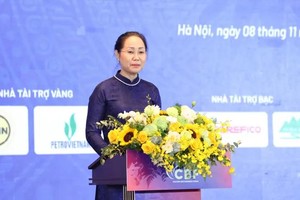
On the morning of November 11 in Hanoi, the Vietnam Chamber of Commerce and Industry (VCCI), in coordination with relevant agencies, held a seminar entitled “The Vietnam–EFTA Free Trade Agreement (VEFTA): Opportunities and Challenges for Vietnamese Businesses.”
At the seminar, Nguyen Son Tra, a representative of the Department of Foreign Market Development and Multilateral Trade under the Ministry of Industry and Trade, said that following 14 years of negotiations and 21 formal rounds of talks, the VEFTA was signed on October 18. The agreement opens up greater access to high-purchasing-power markets and is expected to promote trade and investment between Vietnam and the four member countries of the European Free Trade Association (EFTA), including Switzerland, Norway, Iceland, and Liechtenstein.
According to the Ministry of Industry and Trade, total trade between Vietnam and EFTA exceeded US$1.9 billion in 2025, up nearly 29 percent from the previous year. Of this, Vietnam's exports amounted to approximately US$405 million, while imports exceeded US$1.5 billion. Although bilateral trade has expanded, the trade balance remains tilted toward imports.
The ministry's representative stressed that EFTA is not a customs union. Businesses therefore need to study the tariff schedules, import requirements, and consumer demand of each member country separately.
Market access conditions for agricultural products also vary. Switzerland and Liechtenstein immediately eliminate tariffs on approximately 40 percent of agricultural product categories, compared with 53 percent in Norway and 74 percent in Iceland. As a result, businesses cannot adopt a uniform approach to all four markets.

Regarding tariff preferences, Nguyen Phuong Linh, Head of the Economic and Financial Integration Division under the Department of Debt Management and External Economic Relations at the Ministry of Finance, said EFTA had committed to immediately eliminating tariffs on 90 percent of tariff lines, covering 99.5 percent of imports from Vietnam by value.
Specifically, Switzerland and Liechtenstein will eliminate tariffs on approximately 85 percent of tariff lines, Norway on more than 90.7 percent, and Iceland on more than 94 percent.
However, goods do not automatically qualify for preferential tariffs. To benefit from these concessions, they must fall within the applicable preferential tariff schedules, comply with rules of origin and direct consignment requirements, and be accompanied by valid certificates of origin.
In addition, businesses must meet requirements concerning product quality, safety, traceability, environmental protection, and social responsibility.
According to Dau Anh Tuan, VCCI Deputy Secretary-General and Director of its Legal Department, Vietnamese businesses need to pay attention to three key issues when entering EFTA markets: tariff preferences vary among member countries; lower tariffs do not mean lower standards; and non-tariff barriers remain a major obstacle.
Experience in implementing free trade agreements shows that tariff reductions are merely an initial condition. A business's ability to comply with rules of origin and meet market standards ultimately determines whether it can truly benefit from an agreement.