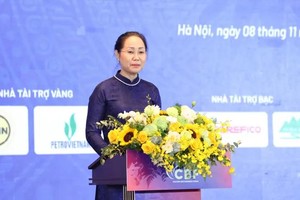
The Ministry of Industry and Trade held the first nationwide conference on bringing e-commerce to the commune level on the afternoon of November 11, aiming to promote e-commerce development at the grassroots level, expand markets for local products, and contribute to achieving the target of double-digit economic growth.
In his opening remarks, Deputy Minister of Industry and Trade Nguyen Viet Son said the ministry aims to ensure that by 2030, 60 percent of communes and equivalent administrative units have businesses selling goods or providing services online.
The ministry also aims to provide training in e-commerce application skills to one million participants, including businesses, cooperatives, household businesses, individuals, state management officials, and university students.

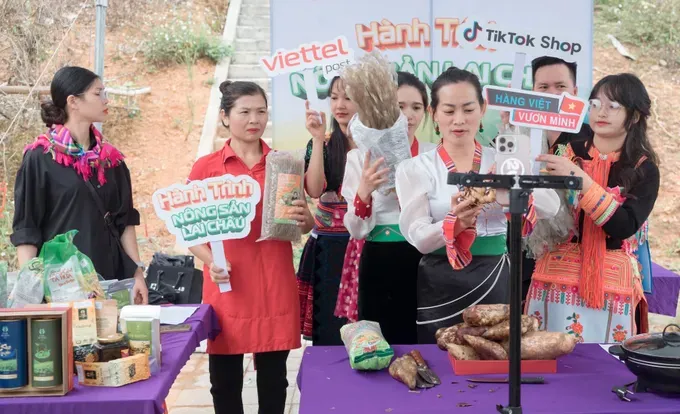
A representative of TikTok Shop said the “e-commerce communes and wards” model, jointly implemented by TikTok Shop and the Vietnam E-commerce and Digital Economy Agency, began its pilot phase in January 2026. The initiative aims to help residents bring their products to online platforms.
According to figures released by TikTok Shop, as of October 31, Binh Lu Commune in Lai Chau Province had trained 20 sellers, eight of whom had acquired the capacity to operate independently, generating a total of 9,324 orders.
Similarly, Phuong Duc Commune in Hanoi had trained 80 sellers, with 42 able to conduct independent online business operations, recording 73,070 orders.
In the Southern region, Cho Lach Commune in Vinh Long Province had trained 66 sellers, 50 of whom had become capable of operating independently, generating 81,521 orders.
At the conference, delegates highlighted several challenges facing e-commerce development at the commune level, including residents' limited online business skills, inadequate standardization of product information and traceability, unstable supply, and high logistics costs.
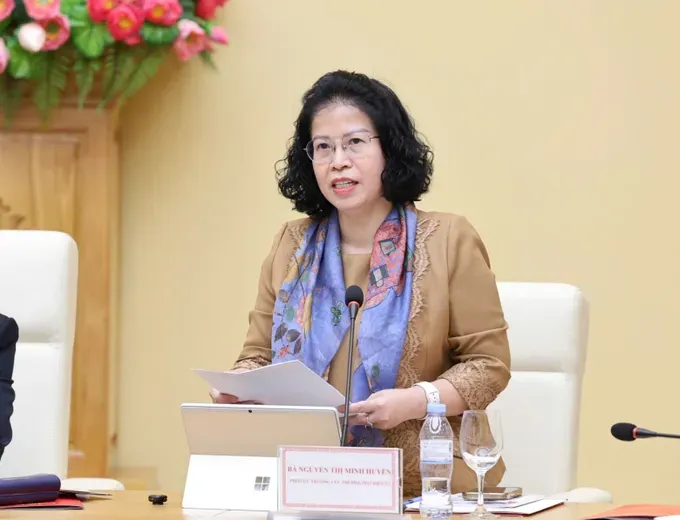
Nguyen Thi Minh Huyen, Deputy Director of the Vietnam E-commerce and Digital Economy Agency, said the agency is focusing on developing key product sectors while strengthening interregional connectivity to promote and expand markets for agricultural produce, products under the One Commune One Product (OCOP) program, and local specialties.

Under an interregional e-commerce connectivity program in Dong Thap Province, nearly 1,000 OCOP items were sold, with the products attracting nearly five million views over the three-day event. Notably, more than 3.5 tons of pineapples were sold in just 90 minutes through online sales.
Deputy Minister of Industry and Trade Nguyen Viet Son noted that the effectiveness of e-commerce development at the commune level should not be measured solely by the number of events held or people attending training courses. Instead, it should be assessed based on the number of orders generated and revenue earned after the support period.
E-commerce must go beyond listing products on online marketplaces or holding a few livestream sales sessions. Its ultimate goal should be to increase local people's incomes and make a tangible contribution to achieving the target of double-digit economic growth.