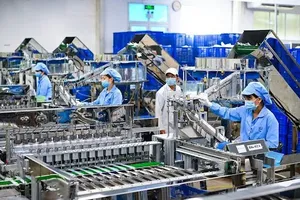
Automation and green transformation are becoming urgent priorities for mechanical and electrical enterprises as they seek to reduce costs, enhance competitiveness, and meet increasingly stringent supply chain requirements. However, many small and medium-sized enterprises (SMEs) continue to face difficulties accessing preferential financing.
Investing to maintain competitiveness
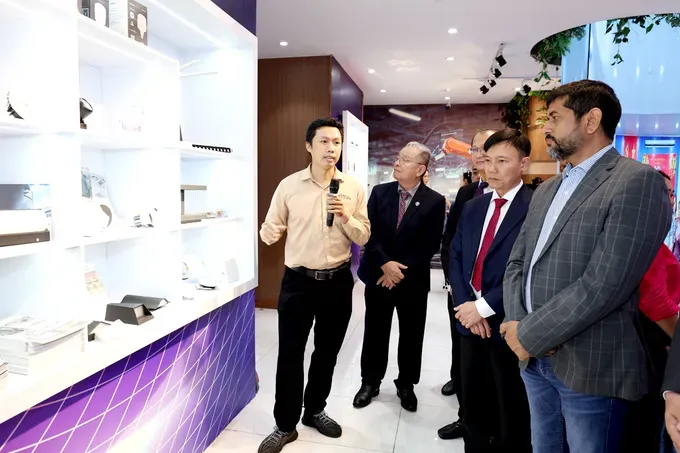
Le Mai Huu Lam, General Director of Cat Van Loi Industrial Electrical Equipment Manufacturing Joint Stock Company, plans to accelerate automation across the company's production lines in 2027. In the initial phase, the company expects to invest approximately US$300,000 in machinery and equipment while reducing its workforce by around 25 percent.
According to Mr. Lam, although the company had considered automating and digitalizing its production processes several years ago, high capital costs had made it necessary to carefully weigh the investment. He stressed that technological innovation is now essential to maintaining competitiveness, particularly as the company's products are already being used in numerous projects across the region and around the world.
Alongside automation, many mechanical engineering enterprises have opted for green transformation at an early stage to meet increasingly stringent supply chain requirements.
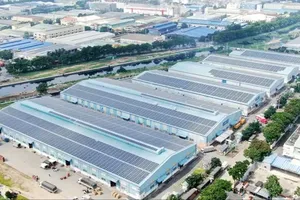
In 2020, Tan Thanh Mechanical Trading Joint Stock Company decided to invest nearly VND7 billion in a rooftop solar power system with an installed capacity of 425 kWp.
According to Ms. Kieu Ngoc Phuong, the company's Deputy General Director, the solar power system has enabled the enterprise to secure a reliable source of clean electricity, contributing to the greening of its production processes. The company estimates that the system helps reduce carbon dioxide emissions by more than 400 tons annually while giving its products an additional competitive advantage in export markets such as the United States and Europe.
Tan Thanh Mechanical Trading Joint Stock Company has also proactively invested in an automated shot-blasting line and powder electrostatic coating technology. Compared with conventional painting methods, the technology reduces coating time by more than 50 percent. Approximately 98–99 percent of the powder coating adheres to the products, while the remainder is recovered for reuse.
Ms. Phuong noted that green transformation should be viewed as a long-term investment, with its effectiveness assessed over the entire course of a company's operations.
Preferential financing remains difficult to access
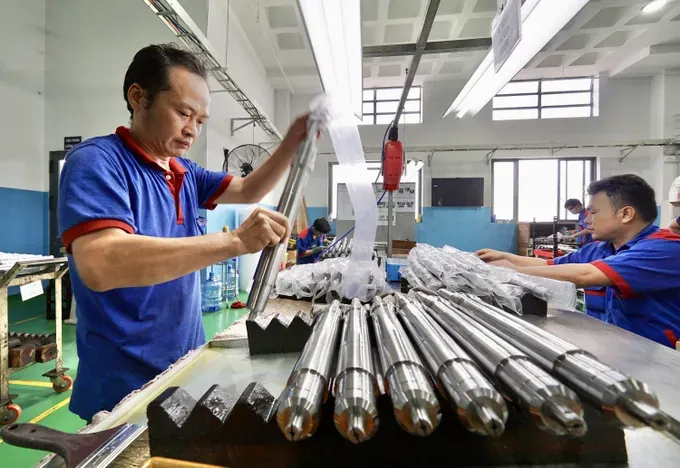
According to Tran Hoai Nam, Vice Chairman of the Ho Chi Minh City Mechanical and Electrical Enterprises Association, more than 80 percent of the association's members are small and medium-sized enterprises (SMEs), many of which are still seeking financial resources to carry out digital and green transformations.
One of the support channels available to businesses is the city's investment stimulus program under Resolution No. 09/2023/NQ-HDND and Resolution No. 523/NQ-HDND, issued by the Ho Chi Minh City People's Council.
According to Nguyen Quang Thanh, Deputy General Director of Ho Chi Minh City Finance and Investment State-owned Company (HFIC), eligible projects in priority sectors can receive interest rate subsidies covering 50–100 percent of loan interest, with a maximum subsidy of VND200 billion per project and a support period of up to seven years.
In particular, eligible projects in mechanical engineering and automation, electronics and information technology, and supporting industries can receive subsidies covering 100 percent of loan interest.
Nhat Long Mechanical Trading Company Limited is among the enterprises that have benefited from Ho Chi Minh City's investment stimulus policy.
Nguyen Ngo Long, Chairman of the company's Board of Directors, said the company secured a loan of nearly VND14 billion at the end of 2025, with a 100 percent interest rate subsidy, helping ease the financial burden of investing in upgraded machinery and technology. However, the number of businesses able to access this funding remains limited.
Estimates show that fewer than 5 percent of the more than 350 members of the Ho Chi Minh City Mechanical and Electrical Enterprises Association have accessed this funding. Businesses attribute the low uptake partly to complicated loan application procedures.
Seeking alternative solutions, some enterprises have turned to foreign banks operating in Vietnam to secure more favorable interest rates. Le Mai Huu Lam said Cat Van Loi Industrial Electrical Equipment Manufacturing Joint Stock Company is working with Standard Chartered Vietnam to obtain short-term loans at annual interest rates of 7–8 percent. However, accessing financing from these banks requires businesses to maintain transparent financial records and demonstrate sound financial health.
Meanwhile, Kieu Ngoc Phuong said Tan Thanh Mechanical Trading Joint Stock Company also plans to explore financing from foreign financial institutions, including DEG, a subsidiary of Germany's KfW Development Bank, and the Green Climate Fund.
For businesses seeking to invest in solar power systems but lacking sufficient capital, investment partnerships offer another option worth considering.
Diep Bao Canh, General Director of Red Sun Energy Joint Stock Company, said his company could finance rooftop solar power installations and sell electricity to businesses at competitive rates.
Le Anh Hoang, Deputy Director of the Ho Chi Minh City Investment and Trade Promotion Center (ITPC), emphasized that for the 2026–2030 period, the city has identified green and digital transformation as key drivers of a new growth model. Ho Chi Minh City aims for the digital economy to account for 30–40 percent of its gross regional domestic product (GRDP), while the green economy is targeted to contribute at least 10 percent of GRDP by 2030.