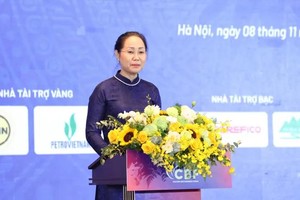
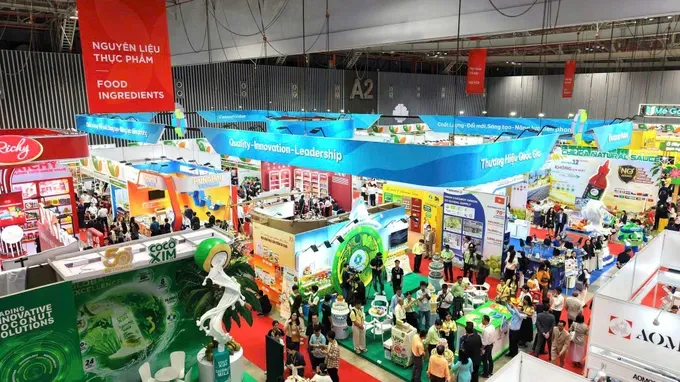
On November 12, in Ho Chi Minh City, within the framework of the Vietnam International Food Industry Exhibition 2026 (Vietnam Foodexpo 2026), the Ministry of Industry and Trade, in coordination with the Association of Vietnam Retailers, organized a program titled "Connecting the consumption of domestically produced food".
The event aimed to promote linkages between manufacturing enterprises and distribution systems, expanding the market for Vietnamese food.
Vietnamese food retains ample room for growth in the domestic market
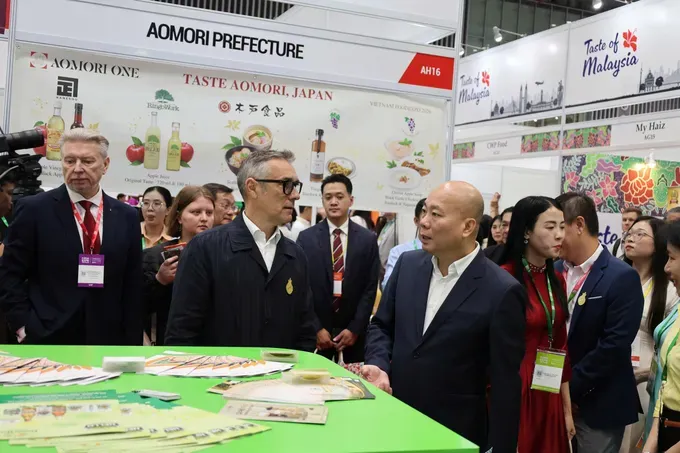
Meanwhile, the production and processing capacity of Vietnamese food is increasingly improving. At Vietnam Foodexpo 2026, more than 90 percent of participating Vietnamese enterprises met HACCP and ISO standards, and over 80 percent held international certifications such as BRC, FSSC, and EU Organic. Around 100 enterprises possessed Halal certification, opening up opportunities to access a market of roughly 2 billion global consumers.
Vietnam Foodexpo 2026 brought together more than 700 booths from over 500 domestic and foreign enterprises, a 1.5-fold increase compared to 2025, helping connect manufacturers with distribution systems and international buyers.
Director Vu Ba Phu of the Vietnam Trade Promotion Agency under the Ministry of Industry and Trade stated that raising quality standards, applying processing technology, and developing supply capacity are creating a foundation for Vietnamese food to participate more deeply in the global value chain.
However, many export-standard Vietnamese food products still struggle to appear on domestic supermarket shelves, even as retailers continue to search for domestic supply sources with stable quality, large volumes, and transparent origins. This reality shows that product quality is only a necessary condition, while the capacity to meet commercial requirements and organize supply chains determines the ability to expand market share.
According to Deputy Director Phan Van Chinh of the Agency for Domestic Market Surveillance and Development under the Ministry of Industry and Trade, connecting production and distribution still faces three bottlenecks: market information, supply standards, and cooperative trust. Manufacturing enterprises do not clearly grasp purchasing demands, while retailers lack information on qualified supply sources. Beyond quality, Vietnamese food must meet requirements regarding packaging, traceability, preservation, delivery, and continuous supply to enter modern distribution systems.
According to the Ministry of Industry and Trade, Vietnam’s retail market is expected to reach approximately US$269 billion in 2025, with food and food products accounting for 34.1 percent of total retail sales. On average, consumers spend more than VND5.1 trillion per day on food and food products through retail channels. In the first ten months of 2026, total retail sales of goods and consumer service revenues reached approximately VND6,618.9 trillion, representing an increase of 13.5 percent compared to the same period of the previous year. This represents significant potential for Vietnamese food products to expand their market consumption.
Domestic retail market opens new opportunities for Vietnamese food

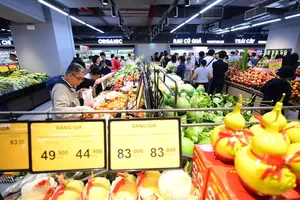
Practical experience from Saigon Co.op shows that the consumption potential for Vietnamese food remains huge if enterprises meet distribution requirements. Deputy Director Duong Minh Quang of the Ho Chi Minh City Union of Trading Cooperatives (Saigon Co.op) noted that the system operates more than 800 points of sale nationwide, serving over one million customers daily. Its food sales reach nearly VND9,900 billion per year, of which processed food accounts for 68 percent and fresh food accounts for 32 percent.
Notably, over 90 percent of goods on Saigon Co.op shelves are Vietnamese products. According to Deputy Director Duong Minh Quang, consumers increasingly prioritize safe food with transparent origins, convenience, and reasonable prices. Therefore, enterprises need to research market demand, standardize production, and invest in post-harvest technology, cold storage, and logistics to ensure quality, volume, and delivery schedules. These are the conditions for Vietnamese food to maintain a stable presence in the retail system.
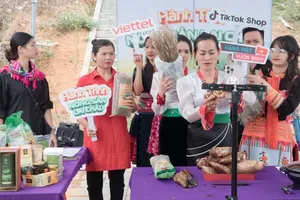
To improve supply-demand connectivity, Saigon Co.op proposed building a unified database on raw material areas, output, harvest seasons, and consumption demand. Sharing information helps enterprises stay proactive in production and enables retailers to select suitable supply sources, reducing intermediary costs. The system continues to expand opportunities to bring Vietnamese food from domestic enterprises and cooperatives into its distribution network, combining the development of both direct and online sales channels.
The Ministry of Industry and Trade is shifting its focus from campaigning for the prioritized use of Vietnamese goods to creating conditions to enhance competitiveness through quality and supply efficiency. According to Phan Van Chinh, distributors need to publicize purchasing criteria, create fair access opportunities for domestic enterprises, and avoid setting overly strict requirements that hinder entry into the retail system.
Alongside consolidating the domestic market, the Ministry of Industry and Trade is stepping up trade promotion, connecting food enterprises with international distribution groups and buyers. Trading activities at Vietnam Foodexpo 2026 contribute to expanding markets and bringing Vietnamese food deeper into the global supply chain.
Expanding the market share of Vietnamese food depends not only on product quality but also on the effectiveness of production-distribution linkages. Transparent supply-demand information, synchronized commercial standards, and expanded consumption channels will help enterprises effectively tap the domestic market while enhancing export competitiveness.