During his return visit to Ho Chi Minh City in early June, U.S. veteran Robert Ambrose Connor took time to visit the Ho Chi Minh City Museum of History before attending a special seminar on the verification of information related to Vietnamese fallen soldiers, an endeavor to which he has devoted years of tireless effort.
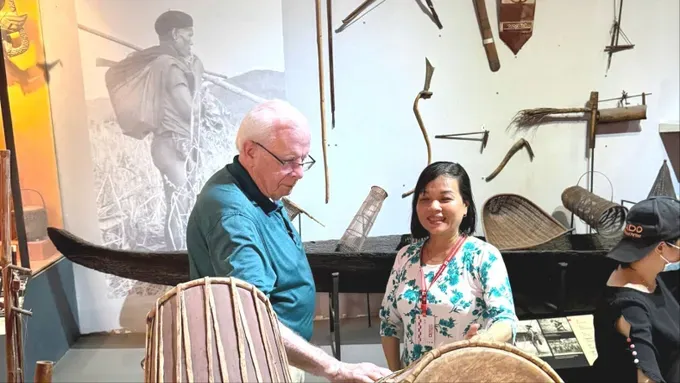
On June 7, as he toured the exhibition spaces of the Ho Chi Minh City Museum of History, the 80-year-old veteran paused repeatedly before artifacts associated with the formation and development of Ho Chi Minh City and Vietnam. He listened attentively to presentations on ancient civilizations, archaeological relics, and collections depicting the daily life and cultural heritage of the Vietnamese people across different historical periods.
Born in 1946 in Pennsylvania, the United States, Robert Ambrose Connor served in the U.S. Air Force and was stationed at the strategic Bien Hoa Air Base, located in what is now Dong Nai City, during one of the most intense periods of the war. During the 1968 Tet Offensive and General Uprising, he directly experienced and witnessed the historic battle at Bien Hoa Air Base, where the Armed Forces for the Liberation of Southern Vietnam launched an attack, leaving him with memories that have remained indelible ever since.
Decades later, while helping his granddaughter with a history assignment, he unexpectedly came across a photograph of Bien Hoa Air Base taken in 1968. The image brought back memories of a mass grave containing the remains of approximately 150 Vietnamese soldiers who had fallen during the battle. That recollection gradually became the driving force behind a years-long mission.
Together with fellow members of a U.S. veterans’ group, he spent years searching for and cross-referencing military maps, historical coordinates, and personal records in an effort to identify the locations of mass burial sites.
Over the years, he has returned to Vietnam on numerous occasions, meeting with government agencies, historians, war veterans, and families of fallen soldiers. More than 20 dossiers containing coordinate data related to suspected mass grave sites have been handed over by him and his former comrades to the Vietnamese side to support the verification, recovery, and repatriation of the remains of fallen soldiers.
In the museum that preserves the many layers of Vietnam’s rich historical heritage, the American veteran showed particular interest in stories about the land and people of Vietnam. The visit also provided him with an opportunity to deepen his understanding of the country’s history and culture—a nation he has returned to many times over the past decade in the hope of contributing to the healing of the wounds left by war.
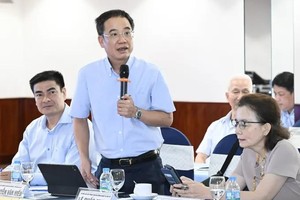
Earlier, former US serviceman Robert Ambrose Connor and his delegation visited the Reunification Hall. During this return trip, he was among the historical witnesses invited to attend the seminar titled “Verification of Information and Findings on Fallen Soldiers and Martyrs’ Graves in the Chi Hoa–Cho Quan Cemetery Area (now Le Thi Rieng Park, Hoa Hung Ward, Ho Chi Minh City).”
The memories, documents, and information preserved by Robert Ambrose Connor and other American veterans are expected to provide additional evidence to help clarify historical traces that have remained unresolved for nearly six decades. These contributions are expected to support efforts to locate and recover the remains of fallen soldiers while honoring those who sacrificed their lives for the independence of the nation.