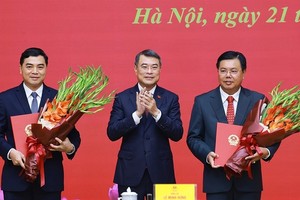
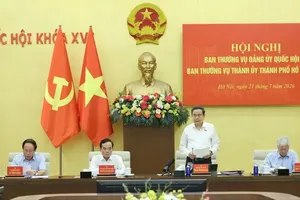
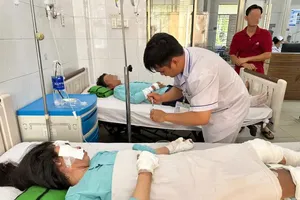
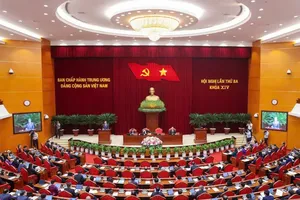
At the national conference expressing gratitude to revolutionaries in 2026, held on July 23, numerous corporations, businesses, and banks actively registered their support with an estimated total funding of VND12 trillion (US$456 million), enthusiastically responding to the campaign to “boost care for revolutionary contributors” initiated by the Prime Minister.
The profound tradition of “Be grateful for what you have” is once again receiving a robust response. This also represents the spirit woven directly through the Party and State’s fundamental guidelines and policies directed strictly at those who bravely contributed to the revolution.
Throughout the past 79 years, caring for national devotees has been strictly identified by the Party and State as a constant, long-term responsibility. The preferential policy system is progressively being perfected, ensuring the everyday lives of meritorious people are steadily elevated.
In the 2020-2025 period alone, the nationwide Gratitude Fund successfully mobilized over VND3 trillion ($114 million), constructed nearly 36,000 houses of gratitude, repaired nearly 31,000 homes, and generously gifted over 57,000 savings books directly to revolutionary contributors. During this year’s July 27 occasion, more than 1.56 million revolutionary contributors are receiving gifts in accordance with Decision No.885/QD-CTN issued by the State President.
Those staggering figures clearly demonstrate the great attention of both the State and society. However, as the country continually develops, the tangible results of caring for contributors must increasingly be witnessed through profound transformations in each person’s actual daily life.
That’s precisely why the National Assembly Standing Committee is currently considering amending the Ordinance on Preferential Treatment for People with Meritorious Services to the Revolution. This is a vital legislative shift that, for National Assembly Chairman Tran Thanh Man, brought a deep sense of duty as he imparted this critical information on July 19 when visiting wounded and sick veterans at the Long Dat Nursing Center for Invalids and Meritorious People in HCMC.
The primary direction of this amendment is to heavily expand the beneficiary scope and methodically adjust subsidies and allowances for wounded soldiers, sick veterans, and martyrs’ relatives, aiming to firmly ensure that the living standard of national devotees is entirely equal to or significantly higher than the average living standard in their respective residential areas.
That meaningful goal directly strikes at the core issue: utilizing the overall quality of life as the ultimate measuring stick. In stark reality, possessing the exact same subsidy amount doesn’t mean much when people living in urban centers, remote areas, or isolated islands constantly face drastically different living costs and service access conditions.
Furthermore, severely wounded veterans naturally suffer from highly complex injury conditions and require different care needs, meaning the older they get, the more robust support they desperately require, from daily care and mobility to essential rehabilitation and long-term medical treatments.
Therefore, practical policies need to align much more closely with the actual living circumstances and genuine needs of each specific beneficiary group, namely a safe roof over their heads, convenient medical examinations and treatments, a sufficient subsidy to fully cover expenses, specialized vehicles perfectly suited for their specific injuries, and dedicated care when their age advances and their health inevitably deteriorates.
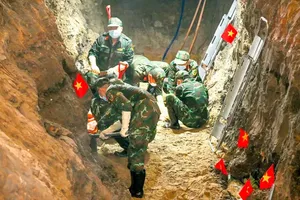
Throughout that ongoing process, mobilized social resources play a crucial role. It’s reported that numerous enterprises aren’t merely contributing financial funds, but they’re also generously sponsoring advanced machinery and modern equipment serving the exploration, intensive search, gathering, and accurate identification of martyrs’ remains.
This profound humanitarian value represents vital resources placed exactly in the right spot. Meritorious individuals can peacefully reside in safe places and receive appropriate care; martyrs’ children are heavily supported in their academic pursuits; and martyrs’ grieving families gain additional opportunities to reunite with their lost relatives through the power of advanced science and modern technology.
That specific supportive approach also suggests a considerably larger requirement, where social resources must be systematically organized, strictly targeted at the right beneficiaries, perfectly matched with genuine needs, and firmly capable of producing highly measurable results.
The enthusiastic companionship of businesses, organizations, and the broader community is consistently appreciated, but it simply can’t ever replace the State’s fundamental responsibilities. What’s absolutely essential is seamless coordination to actively avoid situations where one specific location receives multiple rounds of support while another region still remains sorely lacking. The authorities must also avoid casually handing out superficial gifts driven by fleeting trends without considering long-term maintenance, essential repairs, and ongoing care.
Firmly ensuring a worthy living standard for revolutionary contributors is a moral measuring stick for the nation’s developmental quality. When the country steadily moves forward, it’s absolutely imperative that those who bravely contributed to forging the current peace must genuinely enjoy a better, more peaceful life and receive exceptionally thoughtful care.




)