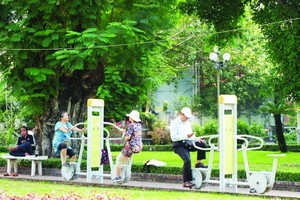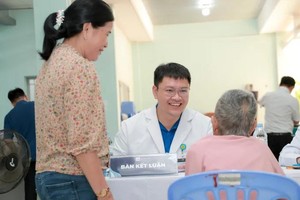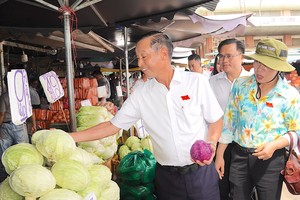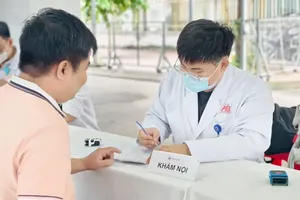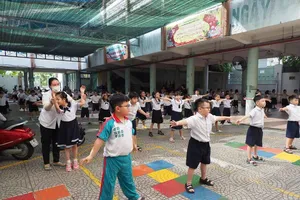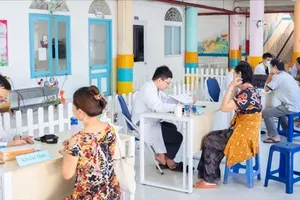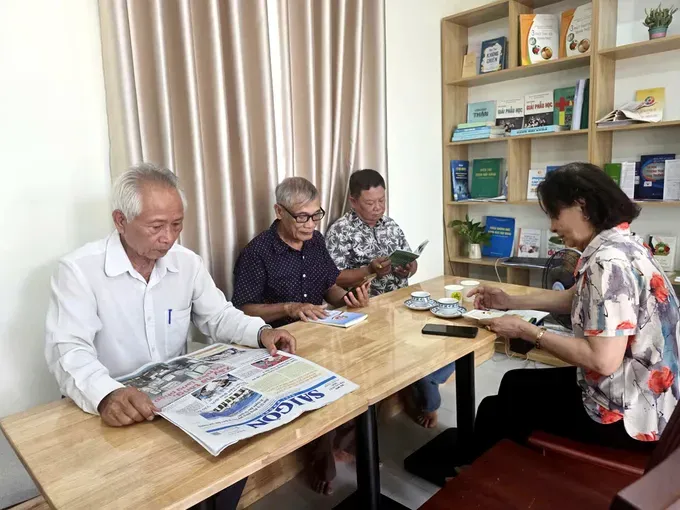
After more than a week of operation, the Daycare Center for the Elderly in Binh Tan Ward has become a familiar address for many local seniors. Not only are they monitored and given health advice, but they also have a space to exercise, socialize, sing, chat, and share the stories of their old age.
Right from the early morning, laughter and chatter buzz vibrantly at the center. Some are exercising, others are chatting or seeking out familiar friends to ask about their health the moment they walk in. For 82-year-old Tran Thi Xuan Huong, residing in Binh Tan Ward, the facility is a welcome change from staying indoors all day, as she joined the moment she heard about it.
“Initially, I thought coming here was just to check my health. Upon arriving, I saw there’re many activities, and I get to meet people of the same age and circumstances. Some folks talk very joyfully, and on days I don’t go, I actually miss it,” she confided.
According to Chairman Vu Hong Ninh of the Binh Tan Ward Elderly Association, for many people, this place isn’t merely a gathering spot but a “shared house” where they can meet friends, receive health care attention, and feel the community’s sharing spirit. Those who arrive early aid the latecomers; those who memorize the exercises will guide those who don’t know them, and everyday stories just roll on from one session to another.
At the end of the day, this model has opened up an additional community care space so seniors don’t just live longer, but also have more chances to live happily, healthily, and connected right where they reside.
For Binh Tan Ward People’s Committee Chairman Nguyen Van Su, this city-first model is already a notable success. After just a week, the initiative has attracted numerous seniors. Here, the elderly receive vital primary health care, continuous monitoring, and counseling. Simultaneously, they participate in cultural and sports activities, socializing and sharing wellness knowledge. Therefore, this space isn’t merely a clinic; it’s a vibrant hub for them to leave their familiar homes, meet friends, and maintain positive living habits.
The ward is currently building a traditional medicinal plant garden, hoping seniors don’t just passively receive care but actively engage in planting herbs. Through this, they gain a space for physical movement while sharing botanical expertise with the community. More importantly, seniors will feel they’re still doing useful things, continuing to contribute rather than just being care recipients.
Chairman Su noted that launching this Daycare Center for the Elderly concretizes local policies through practical actions. Every senior is a treasure trove of experience and a precious community asset. The government will, therefore, coordinate with health sectors and mass organizations to develop the model, ensuring the elderly are heard and can contribute their wisdom. The ward will also mobilize social resources to ensure long-term effectiveness, serving more seniors for broader community care.
According to Binh Tan Ward Elderly Association Chairman Vu Hong Ninh, this model represents a crucial pilot step to bring holistic care directly into the community. Instead of waiting for seniors to visit medical facilities only when illnesses strike, it proactively creates an accessible space to monitor and guide health care. Ultimately, it encourages seniors to prevent diseases and physically train, supporting their well-being at the end of the day.
Architecting new generation elderly care model
Population aging is posing a demand to overhaul the elderly health care model from treating individual diseases to comprehensively managing physical, mental, and mobility capabilities.
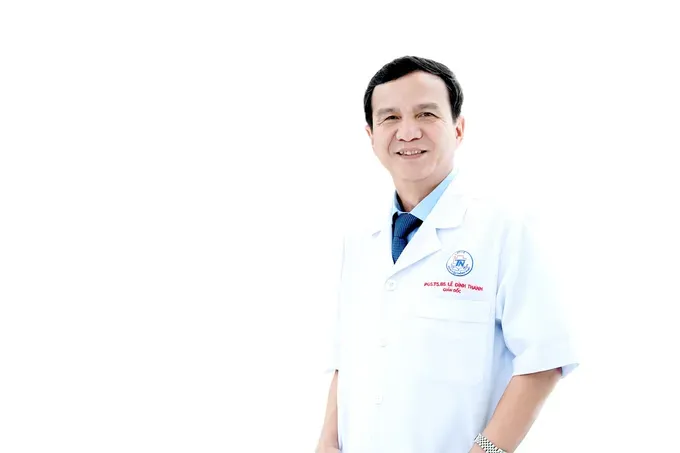
For Assoc Prof Dr Le Dinh Thanh, Director of Thong Nhat Hospital, the essence of the elderly medical burden lies in a harsh reality. Seniors don’t just suffer from a single illness but carry multiple pathologies, use multiple medications, and experience severe geriatric syndromes like frailty and dementia.
This demands integrated care thinking. Transitioning from the traditional, disease-centric model to a new-generation geriatric hospital focused on proactively preventing chronic diseases early is an urgent requirement.
This new-generation Smart Geriatric Hospital places seniors firmly at the center, utilizing the 4M framework (What Matters, Medication, Mentation, and Mobility) as a guiding compass. This model integrates artificial intelligence in screening and optimizing treatment, applies precision medicine, and pivots towards value-based care.
The key driving force is the hospital-university framework. When blended into a single knowledge machine, the missions of care, training, and research mutually support one another, successfully getting the ball rolling on comprehensive medical solutions.
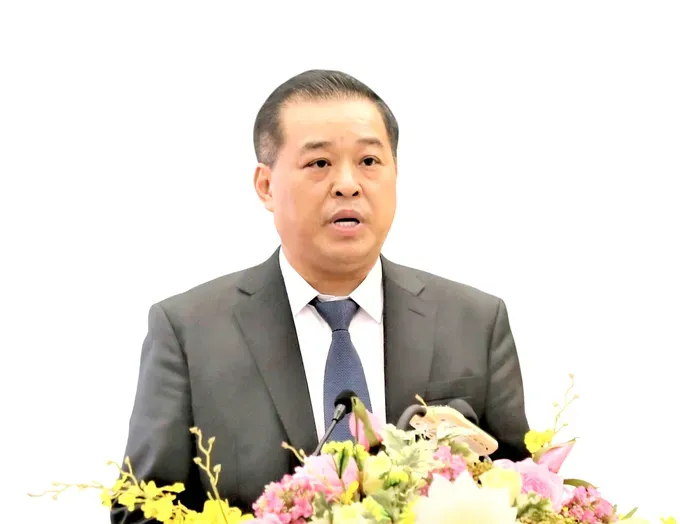
Meanwhile, Deputy Director Dinh Hong Phong of the Hanoi Department of Health noted that the capital currently houses about 1.4 million elderly citizens, accounting for roughly 16.3 percent of the population. By 2040, this rate will likely hit 20 percent. As the city ages rapidly, managing chronic diseases right at home becomes imperative.
Since June 2026, Hanoi has operated a daytime elderly care pilot model across six local wards, namely Long Bien, Quoc Oai, Dong Da, Viet Hung, Bo De, and Tay Ho. This breakthrough solution isn’t just a place to dispense medicine. It’s a reliable hub where seniors can find their youth again in semi-boarding nursing facilities. When elderly residents have their health monitored right where they live, their overall quality of life will certainly elevate, helping them live happily and healthily.