To remain competitive, businesses must adapt and strictly comply with importers’ standards, said Pham Van Viet, General Director of Viet Thang Jean Co., Ltd., an export-oriented garment manufacturer.
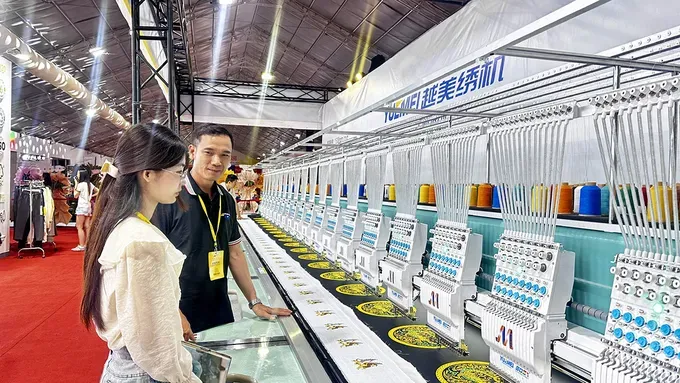
Between 2012 and 2019, the company transitioned from semi-automated operations to Industry 4.0 technologies, aiming to boost productivity while meeting Europe’s increasingly stringent requirements for environmentally friendly products.
Specifically, the company has introduced laser technology to replace manual processes and traditional washing and bleaching methods, significantly shortening production time, reducing labor demand, and virtually eliminating emissions. Ozone bleaching technology has been adopted to remove the need for chemicals, helping safeguard workers’ health, while nano-based processes have replaced conventional dyeing methods, cutting chemical use by 95 percent and nearly eliminating water consumption.
Total investment during this period reached approximately US$25 million for two production lines. In recent years, Viet Thang Jean has continued to upgrade its operations, integrating additional technologies and gradually expanding into product recycling, in line with increasingly stringent requirements for sustainable and circular manufacturing.
In the footwear sector, Mr. Nguyen Chi Trung, Chairman of the Board of Gia Dinh Group JSC, said companies are currently prioritizing investment in two key areas to advance green and circular production.
First, the company has installed a 1 MWp rooftop solar power system to reduce greenhouse gas emissions and carbon output, now supplying around 40 percent of its production energy needs. Second, it is exploring the use of recycled materials, a trend increasingly embraced by major European markets.
The business still in the research phase. This is a complex challenge that requires substantial investment in technology, but it is a necessary step, Mr. Trung said, noting that the European Union (EU) is expected to widely implement Digital Product Passport (DPP) regulations in the coming years, including requirements related to recycling.
In recent years, the European market has steadily introduced a range of regulations promoting green and sustainable production, including the Carbon Border Adjustment Mechanism (CBAM) and the Ecodesign for Sustainable Products Regulation (ESPR).
Under the ESPR framework, businesses are required to transition toward more sustainable models, meeting stringent standards on product durability and recyclability, enhancing supply chain transparency through Digital Product Passports (DPP), and limiting the destruction of unsold goods.
Government support for businesses
Under Vietnam’s development strategy for the textile and footwear industries through 2030, with a vision to 2035, the sectors are expected to achieve efficient and sustainable growth based on a circular economy model by 2035. The strategy provides a legal framework for businesses to align their transformation with global trends.
Ms. Nguyen Thi Tuyet Mai, Deputy Secretary General of the Vietnam Textile and Apparel Association, said textile firms are making concerted efforts to shift toward low-emission production models by adopting renewable energy and optimizing manufacturing processes.
However, she noted that one of the most pressing challenges remains access to green finance, particularly for small and medium-sized enterprises. In addition, as the country transitions toward a circular economy, Vietnam still requires a coherent and comprehensive policy framework for the sector, including mechanisms to incentivize investment in recycling and cleaner production, as well as clear standards for circular products.
International requirements such as ESPR, DPP, and Extended Producer Responsibility (EPR) are being rolled out at a rapid pace, requiring Vietnamese businesses to have sufficient time for investment and preparation, along with strong support from state management agencies, Ms. Nguyen Thi Tuyet Mai said.
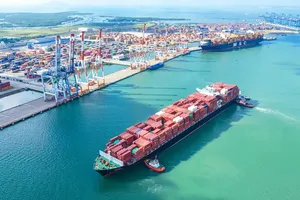
In 2025, Vietnam’s exports to the European Union reached US$56.2 billion, with a trade surplus of US$38.6 billion, up 10.1 percent year-on-year—marking a record high in trade with the bloc.
Mr. Nguyen Van Khanh, Vice Chairman of the Ho Chi Minh City Leather and Footwear Association, said many small and medium-sized enterprises are facing mounting pressure and risk falling behind. While they are eager to invest, limited financial capacity remains a major constraint; without access to adequate funding, they may struggle to secure orders from key markets such as the European Union in the coming years.
From a policy perspective, Dr. Tran Cong Chinh, a lecturer at the University of Economics under Vietnam National University, Hanoi, called for a comprehensive and synchronized policy framework. Such measures, he said, should not only support large corporations but also extend to small and medium-sized enterprises, enabling them to invest in circular technologies, boost exports, and make greater contributions to the national economy.