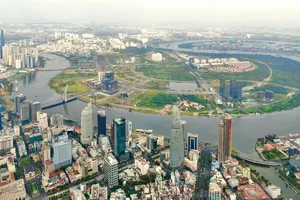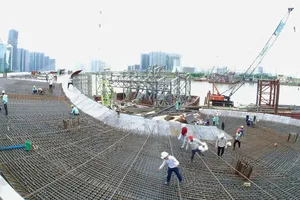
Welcoming the new Law on Urban Development, approved by the 16th National Assembly yesterday, several citizens expressed immense excitement, trust, and high consensus. Simultaneously, they hope the entire political system of HCMC can capitalize on the time and leverage opportunities from these new mechanisms.
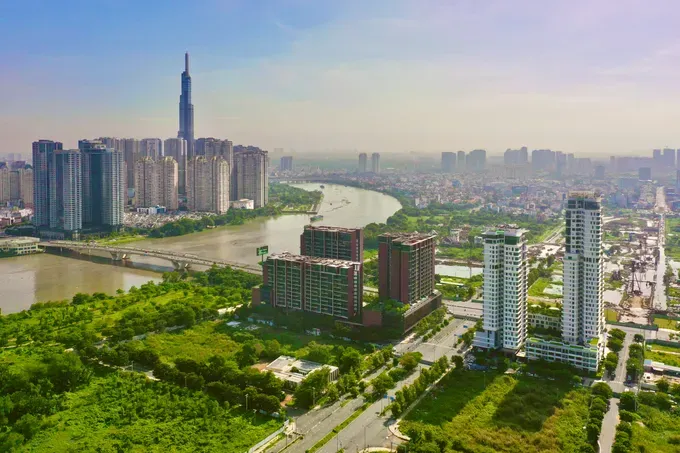
Dr Huynh Thanh Dien from Nguyen Tat Thanh University stressed that the new law brilliantly opens up growth space from the sea. As someone who closely followed HCMC’s legislative drafting process, he’s highly enthusiastic that the National Assembly (NA) has officially approved it. Many practical issues facing HCMC have been incorporated, including vital mechanisms to develop land reclamation urban areas.
The addition of these regulations creates a synchronous legal framework. It connects the maritime economy and strategic investors with urban infrastructure, turning marine potential into a genuine growth engine. With over 300km of expanded coastline, it appears this mechanism opens ample room for HCMC to systematically restructure its developmental space. The city holds a distinct advantage in merging a financial and industrial hub with deep-water ports, coastal tourism, and regional logistics networks.
This mechanism does establish a comprehensive legal corridor for all project stages, significantly reducing administrative overlaps. It shortens investment preparation time and enhances transparency, thereby attracting long-term capital and capable investors to get the ball rolling.
Furthermore, the maximum 70-year operational term perfectly aligns with massive capital scales. It seems not allowing the transfer of whole projects before completion and only permitting a maximum 50-percent transfer of the reclaimed land area with finished technical infrastructure will definitively curb speculative entities from merely enjoying land rent differentials.
However, as a rule of thumb, the city must rigorously evaluate actual financial capacity and environmental governance. Decentralizing power to the municipal People’s Committee to decide on technical-economic targets, land use, and mineral exploitation must go hand in hand with strict public accountability. In the end, construction density must rely heavily on environmental carrying capacity, and it can’t just serve pure commercial expansion.
On that solid foundation, a sea reclamation zone can seamlessly integrate seaports, logistics services, free trade, tourism, and innovation, ultimately opening the door for HCMC to become a bustling coastal megacity.
For Deputy Head Vo Ngoc Thanh Truc of the HCMC NA Delegation, the new legislation has opened a vital institutional door. “The city’s responsibility from this moment on is turning granted rights into action capacity, transforming that capacity into projects, and molding projects into concrete value,” she stated. In the end, the NA’s approval is merely paving the way.
The implementation phase will decisively dictate whether these mechanisms truly become developmental resources. HCMC has made proactive preparations to get the ball rolling. Jurisdictional matters have been meticulously reviewed, and essential drafts are essentially ready for immediate execution.
Slated for late August, the city will host deployment conferences and People’s Council reviews to concretize the regulations. This shows a very clear spirit that the city isn’t passively waiting, but rather synchronously prepping everything so new mechanisms can run without any vacuum.
Meanwhile, Assoc Prof Dr Bui Hoai Son, Member of the NA’s Culture and Social Affairs Committee, commented that passing the Law on Urban Development is excellent news. In a context where large cities are identified as new growth poles, the law will forge a framework to clear bottlenecks and unleash breakthrough mechanisms.
To ensure these policies step effectively into reality, a proactive local government is the decisive factor. For HCMC, officials need to swiftly issue resolutions tailored to the city’s developmental demands. Greater authority is inevitably accompanied by heavier responsibilities. Concretizing the law through highly practical decisions will fundamentally help HCMC maximize its inherent advantages and break through powerfully.
Delegate Trinh Thi Tu Anh of the NA’s Science, Technology and Environment Committee shared that balancing newfound authority is key. “I believe HCMC needs to quickly issue documents under its authority, building master plans and programs that create new growth momentum,” she noted.
Massive decentralization must go hand in hand with controlling power, ensuring all activities remain strictly within the legal framework. Authorities must leverage the critiquing roles of the HCMC NA Delegation and socio-political organizations. Being granted more authority will give HCMC extra room to develop an innovation-based economic model. However, after all, legislative approval is just the beginning; actual effectiveness depends entirely on the implementation phase.
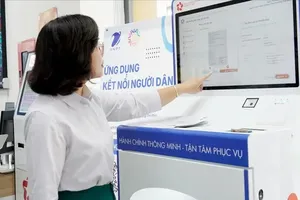
According to Assoc Prof Dr Cao Vu Minh from the University of Economics and Law (Vietnam National University-HCM), utilizing social resources for technical activities to support administrative procedures is an inevitable trend. “I trust this builds a service-oriented, professional administration,” he shared.
Therefore, Article 9 of the Law on Urban Development lays a solid foundation, opening chances for the private sector to participate in public administrative stages spanning construction, land, and social order. When private entities handle professional support tasks, workload pressure on the state apparatus is significantly lightened. An open, flexible procedure system, backed by the private sector, will act as a magnet strongly attracting investment capital.
For Chairman Nguyen Duc Tri of the Tan Hung Ward People’s Committee, decentralization must be clear down to the grassroots level. He’s incredibly thrilled that the NA passed the law, as it’ll help HCMC become more proactive in resolving real-world issues.
Drawing from actual ward-level work, he thinks the clear decentralization rules hold immense value, allowing local authorities to handle matters right on the spot instead of waiting for feedback across multiple tiers. There are instances where the commune level grasps the situation perfectly, but resolving it involves frustratingly multiple sectors.
He highly expects HCMC will meticulously review related regulations so tasks aren’t executed through redundant agencies. When procedures are unequivocally clear, grassroots levels will be more proactive, saving residents from constant waiting. The closer a level is to the people, the more necessary it is to decentralize power to that exact level.