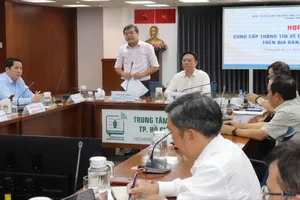
According to the Ministry of Education and Training, 874,811 candidates nationwide registered for university admission in 2026, submitting a total of 7,180,860 applications.
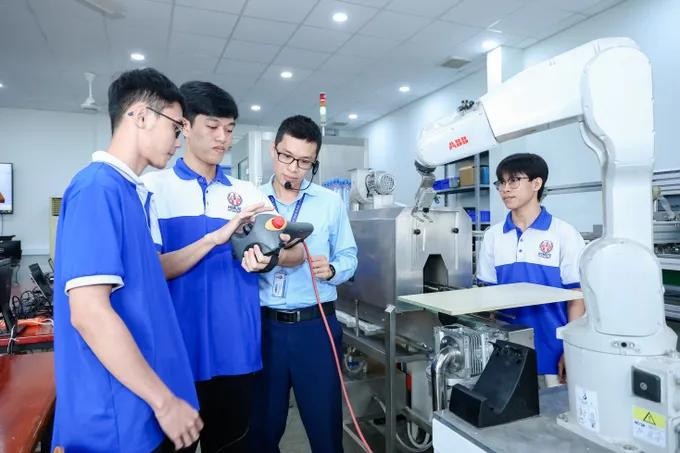
Among them, 467,590 candidates, more than 53 percent of the total, applied to science, technology, engineering, and mathematics (STEM) programs, accounting for 2,368,179 applications, or 32 percent of all preferences. It is the first time in Vietnam's university admissions history that STEM fields have become the most popular choice among applicants.
Breakthrough policies drive stronger interest
According to Associate Professor Bui Hoai Thang, Head of the Academic Affairs Office at Ho Chi Minh City University of Technology under Vietnam National University-Ho Chi Minh City, the 2026 admissions season has been heavily influenced by a series of major government policies, particularly those affecting students' choice of majors.
The Ministry of Education and Training has identified 111 academic programs across 15 groups of fundamental sciences, key engineering disciplines, and strategic technologies eligible for national scholarships under Government Decree No. 179/2026/ND-CP.
Under the decree, undergraduate students receive monthly scholarships ranging from US$141 to US$210, while master's and doctoral students receive between US$210 and US$321 per month. Additional scholarships are also available through talent development programs for STEM engineering and graduate students.
As part of the national human resources development program for high-tech industries during 2025-2035, with a vision to 2045, the ministry has also issued an action plan guiding universities in standardizing, modernizing, and implementing talent programs for engineering, master's, and doctoral education in fundamental sciences, engineering, and strategic technologies.
According to Associate Professor Bui Hoai Thang, these breakthrough policies have encouraged more students to pursue disciplines prioritized by the government to support Vietnam's development in the new era.
Ministry statistics show that 331,693 candidates applied to programs covered by Decree 179, submitting a total of 1,291,839 applications.
The ministry said the sharp increase in STEM applications is an encouraging sign, demonstrating that students are adapting to the country's evolving workforce needs.
Universities expect a boost in talent development
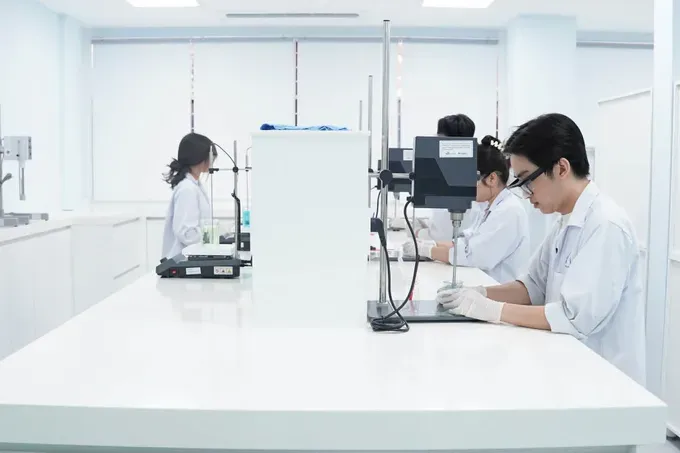
Associate Professor Phan Hong Hai, Principal of Ho Chi Minh City University of Industry, said Decree 179 provides an important legal framework for attracting talented students to key engineering and strategic technology fields.
The university currently offers 16 undergraduate, nine master's, and seven doctoral programs eligible for the scholarship policy. Hai said the institution expects the incentives to attract more outstanding students, strengthening its long-term strategy to improve education quality and scientific research.
Associate Professor Bui Hoai Thang said all 11 faculties at Ho Chi Minh City University of Technology have at least one program eligible under Decree 179, giving students across the university opportunities to study nationally prioritized fields such as semiconductors, computer science, automation, materials science, biology, mechanical engineering, transportation, and construction.
He said building a leading research university requires not only excellent faculty members but also outstanding students engaged in research at every level of higher education.
"Decree 179 creates favorable conditions for developing that talent pool," he said.
He described the policy as more than a scholarship program, calling it an investment in the future of research universities that will accelerate the university's transformation into a leading regional research institution capable of advancing strategic technologies.
Quach Thanh Hai, Vice Principal of the Ho Chi Minh City University of Technology and Engineering, described Decree 179 as a major catalyst for the institution's long-term development strategy.
He said generous government-funded scholarships would help solve recruitment challenges and retain talented students in high-tech disciplines that are difficult to fill but critically important to the country.
Vice Principal Quach Thanh Hai said the new decree will redefine the university’s education and research priorities in four areas. First, admissions will focus on attracting top-performing students rather than boosting enrollment numbers.
Second, the school will restructure nearly 50 engineering programs, 22 master’s programs, and 12 doctoral programs, while expanding talent education and integrated training to address shortages of graduate engineers.
Third, scientific research will be strengthened by building young research teams and increasing international publications. Finally, the university will expand partnerships with businesses and overseas institutions through joint research, equipment sponsorship, and recruitment of international students.