Vietnam is placing a strong emphasis on developing a high-quality workforce in science, technology, engineering and mathematics (STEM) as it seeks to strengthen its competitiveness in emerging fields such as artificial intelligence (AI), semiconductor and quantum technologies.
Shifting from training human resources to national capabilities
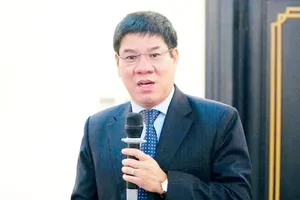
Assoc. Prof. and Dr Phan Thanh Binh, former Chairman of the National Assembly’s Committee for Culture, Education, Youth, Adolescents and Children, said the Fourth Industrial Revolution is being driven by strategic technologies including AI, semiconductors, advanced biotechnology, new materials and energy technologies, quantum technology and next-generation digital technologies.
He noted that these strategic technologies represent an advanced evolution of the four key technological sectors that Vietnam identified more than two decades ago, namely information technology (IT), biotechnology, materials technology, and mechanical engineering and automation.
Today, IT has grown into AI, big data, cloud computing and quantum technology while mechanical engineering – automation has evolved into robotics, smart manufacturing and Industry 4.0 applications. Materials technology has expanded into advanced materials, nanomaterials and materials for new energy applications; and biotechnology has evolved into gene technology, cell technology, synthetic biology and precision biomedicine.
Vietnam has demonstrated a relatively strong capacity to absorb and apply new technologies and is gradually establishing itself as an innovation-driven economy. However, he assessed that significant challenges remain, particularly in mastering core technologies, commercialising research outcomes, strengthening the innovation ecosystem and developing a highly skilled workforce.
To meet the requirements of the new development phase, Vietnam needs to shift its mindset from simply training human resources to building national capabilities, the former official opined.
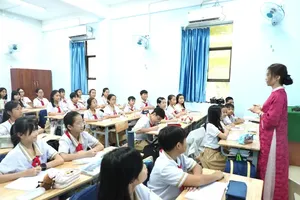
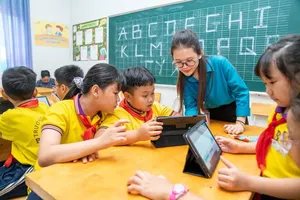
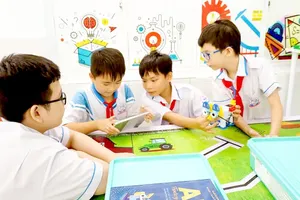
He stressed the importance of promoting STEM education from an early age to cultivate scientific thinking, creativity and problem-solving skills. At the same time, Vietnam should restructure technical, technological and basic science education, with greater emphasis on mathematics, physics, chemistry and computer science – the essentials for AI, semiconductor and quantum technologies.
Beyond education, Binh emphasised the need to develop talent at multiple levels, from technicians and engineers to researchers, technology strategists and managers. He also called for stronger collaboration among government agencies, universities and businesses, alongside more effective mechanisms to attract overseas Vietnamese professionals and international experts.
Vietnam’s challenge is not merely to train more engineers or scientists, but to cultivate a generation capable of mastering, improving and eventually creating core technologies. Such capabilities will be crucial to enhancing the country’s competitiveness and securing its position in the global technology landscape in the years ahead, he emphasised.
Aligning training with industry needs
Universities across Vietnam have already begun adapting their training models to these priorities.
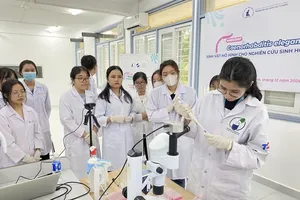
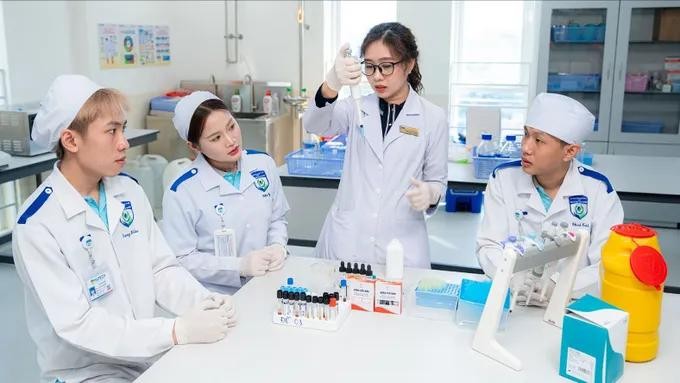
Assoc. Prof. and Dr Tran Le Quan, President of the University of Science under the Vietnam National University, Ho Chi Minh City, said the institution has invested heavily in modern laboratories, research centres and advanced equipment serving semiconductor technology, advanced materials, AI, data science, biotechnology and quantum technology.
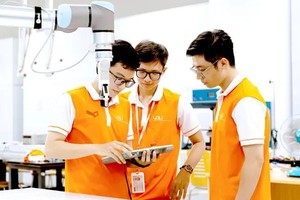
The university has also expanded partnerships with businesses to establish industry-linked laboratories, enabling students to gain hands-on experience with advanced production technologies and real-world industrial challenges, he noted.
Meanwhile, the Ho Chi Minh City University of Technology is strengthening project-based learning, interdisciplinary education and industry internships. Students are encouraged to participate in research projects from an early stage, and also equipped with innovation, entrepreneurship and digital skills as well as foreign-language proficiency.
Training programmes are being updated to meet international standards and better integrate academic knowledge with practical industry needs. The institution continues to invest in laboratories and research platforms, particularly in semiconductors, advanced materials, energy and digital technologies, according to head of its training affairs division Assoc. Prof. and Dr Bui Hoai Thang.