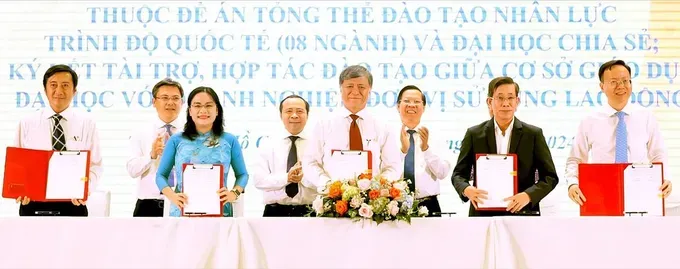
The fields include Information Technology and Communications, Mechanical Engineering and Automation, Artificial Intelligence (AI), Business Administration, Finance and Banking, Healthcare, Tourism, and Urban Management. These programs have been commissioned by the Ho Chi Minh City People's Committee to develop a high-quality workforce for the city during the 2025–2035 period.
According to Professor Ngo Thi Phuong Lan, President of the Ho Chi Minh City University of Social Sciences and Humanities, the university is leading the Urban Management program. The program will be implemented in two phases, each featuring different admission procedures and tuition fee mechanisms.
During the pilot phase, the program will select 20–25 high-performing third-year students from the existing Urban Studies program to pursue the Urban Management specialization. It will then transition to regular undergraduate admissions, with an initial enrollment target of 40–60 students per year, which is expected to increase gradually. With its flexible admission mechanism, the program aims not only to ensure high training quality but also to provide students with access to an internationally benchmarked learning environment.
For the Artificial Intelligence (AI) program, the Ho Chi Minh City University of Science has developed the expected learning outcomes and curriculum framework by drawing on reference programs from leading universities across the region and around the world. The program aims to produce internationally qualified graduates equipped with advanced knowledge and skills in AI-related fields, along with strong English proficiency and other essential competencies required to work effectively in a global professional environment.
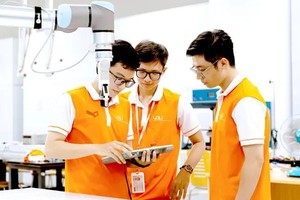
Meanwhile, programs in Finance and Banking, Information Technology and Communications, and Mechanical Engineering and Automation, among others, have been designed with the overarching goal of integrating academic theory with practical application. They also emphasize the development of essential competencies and professional skills to enable graduates to meet international employment standards and transition smoothly into the global labor market.
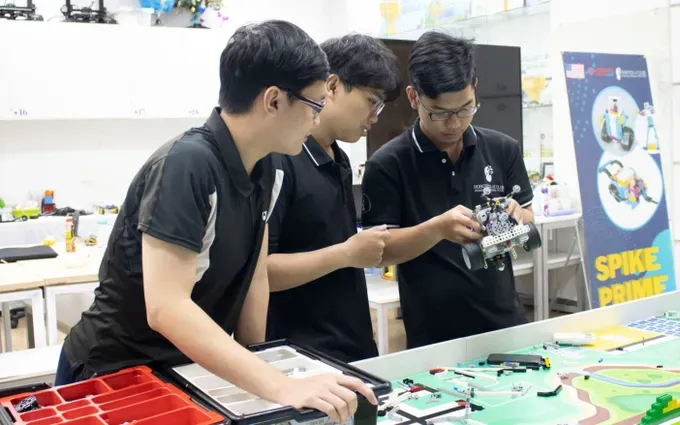
Entrusted by Ho Chi Minh City to develop an internationally benchmarked workforce in Information Technology and Communications, Associate Professor Dr. Tran Thien Phuc, Vice President of the Ho Chi Minh City University of Technology, said that the objective of this commissioned program is for the university to focus on developing a comprehensive training scheme for internationally qualified Information Technology and Communications professionals, with the aim of positioning Ho Chi Minh City as a national and regional hub for Information Technology and Communications education, technology development, and technology transfer.”
Associate Professor Dr. Tran Thien Phuc expressed confidence that the program would deliver tangible benefits to all stakeholders.
Specifically, students will acquire advanced professional competencies, enjoy strong employment prospects, and become highly competitive candidates sought after by leading technology companies in Vietnam and abroad. The program will also provide opportunities for students to develop startup projects in the Information Technology and Communications sector. For Ho Chi Minh City, the initiative is expected to support the city's ambition of becoming a leading center for information technology education, innovation, and technology transfer in Vietnam and Southeast Asia, while enhancing its standing on the global technology map through international partnerships and academic exchange programs.