The draft circular was, according to the Ministry of Education and Training, meticulously constructed to concretize the major provisions outlined in Education Law No.123/2025/QH15, aiming to meet the rigorous demands of systemic innovation directed at comprehensively developing learners’ inherent qualities and core competencies, perfectly aligning with the practical rollout of the 2018 General Education Program.
The draft circular firmly establishes a crystal-clear and transparent boundary between various educational activities inside the school grounds, proactively avoiding situations where guidelines are misunderstood or deliberately misinterpreted in on-the-ground reality.
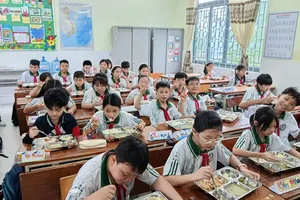
The stipulations summarized in the draft circular aren’t merely rules concerning extra teaching and tutoring. Rather, they squarely focus on supplementary educational activities tailored to learners’ specific demands, including crucial life skills, STEM/STEAM education, robotics, artificial intelligence (AI), alongside the strong development of foreign language proficiency, computer science, fine arts, and physical education.
The brand-new regulations explicitly state that supplementary educational activities can’t replace or overlap with the mandatory curriculum, and they strictly forbid utilizing this designated time to teach core subjects in advance, conduct grueling review sessions, prep for high-stakes exams, or cram academic knowledge from the general education program into students’ heads.
Supplementary educational activities must be organized outside of standard official school hours, relying on the genuine demands, personal interests, innate aptitudes, career orientations, and entirely voluntary participation of the students. The final results gleaned from participating in these activities won’t be used to evaluate or rank academic performance, nor will they factor into emulation movements or serve as a basis for applying any form of disciplinary action against the students.
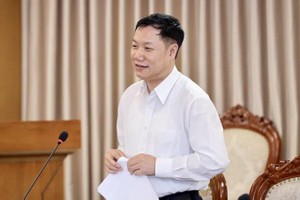
For Principal Cao Duc Khoa of Nguyen Du Junior High School in HCMC, the proposed regulations couldn’t have come at a better time. “The draft circular’s inception perfectly aligns with the brand-new educational context, where students’ learning demands are exceptionally diverse,” he explained.
As the 2026-2027 academic year rapidly approaches, the new regulation aims to rigorously standardize management work, creating a comprehensive legal corridor to help educational institutions get the ball rolling. Across HCMC, while the draft circular’s contents aren’t groundbreaking compared to existing extracurricular guiding documents, they’ll undeniably help schools and parents grasp a vastly more accurate understanding regarding the management of these programs. Consequently, collaborative coordination between schools and families will naturally foster profound consensus and higher efficacy.
Offering a different perspective, Principal Ho Tuan Anh of Quynh Phuong Junior High School in Quynh Mai Ward of Nghe An Province noted that the circular proactively prevents rampant extra tutoring. Nevertheless, uneven physical facility conditions across schools might lead to agonizing disparities concerning students’ inherent rights.
For educator Pham Van Dinh from Lung Chinh Semi-Boarding Junior High School for Ethnic Minorities in Tuyen Quang Province, setting strict boundaries is absolutely vital. He suggested that authorities need to explicitly stipulate the maximum total duration, like periods per week or hours per day, for demand-based educational activities.
Currently, the draft circular merely states programs “mustn’t cause overload for learners” but lacks concrete quantitative figures. Enforcing a strict time ceiling would brilliantly safeguard the psychological and physiological well-being of students, inherently guaranteeing they actually have time for genuine rest and recuperation.
Regarding human resource standards, it’s highly necessary to provide clearer regulations concerning the pedagogical proficiency requirements for external personnel, which includes artisans, athletes, and specialized experts in information technology. While the draft stipulates they must possess “appropriate profiles, diplomas, and professional certificates,” authorities need to append a mandatory requirement for short-term pedagogical training certificates to ensure the educational environment’s safety and guarantee the sheer quality of knowledge transmission.
On the other hand, there needs to be a robust support mechanism for severely disadvantaged students, alongside supplementary regulations granting fee exemptions and drastic reductions for youngsters from poor households and policy beneficiaries when they participate in these demand-based programs.
Furthermore, several school principals are harboring deep-seated concerns regarding their newfound authority to appraise teaching materials and learning resources utilized in these supplementary activities. Under the new framework, principals are handed this appraisal authority, a task previously managed directly by the Department of Education and Training.
This means they now shoulder grueling responsibilities like establishing dedicated resource appraisal councils, strictly supervising affiliated personnel originating outside the school, and taking comprehensive accountability for academic quality and overarching safety. This monumental shift could inevitably spawn agonizing difficulties and massive managerial pressure for schools, particularly if learning materials dive entirely too deep into complex technical expertise or cutting-edge, newly emerged technologies.
Therefore, it’s absolutely crucial to regulate a universally shared portfolio of learning materials that have flawlessly passed rigorous appraisal at the Ministry or Department levels, providing schools with a reliable reference catalog.
Most notably, to completely prevent the underlying risk of schools deviating from regulations, the circular must explicitly outline the intricate management responsibilities of the ministry, department, local grassroots authorities, and educational institutions themselves, ultimately safeguarding the students’ right to autonomous participation.