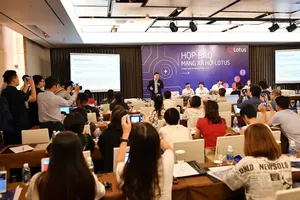
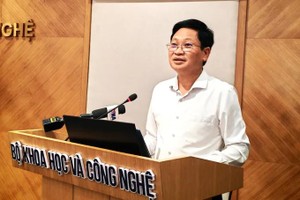
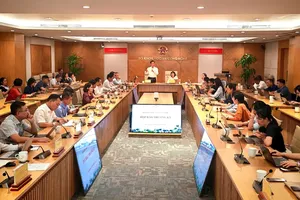
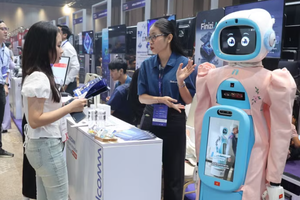
The Authority of Information Technology Industry under the Ministry of Science and Technology, in coordination with the Ho Chi Minh City Department of Science and Technology and Sun Edu International Education Joint Stock Company, held the event.
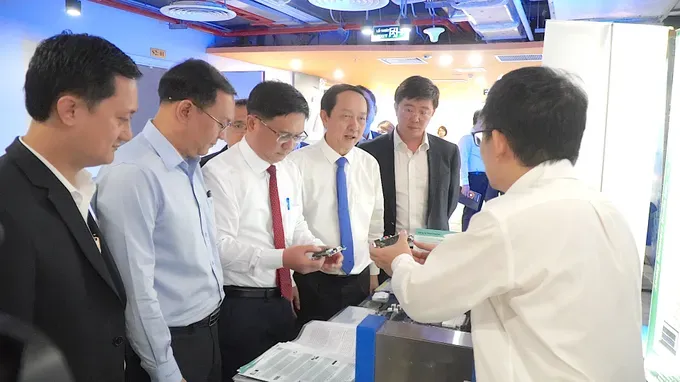
Addressing the workshop, Deputy Head of the Central Commission for Propaganda and Mass Mobilization Huynh Thanh Dat emphasized Ho Chi Minh City’s role as a “locomotive of innovation”. He noted that the city has become a convergence point for three key pillars, including policy, technology and human resources, vividly reflecting the spirit of Politburo Resolution No. 57-NQ/TW dated December 22, 2024, on breakthroughs in science, technology, innovation and national digital transformation.
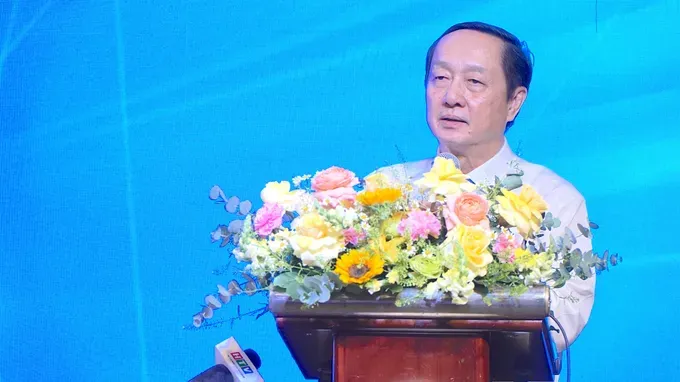
Ho Chi Minh City has actively advanced a “triple-helix” cooperation model, between the State, academia and business in training high-quality human resources. Practical experience in the city has pointed to clear and feasible solutions that can be implemented immediately, including workforce training, technology infrastructure development, the establishment of shared-use centers, and the promotion of public–private partnerships in semiconductors, artificial intelligence and high-tech industries.

In his remarks at the workshop, Deputy Minister of Science and Technology Bui Hoang Phuong said with its strong competitive advantage in science, technology and engineering human resources, the Government has issued a program to develop semiconductor talent and is reviewing plans to double the target number of semiconductor engineers from 50,000 to 100,000. However, the proportion of engineering graduates working in the semiconductor industry currently stands at only 0.4 percent, nearly eight times lower than in developed countries.
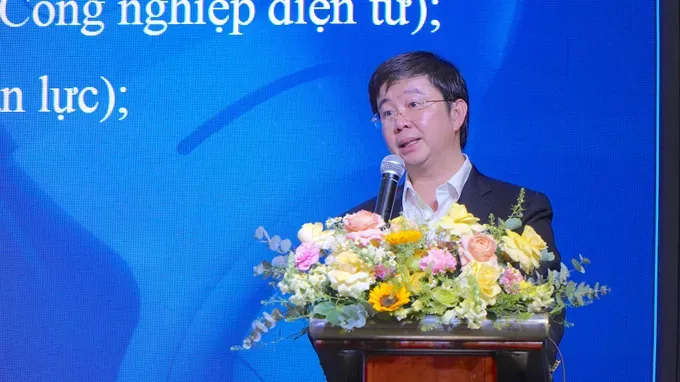
To address these challenges, the Government has rolled out a series of measures, including the establishment of a National Steering Committee for Semiconductor Industry Development; the first-ever inclusion of semiconductor-related legal provisions in the Law on Digital Technology Industry; and the introduction of special incentive mechanisms such as corporate income tax exemptions and reductions, preferential land rental policies, and exemptions from work permits for high-quality talent.
In addition, the Ministry of Science and Technology is urgently working to establish a national center for supporting semiconductor chip prototyping under the MPW (Multi-Project Wafer) model, aiming to immediately resolve bottlenecks related to cost and production time for chip prototyping by individuals and startup enterprises. The long-term goal is to move toward building a domestic chip manufacturing plant to achieve greater self-reliance in strategic semiconductor technologies.
According to Mr. Nguyen Manh Cuong, Vice Chairman of the Ho Chi Minh City People’s Committee, the city is entering a “golden time” to attract investment into the city’s semiconductor industry. The city’s new spatial development planning is creating a unique industrial ecosystem that brings together all the key advantages for semiconductor development, including R&D capabilities and human resources, as well as manufacturing and logistics centers linked to the Cai Mep–Thi Vai port complex and direct connectivity to Long Thanh International Airport.
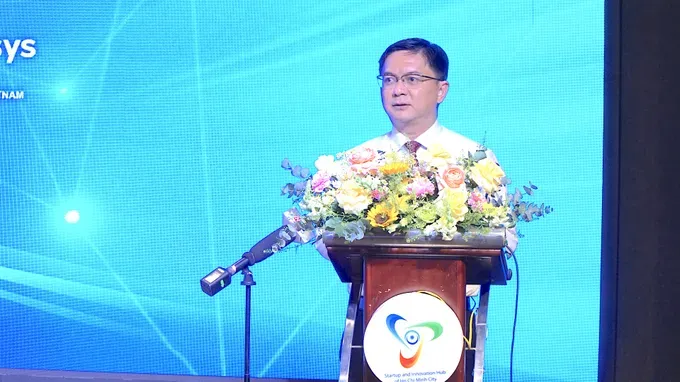
Vice Chairman Nguyen Manh Cuong stressed that the city is committed to creating the most favorable conditions for investors, leveraging special mechanisms granted by the National Assembly to establish functional zones within free trade areas. Ho Chi Minh City also pledged to be the largest customer for semiconductor chip products, while ensuring a stable energy supply, world-class digital connectivity infrastructure, and improved quality of life to attract global experts.
At the workshop, a representative of the Ho Chi Minh City Department of Science and Technology introduced the “HCM+” development model, positioning the city as a new growth pole for the semiconductor industry. The model is developed on four pillars, comprising human resources, ecosystem development, core technology research and development, and institutional frameworks. Based on this foundation, breakthrough policy groups were proposed, with an emphasis on direct financial support for infrastructure and manufacturing, the development of IC design, supporting industries and the training and attraction of high-quality talent.
One issue of particular concern among participants was the gap between training programs and the actual needs of businesses.
From a technological perspective, experts from Ansys–Synopsys and Dell Technologies analyzed emerging challenges facing the semiconductor industry amid the rapid development of AI, 5G, 6G and high-performance computing. Trends such as advanced 2.5D/3D IC packaging, multiphysics co-design and the application of AI across the entire semiconductor value chain were identified as inevitable directions to enhance performance, optimize costs, and shorten time-to-market.