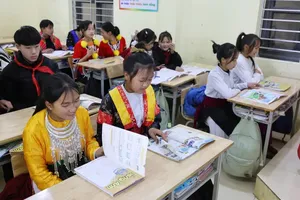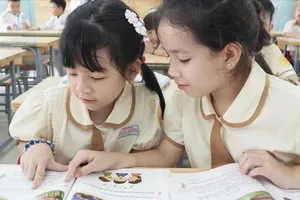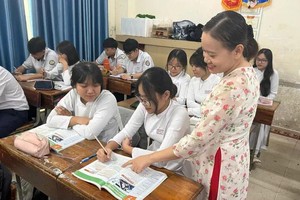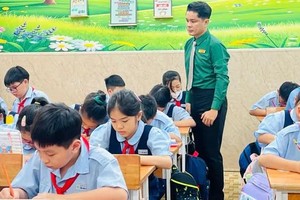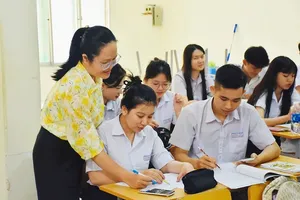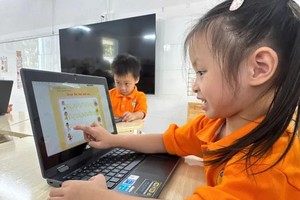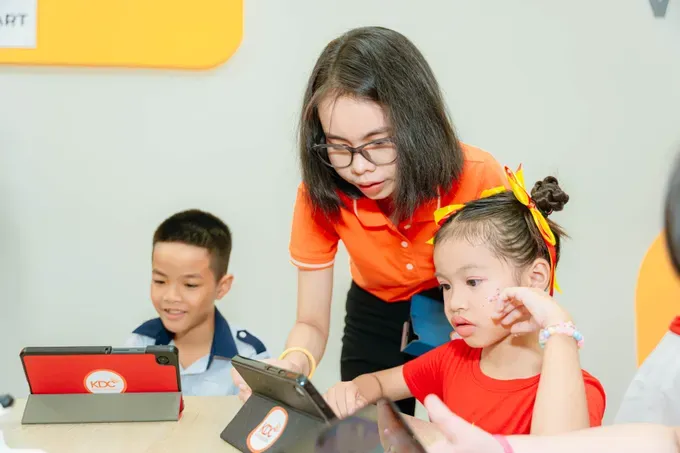
For N.H., a parent with a child attending a primary school in Vung Tau Ward of HCMC, the current scheduling policy has created a practical dilemma. “At my child’s school, joint program subjects are interspersed within the main curriculum schedule,” he explained. “It’s difficult for parents not to register their children, primarily because if we don’t, there’s no one to pick them up mid-day. Many parents simply sign up just to have someone watch their kids.”
N.H. suggested that schools should schedule these joint subjects in a separate afternoon session. This way, students without a need for the extra classes could head home after completing the main curriculum. For students needing to stay on campus due to family logistics, he proposed that schools arrange alternative activities overseen by teachers to ensure student safety.
D.D., another parent residing in Vung Tau Ward, shared that her family opted out of the joint subjects this school year. Despite the homeroom teacher contacting her multiple times to lobby for enrollment, she steadfastly refused.
“My child is currently studying an advanced curriculum at an external language center, whereas the in-school joint English program only covers basic English for beginners,” D.D. argued. “Similarly, the main curriculum already includes Informatics; teachers could integrate Digital Technology content into that subject rather than splitting it into two separate chargeable subjects.”
Field reports indicate a wide variance in tuition fees for these joint programs across different schools. Specifically, fees for life skills, STEM, and artistic aptitude programs reportedly do not exceed VND150,000 (US$5.91) per student per month.
However, joint programs regarding foreign languages and informatics are rolled out under various monikers, such as English with Foreigners, English with Digital Software, Integrated English for Math and Science, International Informatics, and Digital Citizenship.
The tuition for these programs ranges from several hundred thousand dong to nearly VND3 million ($118.11) per student per month. Although technically labeled “voluntary,” the fact that these classes are slotted into the regular timetable compels parents to register and pay significant costs even if they’d prefer not to.
Principal Truong Van Ho of Vo Truong Toan Junior High School in Tam Thang Ward of HCMC noted that his school hasn’t deployed these joint subjects yet. He explained that finding a partner who meets the dual criteria of reasonable tuition and a complete legal dossier isn’t a walk in the park.
“For instance, some partners don’t have full-time teaching staff and have to ask for our school’s teachers to be in charge of lessons,” the Principal said. “Others use teaching materials that haven’t been approved for circulation in schools, or their financial capacity is unclear.”
Another principal at a junior high school in Rach Dua Ward of HCMC highlighted the logistical reality. If the “voluntary registration” spirit is strictly followed, a segment of students will face empty periods. In these cases, the school must “corral” the students into a room for management and arrange alternative activities to ensure their safety. This inadvertently makes the non-participating students feel discriminated against and complicates staff assignment.
However, according to this principal, the most pressing worry is the quality of instruction in these joint subjects. There are currently no regulations for periodic testing or assessment, nor are there specific standards for output benchmarks or the qualifications of the visiting instructors.
Furthermore, according to parent feedback, the “non-mandatory” nature of these contracts means schools frequently change partners. This leads to fluctuations in the curriculum, duration, and tuition fees. There are even reported cases where different grade levels within the same school follow entirely different programs.
Agreeing with that, teacher Ta Le Nhat Vy from Nguyen Hue Primary School, sited in Ben Thanh Ward of HCMC, voiced that at many centers deploying joint programs, the teaching staff changes constantly.
To have enough teachers, it appears many centers recruit individuals without pedagogical degrees, or those with degrees who quit teaching long ago to work in other industries. Many subjects lack sufficient teaching aids. Many lesson plans are drafted incorrectly but are still taught because, at the end of the day, there is no one to censor or appraise them.
Principal of a junior high school in Gia Dinh Ward of HCMC commented that in the initial phase of deploying STEM education subjects, the school can coordinate with external units for support regarding expertise and equipment. However, in the long run, the school’s own teaching staff must be the core force in implementing teaching activities.
Beyond organizing these as supplementary subjects, teachers can integrate knowledge of digital citizenship, life skills, and STEM education into other subjects. Along with that, organizing clubs and academic playgrounds within the school will give students opportunities to develop qualities and competencies, meeting comprehensive education goals without depending on joint ventures with external businesses.
Clarifying regulations for second-shift activities
According to the regulations of Dispatch No.4567/BGDDT-GDPT (dated August 5, 2025) of the Ministry of Education and Training guiding the organization of teaching 2 sessions/day for general education in the 2025-2026 academic year, “second-shift” teaching activities include scientific research, career guidance, experiential activities, and STEM/STEAM education.
However, Dispatch No.1888/SGDDT-KHTC (dated August 29, 2025) of the HCMC Department of Education and Training regarding the collection and use of tuition and other fees in public education institutions in HCMC states that foreign language, life skills, and STEM education activities belong to the “school program,” not the second-shift education program.
Therefore, authorities must clearly determine which content within the 2 sessions/day schedule belongs to the core school program and which is implemented on a voluntary basis. This clarity is essential to close loopholes that allow schools to “maximize revenue” from parents under the guise of education.