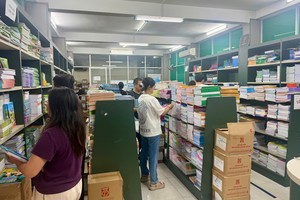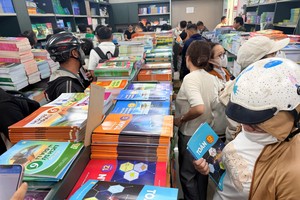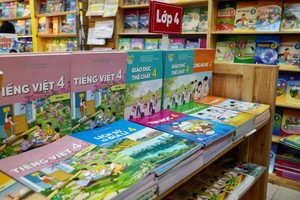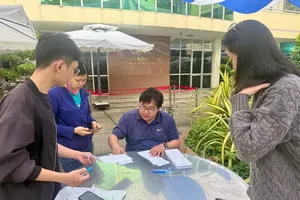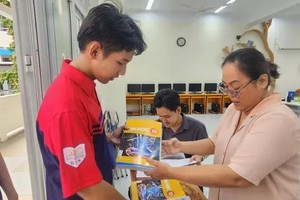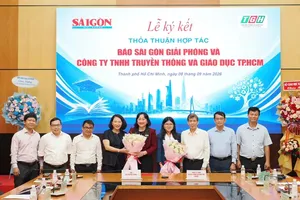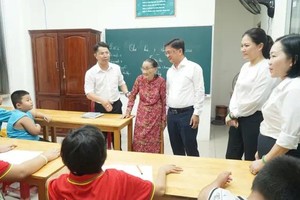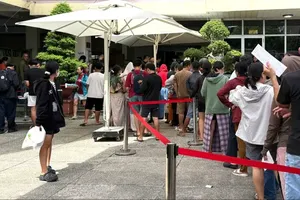
On the evening of December 5, a significant cultural event took place as nearly 200 parents and students gathered at FAHASA Tan Dinh Bookstore in Ho Chi Minh City.
The occasion was a thought-provoking talk titled "From reading to writing - Language development journey," an initiative jointly organized by Phuong Nam Education Investment and Development Joint Stock Company and the FAHASA Bookstore System. The purpose of the gathering was to address the crucial topic of fostering a reading culture in the modern era and guiding parents on how to effectively support their children’s literacy development.
The discourse began by acknowledging the contemporary challenges to reading culture. Pham Vinh Thai, Editor-in-Chief of Vietnam Education Publishing House, noted that in the context of rapid digital transformation, traditional reading faces numerous distractions. However, he stressed the enduring and essential role of books, stating that in addition to knowledge learned in school, students need "book friends" to fulfill three critical functions: to enrich their souls, to expand their critical thinking capabilities, and to develop their language proficiency comprehensively.
Offering a deeper, more emotional perspective, poet Nguyen Quang Thieu, Chairman of the Vietnam Writers Association, shared profound insights into the fundamental act of reading:
"Reading is not just about receiving information, but also about building an inner world. A child who does not read will lack imagination, empathy, and have difficulty expressing his or her own emotions."
He firmly affirmed that, particularly in a world saturated with digital content, books act as the essential bridge, helping children maintain a deep, necessary connection with language and the broader social community.

A recurring theme among the experts was the necessity of parental involvement in the process of building a lasting reading habit. They agreed that to instill this habit, parents must actively accompany their children in practicing reading habits at home.
This accompaniment, however, was defined as going beyond mere physical presence. It involves more than simply sitting next to a child and turning a few pages of a book; it requires a genuine sharing of emotions, ideas, and experiences prompted by the text. When adults and children read together and share these moments, children are shown that reading is not a burdensome academic task, but a natural and highly valued joy to share within the family unit.
Addressing one of the most pressing questions from the audience how to help children develop a habit of reading naturally in an environment dominated by electronic devices, poet Nguyen Quang Thieu offered clear, actionable advice centered on leading by example: He argued that the use of technology by parents directly influences a child’s behavior. "In a family, if parents use mobile phones regularly, children will look for the phone."

Conversely, if parents themselves demonstrate a consistent and enjoyable habit of reading, children will be proactively inspired to seek out books to read. He also highlighted the psychological characteristics of children, noting that they are only truly interested in reading when their natural curiosity is genuinely aroused and they are given the autonomy to choose their own reading material.
Therefore, he advised parents to be patient, act as companions on the reading journey, and, crucially, to understand that forcing a child to read can be counterproductive to the goal of building a genuine, lifelong love of books. The emphasis was placed firmly on patient guidance and environmental influence over mandatory instruction.