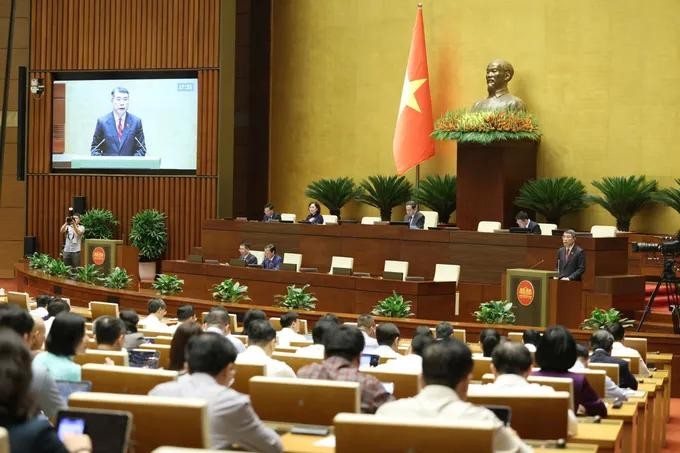
Prime Minister Le Minh Hung delivered a comprehensive report to the National Assembly on the afternoon of April 9, evaluating the supplementary results of the 2025 socio-economic development plan and the state budget, while outlining the implementation strategy for the early months of 2026.
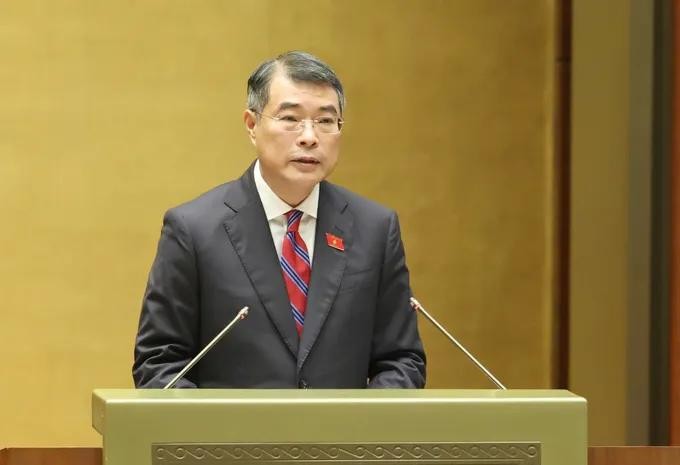
The report confirmed that based on updated data from the fourth quarter of 2025, the socio-economic assessments presented at the 10th session of the 15th National Assembly remain fundamentally accurate, with all 15 key indicators met or exceeded, and several performing better than anticipated.
Regarding the first months of 2026, the Prime Minister noted that the global situation remains complex and unpredictable, leading to supply chain disruptions and sharp increases in oil, gas, and transportation costs. These factors have negatively impacted international trade and investment, directly challenging the nation’s socio-economic development tasks.
Despite these headwinds, the macroeconomy has remained stable, inflation is under control, and major balances are secured. The first-quarter GDP is estimated to have grown by 7.83 percent, with four localities achieving growth rates over 10 percent, while the average Consumer Price Index rose by 3.51 percent. Nevertheless, the Prime Minister acknowledged that achieving the double-digit growth target presents a significant challenge.
For the upcoming period, the Prime Minister emphasized the necessity of unifying thought, perception, and action to pursue high-growth objectives while maintaining macroeconomic stability and mobilizing all resources effectively. This strategy requires close monitoring of international and domestic trends, proactive forecasting, and flexible policy responses. Tight coordination between fiscal and monetary policies is essential to prevent macroeconomic instability or economic crises under any circumstances.
Furthermore, ensuring national energy security remains a top priority, focusing on the long-term supply of crude oil and gas and the strict conservation of electricity to avoid shortages.
The Government has identified the efficient mobilization of resources as a critical solution for reaching double-digit growth. This includes a target to increase state budget revenue by 10 percent, reduce total spending by over 10 percent, and cut recurrent expenditures by an additional 5 percent. Efforts will also focus on resolving long-standing obstacles for delayed projects and leveraging growth drivers from investment, consumption, and exports.
In April, ministries, agencies and localities are expected to complete guidelines for capital allocation based on output results and socio-economic accounting. The Government aims to increase development investment to 40 percent of total state budget expenditures and reduce the number of investment projects using central and local budgets by at least 30 percent for the 2026–2030 period compared to the previous stage.
The Prime Minister also highlighted solutions for restructuring economic sectors, developing new economic models, and creating breakthroughs in science, technology, innovation, and digital transformation. This includes streamlining administrative procedures and improving the business environment to develop a modern, synchronous infrastructure system. Within 2026, the Government plans to finish reviewing and implementing the national planning system to support high-growth requirements.
Additionally, the second quarter will see the completion of land-use planning adjustments, followed by the revision of the Land Law and its guiding documents.
Furthermore, infrastructure for renewable and new energy will be expanded to meet high-growth demands through the effective implementation of the Adjusted Power Development Plan VIII. During the second quarter, the Government intends to establish specialized mechanisms to attract investment into key energy projects, offshore wind, and Liquefied Natural Gas while addressing existing issues in renewable energy projects.
By the third quarter, a national energy storage strategy will be finalized, alongside development schemes for infrastructure supporting atomic energy applications, the aerospace industry, the low-altitude economy, and the quantum industry.