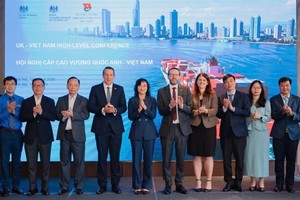
Amid continued volatility in the global economy and a restructuring phase in international capital flows, Vietnam is emerging as an increasingly attractive destination for global investment, particularly in the real estate sector. This was a key takeaway from the forum Dong von ngoai do bo – Co hoi bat dong san Vietnam (Foreign capital inflow - Opportunities for Vietnam's real estate market) held by CafeF on April 6 in Ho Chi Minh City.
During the event, specialists observed that the change in global capital movements is increasingly evident, as international investors favor markets that offer robust growth alongside macroeconomic stability. In this regard, the Southeast Asian nation is distinguished by its consistent economic growth, managed inflation, stable currency rates, and a strong political and social framework. The country's economy has exceeded US$500 billion in scale, while foreign direct investment (FDI) has consistently increased and remained elevated in recent years.
International organizations now view Vietnam not merely as a “manufacturing hub,” but as a “comprehensive investment destination” oriented toward long-term value creation. According to Director Dinh The Hien of the Institute of Informatics and Applied Economics Research, amid global supply chain restructuring, Vietnam has maintained stable production, exports, and domestic consumption, reinforcing investor confidence. However, further improvements in the investment environment and human capital quality are needed to sustain momentum.
Within this broader trend, real estate has emerged as a major recipient of foreign capital. FDI in the sector accounts for a significant share, particularly in major urban centers such as Ho Chi Minh City. Troy Griffiths, Deputy Managing Director of Savills Vietnam, highlighted that political stability, combined with large-scale infrastructure investments—from expressways and metro systems to airports and ring roads—is providing a strong foundation for market growth.
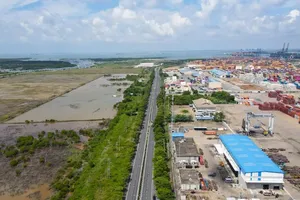
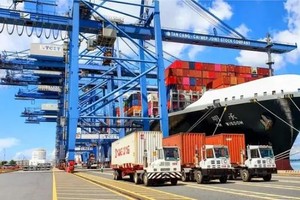
In practice, capital flows tend to “follow infrastructure,” driving the development of new urban areas, industrial zones, and logistics hubs. Well-planned locations with strong connectivity are becoming priority destinations for foreign investors.
Notably, foreign investors’ preferences are shifting from short-term speculation to assets with intrinsic value, long-term income potential, and stable cash flow. According to CEO Ngo Thanh Huan of FIDT, Vietnam’s real estate market is entering a new phase that requires more selective investment strategies, with greater emphasis on risk management and transparency.
International investors are increasingly segmented into different groups with distinct strategies, but all share higher expectations regarding legal clarity, efficiency, and sustainability. Market data also indicates rising interest from foreign buyers, particularly in mid- to high-end apartments in major cities, as well as in satellite areas benefiting from infrastructure development.
At the same time, ESG (environmental, social, and governance) factors are becoming a critical standard in investment decisions. Projects that meet these criteria hold a clear competitive advantage in terms of operational performance and value appreciation. The market is also seeing expansion into emerging segments such as logistics, data centers, healthcare real estate, and senior housing, in line with sustainable development trends and economic restructuring.
Despite significant opportunities, experts cautioned that attracting and effectively utilizing foreign capital still presents challenges. Regulatory bottlenecks, investment procedures, land use rights, and profit repatriation mechanisms require further reform to enhance transparency and market appeal.
Moreover, deeper participation by international investors is intensifying competition. This is prompting domestic enterprises and investors to shift from speculative approaches to long-term investment strategies focused on real value and product quality.
In this context, large-scale, master-planned “all-in-one” urban developments integrated with comprehensive ecosystems are emerging as a dominant trend. These projects not only meet residential demand but also generate economic value by attracting population inflows, capital, and service activities.