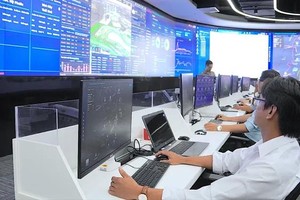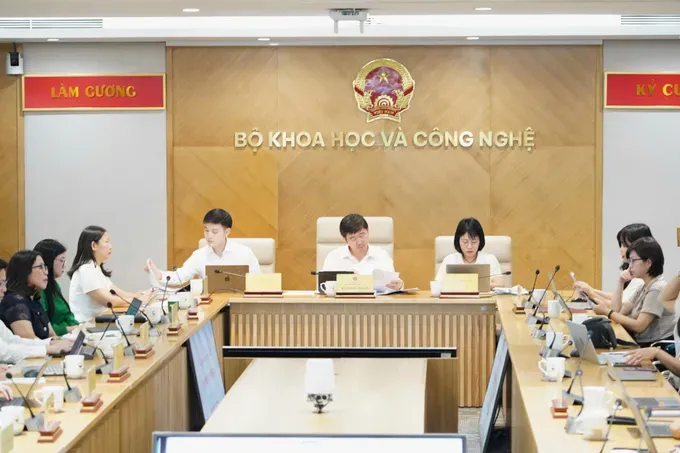
At a press briefing on April 1, the Ministry of Science and Technology is coordinating with relevant ministries and sectors to review and adjust the list of strategic technologies and strategic technology products which was first issued in 2025 with a focus on those that deliver tangible economic impact.
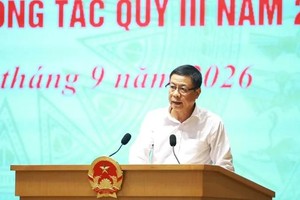
At a regular press briefing on the morning of April 1, Deputy Director Hoang Anh Tu of the Department of Science, Engineering and Technology under the Ministry, said the adjustments aim to meet new requirements, particularly the goal of accelerating breakthrough economic growth.
According to the Deputy Director, in June 2025, the Prime Minister issued Decision No. 1131 on the list of strategic technology groups and products. However, current conditions require further refinement to better align with growth objectives.
The Ministry of Science and Technology has been assigned to take the lead, in coordination with the Ministry of Industry and Trade, the Ministry of Agriculture and Environment, the Ministry of Health, and defense and security agencies, to develop a new approach for identifying technology products that generate clear economic value.
To ensure the selection of technologies that Vietnam both needs and can realistically develop, the Ministry has proposed a five-step process that begins with identifying key challenges and defining impact indicators. This framework continues by determining the most value-creating stages in the value chain and isolating strategic technology products. Finally, the process identifies strategic technologies in line with criteria set out in the 2025 Law on High Technology.
In this framework, “key challenges” refer to urgent national, local, or sectoral issues that, when resolved, produce measurable impacts on growth. Based on an analysis of value-creating stages, authorities will identify core and priority technologies for investment.

Deputy DirectorHoang Anh Tu emphasized that Vietnamese enterprises must clearly determine which stages they can handle independently and which require time for research, adaptation, and eventual mastery. In practice, full technological mastery cannot be achieved immediately, especially as foreign firms often retain proprietary know-how within global value chains.
The Ministry has outlined a core strategy that classifies technologies by domestic capability and potential impact, prioritizing solutions that can be quickly mastered to deliver immediate socio-economic benefits alongside foundational technologies requiring long-term investment. This approach emphasizes innovation, technical refinement, and process optimization as essential drivers to enhance existing productivity. By streamlining these technological assets, officials aim to create the high-value momentum necessary to achieve the city’s goal of double-digit growth.
Strategic technology development plan (towards 2030)
| No. |
Problem Statement |
Impact Indicators (By 2030) |
Value Chain Stage |
Technology Products |
Core Technologies |
| 1 |
Increasing the localization rate of footwear raw materials and accessories to reduce import dependency. |
• Increase localization rate to 65–70 percent. • Reduce imports of key raw material groups by 20–30 percent. • Shorten lead times for input supply by 30–40 percent. |
Input raw materials: tanned leather, technical synthetic leather, technical fabrics, shoe soles, adhesives, accessories, and finishing chemicals. |
High-performance synthetic/genuine leather production systems; high-tech footwear production lines; specialized adhesive, additive, and coating systems. |
Design and manufacturing of high-performance polymer/composite materials; tanning and clean leather finishing technology; solvent-free/low-emission chemical development; and high-tech material design. |
| 2 |
Increasing deep processing rates to reduce raw/preliminary exports and boost domestic added value. |
• Significantly increase the proportion of deep-processed products in key industries. • Reduce the share of raw and preliminary exports. • Enhance domestic added value and the average selling price of processed goods. |
Preliminary processing – Deep processing – Product finishing. |
Production lines and systems for deep processing of agricultural, aquatic, food, wood, rubber, and medicinal products; systems for extraction, concentration, refining, fermentation, and deep drying. |
Deep processing technologies; precision enzyme-biotechnology-fermentation; extraction, concentration, freeze-drying, and refining; and data-driven formula and production segment optimization. |