Maintaining security and public order must be regarded as a particularly important, urgent, regular and long-term political task, placed under the Party’s direct, absolute and comprehensive leadership and the State’s management and administration, Prime Minister Pham Minh Chinh said.
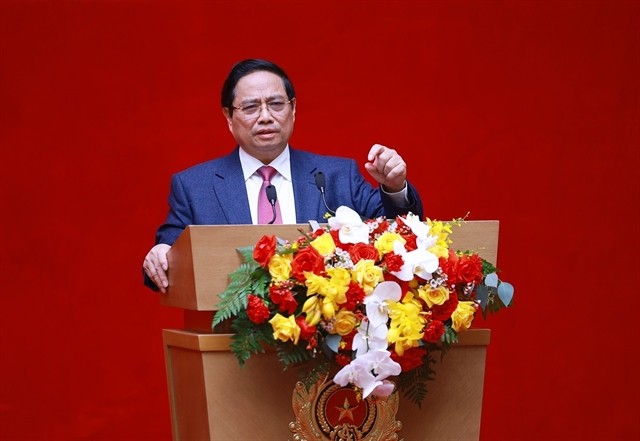
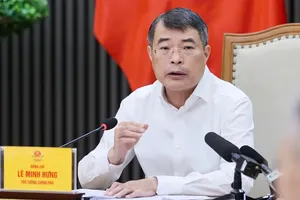
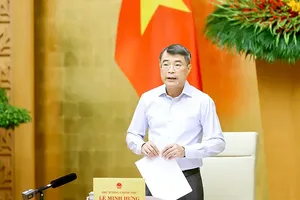
Prime Minister Pham Minh Chinh addresses at the conference 'Ensuring security and public order in support of socio-economic development in the Mekong Delta' on Monday morning in Hanoi.—VNA/VNS Photo
The Prime Minister was speaking while chairing a conference on 'Ensuring security and public order in support of socio-economic development in the Mekong Delta' in Hanoi on Monday.
He said that maintaining security and public order must be regarded as an important, urgent, regular and long-term political task, placed under the Party’s direct, absolute and comprehensive leadership and the State’s management and administration.
The effort requires mobilisation of the combined strength of the entire political system from the central to local levels, as well as the participation of the whole population, with heads of local Party committees and administrations bearing primary and comprehensive responsibility, he said.
He told ministries, sectors and localities to focus on five key, core and overarching task groups.
Central to this is ensuring the close integration of socio-economic development with defence and security, implemented from the grassroots level under the 'four-on-the-spot' approach, with unified direction from local leaders and close coordination among functional agencies.
He underscored the need to effectively implement ethnic and religious policies; roll out economic, cultural and social development programs; create jobs; address disputes; and promote self-reliance and resilience among communities in socio-economic development.
At the same time, authorities should preserve and promote the positive values of traditional culture and beliefs, improve material and spiritual living standards for ethnic groups, strengthen the foundations of social prevention, and eliminate conditions that hostile and reactionary forces could exploit.
In the immediate term, during 2026, he assigned the ministries, sectors and localities to complete seven major priority task groups focused on economic, cultural, educational and healthcare development in the delta.
He also added that any difficulties or bottlenecks arising during implementation should be promptly reported to him for direction and resolution.
Strategic role
Also at the conference, PM Pham Minh Chinh said that the Mekong Delta and its surrounding areas hold particularly important strategic significance in political, socio-economic, defence, security, ecological and foreign affairs terms.
The region serves as the country’s southern 'gateway' and is closely linked to the cause of national construction and the protection of territorial sovereignty.
He said the Party and State have consistently attached great importance to the region’s development, issuing numerous resolutions, directives and conclusions, notably Politburo Resolution No. 13-NQ/TW dated April 2, 2022, on socio-economic development and defence and security in the Mekong Delta to 2030, with a vision to 2045; and Government Resolution No. 78/NQ-CP dated June 18, 2022, promulgating an action programme to implement Resolution No. 13.
Despite notable achievements, he also pointed out remaining shortcomings in the implementation of ethnic and religious policies and in socio-economic development in the delta.
Public order and security in areas with large Khmer ethnic populations still face potentially complex challenges. Implementation of Party guidelines and State policies across economic, cultural and social fields remains limited in some respects, with certain targets unmet. The effectiveness and efficiency of the political system, particularly at the grassroots level, fall short of requirements in some localities.
Living conditions for Khmer communities in some areas remain difficult, while coordination in ensuring security and public order has at times lacked cohesion and synchronisation, leaving several latent risks unresolved.
No room for complacency
Addressing the conference, Minister of Public Security Luong Tam Quang said that the Party guidelines and State policies and laws on ensuring security, preventing and combating activities aimed at undermining public order by hostile and reactionary forces and criminal groups in the delta have been effectively implemented over the past time.
The efforts have helped create a safe and secure environment conducive to socio-economic development and to improving the overall quality of life for people in the region and neighbouring areas.
However, with no room for complacency, the Government convened the conference to unify awareness and set out objectives, tasks and solutions to continue effectively implementing the Party’s viewpoints, guidelines and the State’s policies and laws on ensuring security and public order in support of rapid and sustainable development in the Mekong Delta and surrounding areas.
The focus would be on 'breakthrough' tasks and solutions to remove difficulties and bottlenecks, mobilise all resources for socio-economic development, and ensure security and public order, preventing unexpected incidents and the emergence of security “hotspots”.
At the conference, participants reviewed the overall situation of security and public order in the delta and adjacent areas, assessed achievements and shortcomings, analysed causes and potential risks, and proposed solutions to safeguard security and public order in support of the region’s socio-economic development in the period ahead.