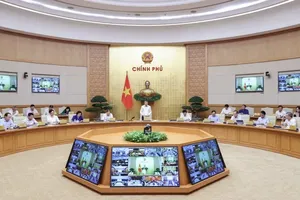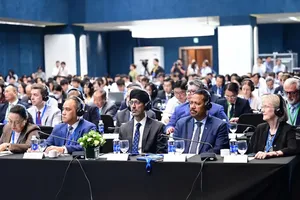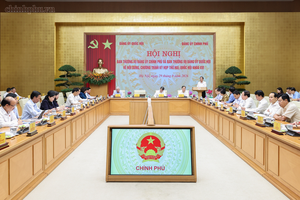
On June 16, the Department of Innovation, Green Transformation, and Industrial Promotion under the Ministry of Industry and Trade hosted a forum titled "Energy Efficiency Requires the Cooperation of the Entire Society."
During the forum, delegates noted that while the risk of widespread power failure is currently contained, the national grid is expected to operate under intense pressure throughout the remainder of 2026. This is driven by surging electricity demand combined with limited new power sources.
Nguyen Anh Tuan, Standing Vice Chairman and Secretary General of the Vietnam Energy Association, stated that to meet the target of over 10 percent economic growth, Vietnam’s energy demand may rise by approximately 12 percent. However, few new power sources are slated to begin operations before the end of 2026, with the most significant being Quang Trach 1 Thermal Power Plant, which provides roughly 1,400MW. Calculations suggest the national system requires an additional 6,000–7,000MW annually to maintain safe operational reserves.
Pham Viet Thach, Deputy Head of the Environment and Sustainable Development Department at Vietnam Electricity (EVN), added that prolonged heatwaves have caused electricity demand to spike. During a heatwave in late May, peak load on the national grid reached 57,189MW—approximately 5 percent higher than the 2025 peak.
With load demands peaking, every kilowatt-hour (kWh) saved reduces the pressure to invest in new power plants and enhances grid stability. Hoang Viet Dung, Deputy Head of the Energy Efficiency and Green Transformation Division, noted that many countries now view energy saving as the "first source of energy," as the cheapest energy is the energy that does not need to be produced.
Dang Hai Dung, Deputy Director of the Department of Innovation, Green Transformation, and Industrial Promotion, emphasized that small, individual actions such as turning off devices when not in use, setting air conditioners to reasonable temperatures, and optimizing production processes are vital to national energy security and sustainable development. Experts at the forum reinforced that energy efficiency is no longer just a technical solution, but a core pillar of national security.
EVN representatives highlighted that the country currently has over 3,000 key energy-consuming facilities. By intensifying energy audits, adopting new technologies, and optimizing operations, these enterprises have the potential to significantly alleviate pressure on the national grid.