After severe bleaching in late 2024 caused by extreme weather, coral reefs in Con Dao National Park are gradually recovering, raising hopes for the return of the marine ecosystem.
Joy beneath the blue waters
Widespread coral bleaching occurred in the waters around Con Dao in 2024 as sea temperatures rose sharply. Surveys at the time found that coral mortality in shallow waters reached 80-90 percent in several areas, including Dam Tre, Hon Tai and Bai Cat Lon.
Coral bleaching had previously occurred in 1998, 2010, 2016 and 2019, but the 2024 event was considered the most severe due to prolonged and unusually hot weather.
In response, with support from experts, Con Dao National Park implemented a range of measures to restore the coral reefs.
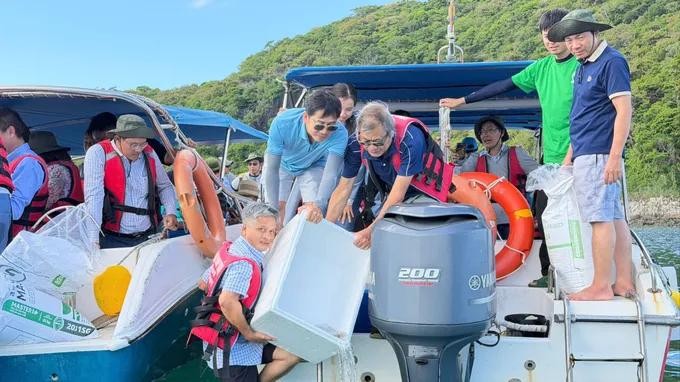
During a survey in late June 2026 in the Bay Canh area of Con Dao Special Zone, Ho Chi Minh City, experts recorded encouraging signs of recovery in Con Dao's marine ecosystem.
After diving to inspect the coral reefs, Vo Si Tuan, former director of the Institute of Oceanography, could not hide his excitement.
"The coral has recovered," he said.
According to the survey team, many coral colonies that had been bleached during the 2024 marine heat event have gradually regained their natural colors.
Among the old coral reefs, young corals were seen attaching themselves to rocky surfaces and growing, accompanied by the return of various reef fish species, including damselfish, butterflyfish and parrotfish.
Conservation efforts are persistent
Nguyen Van Tra, head of the Conservation and International Cooperation Division of Con Dao National Park, said the park maintains regular monitoring at 21 fixed sites to assess the health of coral reefs, seagrass beds and mangrove forests, as well as monitor and evaluate seawater quality.
Con Dao National Park has also established a coral nursery to ensure a supply of coral stock for restoration efforts.
During 2026-2030, the park aims to restore 5-10 hectares of degraded coral reefs with little potential for natural regeneration, using state funding and socialized resources. It also plans to plant about 10 hectares of mangrove forests to help prevent coastal erosion, control and eradicate harmful organisms, and release additional aquatic species.
Meanwhile, forest rangers have stepped up patrols and enforcement to prevent illegal exploitation in conservation areas.
A representative of the Mobile Ranger Station said rangers regularly patrol the sea because just a few hours of illegal exploitation can destroy coral reefs that take decades to form.
During 2026-2030, Con Dao National Park will continue operating seven conservation stations on key islands, including Bay Canh, Hon Cau, Hon Ba, Hon Tai and Dam Tre, to monitor, detect and handle activities that threaten the marine ecosystem.
Authorities are expected to conduct about 2,700 sea and coastal patrols to strengthen protection of more than 14,000 hectares of water in the conservation area.
Alongside authorities, the local community also plays an important role in protecting the marine ecosystem.
Nguyen Hai Duong, a fisherman in Con Dao, said residents' awareness has changed significantly compared with the past. People understand that protecting coral also means protecting fishery resources and their long-term livelihoods.
When they spot unfamiliar boats entering conservation areas, many fishermen now proactively report them to authorities.
Hundreds of thousands of tourists visit Con Dao each year for sightseeing and vacations. Many take diving tours to explore the underwater ecosystem.
The growing number of visitors also means that every boat anchor, every step on the seabed or any careless action can leave a mark on fragile coral reefs.
Therefore, instead of imposing bans, Con Dao has opted for stricter management. Activities in conservation areas are regularly monitored, diving and boat anchoring are controlled, and authorities and other forces maintain regular sea patrols.
Vice Chairman Nguyen Van Manh of the Con Dao Special Zone People's Committee stated that to safeguard coral reef recovery, local authorities are collaborating with Con Dao National Park to step up public awareness campaigns and require fishermen and tour operators to strictly adhere to conservation regulations. The Special Zone is also mobilizing social resources and connecting with businesses such as Saigontourist to secure funding for joint projects with the National Park aimed at planting and restoring damaged coral reefs.