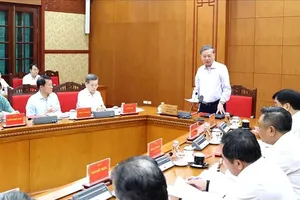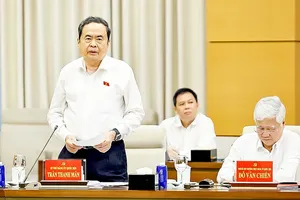
Continuing the agenda of the first extraordinary session, National Assembly (NA) deputies listened to presentations of submissions and reports on several draft laws, including:
- Law amending and supplementing a number of articles of the Law on Publishing;
- Revised Law on Grassroots Mediation;
- Law amending and supplementing several articles of the Law on Vietnamese Laborers Working Abroad under Contracts.
Following these presentations, lawmakers engaged in group discussions to scrutinize these legislative proposals.
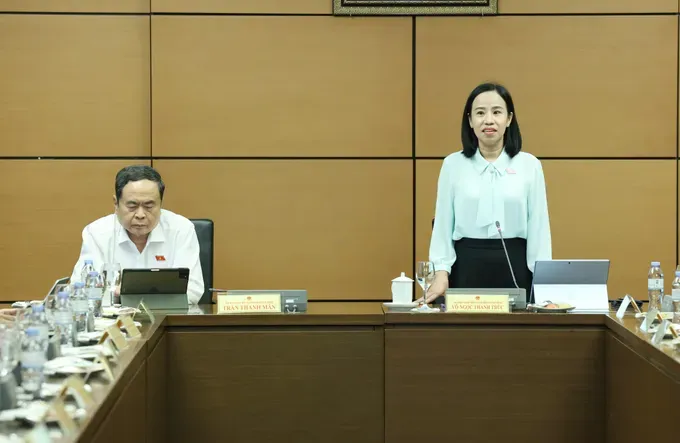
Presenting the draft amendments to the Law on Publishing on behalf of the Government, Minister of Culture, Sports and Tourism Lam Thi Phuong Thanh explicitly stated that the bill centers on upgrading management methods, executing a decisive shift from preliminary screening to data-driven, digital oversight and post-inspection while abolishing or simplifying numerous administrative procedures.
Adopting electronic management methods enables state agencies to react more swiftly to toxic and malicious content, mitigating the delays commonly associated with manual processing.
Additionally, the bill incorporates provisions outlining the responsibilities of digital platforms and intermediary distribution service providers. Accordingly, these platforms, including cross-border entities, must establish coordinated mechanisms to remove or block access to infringing publications.
Representing the verifying agency, Chairman Nguyen Dac Vinh of the Committee for Culture and Social Affairs advised conducting a thorough review so that this bill doesn’t overlap with existing cybersecurity and online information management laws, particularly regarding its feasibility when enforced against cross-border distribution platforms.
He stressed that the Government needs to specify post-inspection mechanisms for online distribution and e-commerce platforms to combat pirated books, utilizing technology to monitor and detect violations automatically and continuously across digital environments.
Contributing feedback to refine the draft amendments to the Law on Publishing, many deputies expressed acute interest in digital transformation, artificial intelligence (AI), as well as safeguarding ideological and cultural security within the publishing sector.
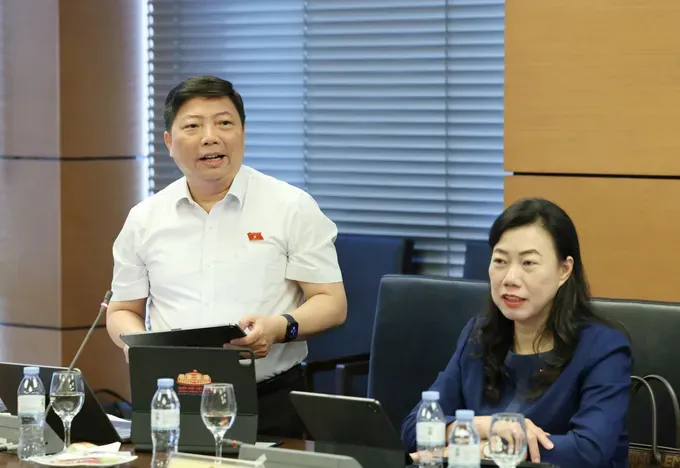
NA Deputy Nguyen Vu Trung, representing HCMC, proposed incorporating provisions into the draft that identify AI-generated content to protect copyright and prevent forgery. He also voiced the stance that foreign platforms, such as Amazon and Apple, must maintain a designated local point of contact when distributing products in Vietnam to uphold copyright protection and handle illegal content upon requests from functional authorities.
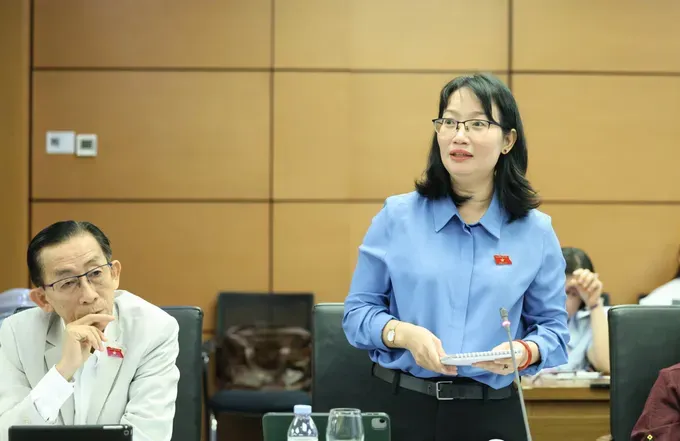
Sharing this viewpoint, Deputy Tran Thi Dieu Thuy from HCMC observed that the existing legislation merely governs traditional publishing channels. In this digital era, it’s essential to embed provisions regarding AI applications and the use of digital data for AI training directly into the bill.
She recommended introducing a legal definition and management mechanism for “book streets” into the draft Law to establish a legal corridor for localities to utilize public spaces for reading culture promotion.
To encourage nationwide reading engagement, she proposed four tangible solutions:
- adding a dedicated clause on nurturing a reading culture among youth,
- instituting "reading periods" in schools,
- designing local reading spaces with participation from publishing houses,
- investing in modern library institutions from preschools to universities, with a focus on remote areas.
Meanwhile, Deputy Nguyen Vu Trung advocated encouraging the publishing industry, the copyright market, and technology enterprises that provide digital publishing solutions.
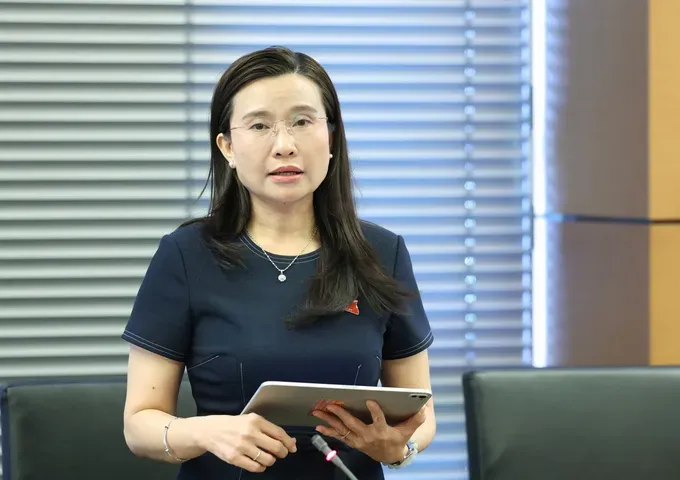
Endorsing the post-inspection mechanism while emphasizing the imperative of protecting ideological security, Deputy Nguyen Pham Duy Trang from HCMC urged the drafting agency to research and formulate provisions aimed at elevating the professional qualifications and ethical capacity of editors and publishing executives.
For Deputy Nguyen Van Huy, representing Hung Yen Province, legislative clarity is paramount. He suggested that the drafting committee further investigate and add a prohibition against publishing, printing, or distributing materials that incite hatred, discrimination, bias, or division among regions, localities, and residential communities. Current regulations primarily govern acts of “undermining national unity” in a generalized sense, which doesn’t fully encompass newly emerging forms of social division.
Adding these explicit prohibitions will establish a robust legal basis to prevent and promptly sanction acts that exploit publishing activities to sow prejudice and incite social discord, thereby safeguarding a healthy publishing environment and preserving national unity.
Decisive shift toward post-inspection
On the afternoon of August 5, NA deputies continued their plenary hall debates on draft bills amending Article 6 and Appendix IV of the Law on Investment regarding conditional business lines, alongside amendments to several articles of the Law on Customs.
Deputy Phan Thi My Dung representing Tay Ninh Province proposed further study to remove farm livestock business operations as well as plant and animal crop breeding activities from the conditional business sector list.
Deputy Trinh Xuan An from Dong Nai Province recommended retaining industry groups related to aircraft and unmanned aerial vehicles within the conditional business list. He also suggested looking into adding diamond trading to the list of conditional business sectors, similar to gold trading, excluding fine jewelry. Drawing from several high-profile incidents that have surfaced recently, diamond trading operations also require regulation under stringent conditions.
For Deputy Le Hoang Anh representing Gia Lai Province, the legislative amendment requires a balanced approach. He argued that at the end of the day, trimming business conditions and transitioning from preliminary screening to post-inspection must follow principled frameworks, rather than being slashed mechanically simply to meet administrative quotas.