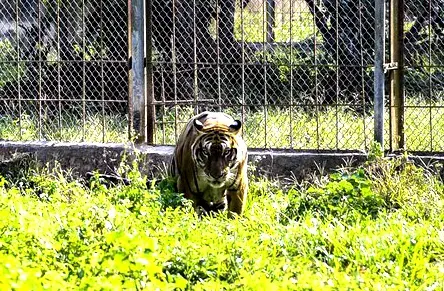
According to the announcement, the convention contains provisions restricting the trade and commercial activities involving several species present in Vietnam, including tigers and other members of the cat family (Felidae spp.), which are listed in Appendix I of the Convention on International Trade in Endangered Species of Wild Fauna and Flora (CITES).
The publication was made pursuant to Point a, Clause 1, Article 23 of Circular No. 85/2025/TT-BNNMT dated December 31, 2025, issued by the Minister of Agriculture and Environment, which regulates the management of endangered, precious, and rare species, common forest animals, and the implementation of CITES.
Under Decision 14.69, as amended at the CITES Conference of the Parties, countries maintaining large-scale commercial tiger breeding facilities are required to implement measures to restrict the number of captive tigers, ensuring that such populations are maintained only at levels supportive of conservation efforts for tigers in the wild. The decision also clearly stipulates that tigers must not be bred for trade in their parts and derivatives.
In addition, Section 41.2 of the summary of the 77th meeting of the CITES Standing Committee outlines several recommendations for Thailand and Vietnam. These include conducting reviews and genetic identification to determine the origin of captive tiger individuals and clarify whether they belong to the Indochinese tiger subspecies (Panthera tigris corbetti).
In addition, tiger breeding facilities are encouraged to participate in breeding and conservation programs aimed at supporting the conservation of the species in the wild while preventing the laundering of wild-caught tigers through captive facilities.
Other recommended measures include limiting tiger breeding in captivity and restricting the import of tigers strictly for conservation purposes and monitoring captive individuals through microchipping, stripe-pattern identification, and DNA analysis where appropriate. The recommendations also call for refraining from establishing new tiger breeding facilities unless there are well-founded justifications and for restricting the authorization of possession of tiger parts and derivatives to prevent illegal trade.