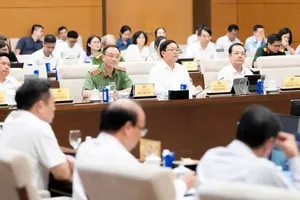
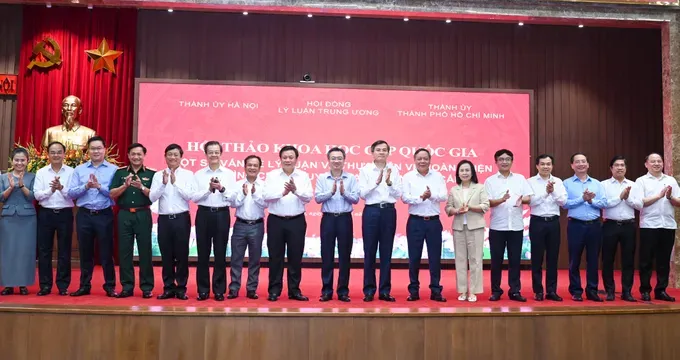
At a national scientific conference on improving the two-tier local government model on the morning of June 17, representatives from ministries, agencies and localities shared initial results and proposed measures to enhance the effectiveness of the new governance structure.

Presenting at the event, Mr. Vu Chien Thang, Deputy Minister of Internal Affairs, said that the most noticeable change since the model's implementation has been the significant reduction in administrative processing times for citizens and businesses.
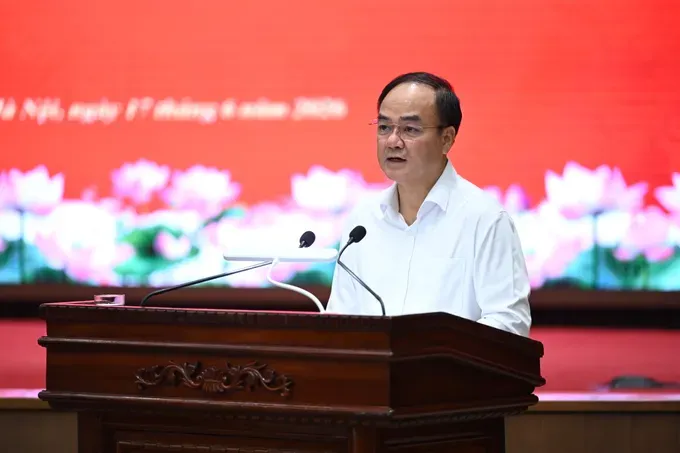
The removal of the district tier has helped simplify administrative structures, clarify responsibilities and enhance the effectiveness of government services, said Mr. Vu Chien Thang
Under the new model, provincial authorities focus on strategic tasks such as planning, development coordination, resource allocation, inspection and supervision, while commune-level governments serve as the frontline in delivering public services, implementing policies and addressing local issues.
According to Mr. Vu Chien Thang, the two-tier local government model is designed not only to streamline administrative structures but also to modernize local governance and improve its effectiveness.
He said local governance is increasingly centered on serving citizens rather than administrative control. With 3,189 Public Administrative Service Centers operating at the commune level in 33 localities, access to essential public services has improved significantly. The average PAR Index reached 89.96 percent in 2025, and citizen satisfaction topped 83 percent.
Despite these achievements, challenges remain in implementing the new model. A total of 2,541 responsibilities have been reassigned, including 1,164 tasks previously handled at the district level that are now under the authority of commune governments.
According to him, the biggest challenge is ensuring that newly delegated responsibilities are matched with adequate resources. Some commune-level administrative offices have faced temporary overloads as the transfer of duties has outpaced organizational and staffing adjustments. Gaps in digital infrastructure and data-sharing capabilities also remain, despite the nationwide rollout of the National Public Service Portal.
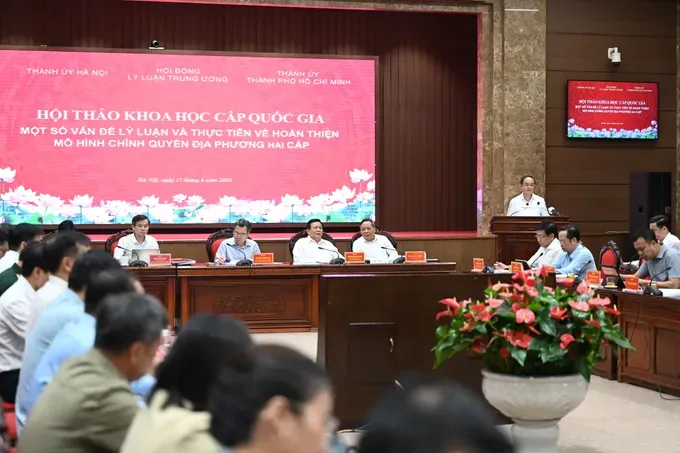
To address these bottlenecks, the Deputy Minister called for legal reforms aligned with the new governance model, particularly in areas such as public finance, planning and land management. He stressed that decentralization should be accompanied by genuine decision-making authority, clearer accountability and the gradual elimination of bureaucratic "ask-and-give" mechanisms.
He also emphasized the need for continued administrative reform, restructuring of the civil service workforce and accelerated digital transformation, including the digitization of records and the development of integrated, shared data systems between central and local authorities.
Speaking at the conference, Mr. Pham Thanh Kien, Head of the Organization Commission of the Ho Chi Minh City Party Committee, said that following recent administrative mergers, Ho Chi Minh City has become a megacity with nearly 14 million residents, an area exceeding 6,772 square kilometers and 168 commune-level administrative units.

He noted that both provincial- and commune-level governments have experienced a significant increase in workload under the two-tier model, making decentralization and delegation essential to creating a governance approach in which local authorities are empowered to make decisions, implement policies and take responsibility for outcomes.
According to the Head of the Organization Commission of the Ho Chi Minh City Party Committee, decentralization is crucial to the effective operation of Ho Chi Minh City's governance structure, which consists of four pillars, including the Party Committee, People's Council, People's Committee, the Vietnam Fatherland Front and socio-political organizations across two administrative levels.
The city currently handles more than 20 percent of all administrative procedures nationwide despite accounting for around 10 percent of the country's population. Nevertheless, it maintains an on-time processing rate of over 99.5 percent, an online application rate exceeding 88 percent and a citizen and business satisfaction rate above 96 percent. All official documents exchanged within the administrative system are processed electronically.
However, he acknowledged ongoing challenges, including inadequate resources to support delegated responsibilities, regulatory inconsistencies and gaps in digital infrastructure. To enhance the effectiveness of decentralization, Ho Chi Minh City proposed a more unified institutional framework, greater alignment between delegated powers and resources, stronger digital infrastructure and clear metrics for evaluating implementation outcomes.