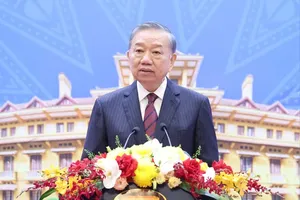
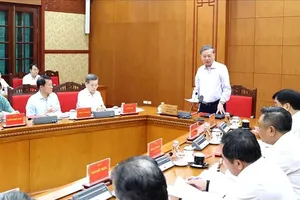
At the 33rd Diplomatic Conference yesterday afternoon in Hanoi, the Ministry of Foreign Affairs convened a session focused on enhancing the leadership, management, and effectiveness of Vietnam’s overseas missions. Foreign Minister Le Hoai Trung attended and delivered key directives.
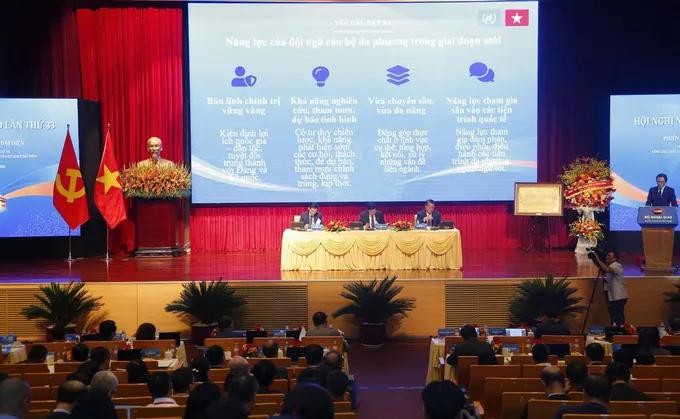
Deputy Foreign Minister Nguyen Manh Cuong emphasized that the rapidly changing global environment — marked by strategic competition among major powers, supply chain restructuring, digital and green transitions, and non-traditional security challenges which requires Vietnam’s missions to shift from reactive advice to strategic forecasting. He urged each mission to serve as a “strategic sensor” for the nation, identifying trends, opportunities, and risks early to safeguard national interests.
The Deputy Minister stressed that reforming the system of overseas missions is not only about improving management efficiency but also about strengthening Vietnam’s foreign policy capacity. Missions must act as reliable “outposts” of the Party and State, providing strategic counsel, connecting resources, protecting national interests, and supporting citizens and businesses in global integration.
Deputy Defense Minister Nguyen Truong Thang called for stronger coordination between missions and defense forces, focusing on strategic research and forecasting, economic and science-technology diplomacy, external communications, and effective implementation of existing cooperation mechanisms.
From a security perspective, Deputy Minister of Public Security Pham The Tung proposed two key measures: enhancing interagency coordination in international security engagement, and improving collaboration between overseas missions and police forces to address security gaps, enforce discipline, and strengthen national security protection.
Vietnam’s Ambassador to China, Pham Thanh Binh, recommended shifting advisory methods toward policy forecasting and creation, adopting interdisciplinary research approaches tied to development needs, and building mechanisms for data sharing and advisory networks. On economic diplomacy, he urged proactive engagement with investment and supply chain shifts, supporting businesses through dialogue and early-warning systems, and establishing interagency coordination for project implementation.
Other ambassadors and representatives also highlighted the need to build a team of economic diplomats with interdisciplinary thinking and practical skills, while leveraging the expertise of overseas Vietnamese entrepreneurs, specialists, and intellectuals to contribute to national development.
In his directive speech, Foreign Minister Le Hoai Trung underscored the vital role of the overseas missions, calling them the backbone of the country’s diplomacy and decisive in implementing the Party and State’s foreign policy as Vietnam enters a new stage of development. He noted that as Vietnam’s position and capabilities grow, the expanding network of missions reflects the country’s evolving foreign relations and increasing contributions to development and international integration.
Minister Le Hoai Trung outlined three new requirements for foreign affairs: ensuring diplomacy matches the country’s historical, cultural, and rising global stature; engaging more actively and responsibly in addressing international issues; and moving beyond participation in cooperation mechanisms to shaping rules, initiatives, and regional and global structures.
He stressed that diplomacy must go beyond traditional tasks to directly serve Vietnam’s new development model, with economic diplomacy playing a particularly crucial role.