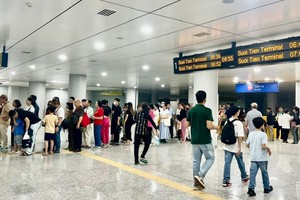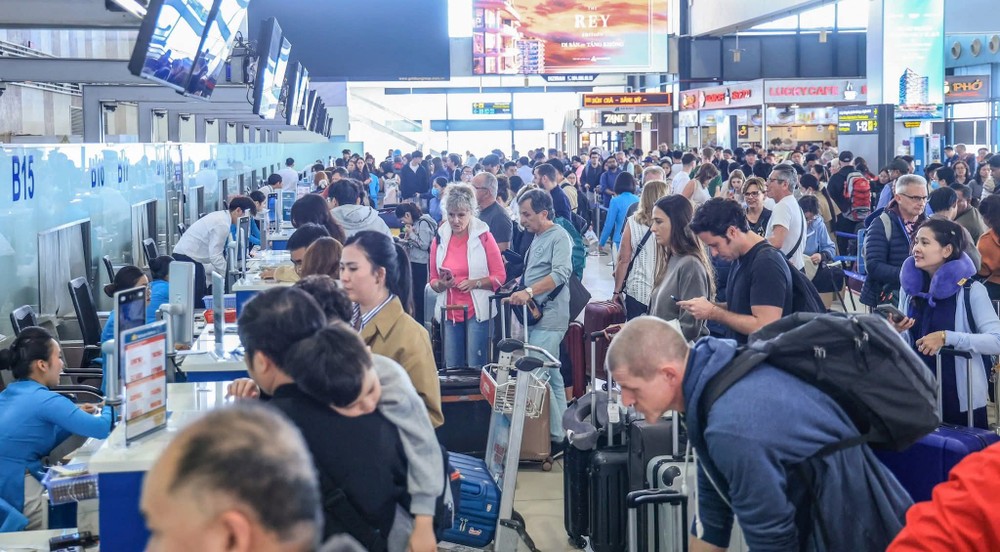
Of the total, domestic services accounted for 374 flights carrying over 57,000 passengers, while international operations reached 327 flights with 44,389 passengers.
To accommodate the sharp surge in demand, Noi Bai International Airport has optimized the use of all 98 existing check-in counters and mobilized additional backup counters in Terminals A, B, and E during peak hours.
The airport has also rolled out a synchronized suite of modern processing systems, including self-service check-in kiosks, automated baggage drop facilities, automated security gates, and smart screening equipment. Nevertheless, congestion and bottlenecks were reported at certain times of the day.
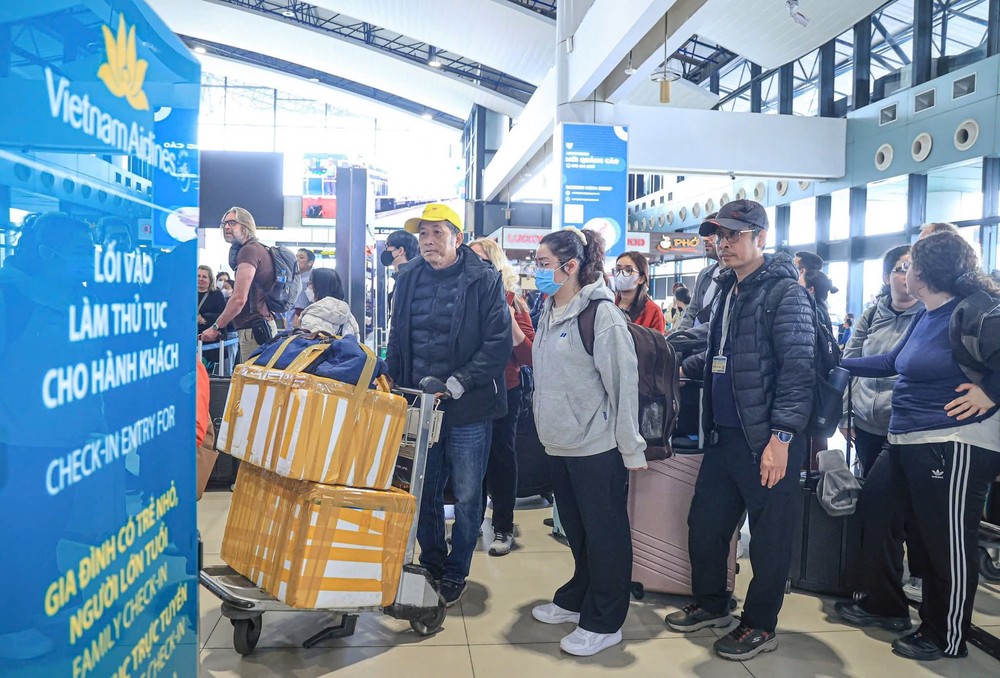
On the same day, numerous passengers reported flight delays ranging from one to three hours beyond scheduled departure times. Although airlines issued advance notifications, many travelers still faced difficulties with onward transportation. Some passengers who had booked flights departing before 10 p.m. ultimately flew after midnight, incurring additional costs for late-night transport from the airport to the city center. Several carriers have also warned that delays may persist in the coming days.
According to the Civil Aviation Authority of Vietnam, from now until February 28, the Northern and North Central Coast regions will enter a period of characteristic weather marked by dense fog, drizzle, and reduced visibility—particularly in the early morning and late evening. Airports such as Noi Bai (Hanoi), Cat Bi (Hai Phong), Tho Xuan (Thanh Hoa), Vinh (Nghe An), Dong Hoi (Quang Tri), and Phu Bai (Hue City) frequently record significantly diminished visibility during this period.
These conditions may disrupt takeoffs and landings, potentially leading to congestion at airports during peak travel days. Airlines are closely monitoring weather developments and preparing flexible operational plans to minimize the impact on passengers.