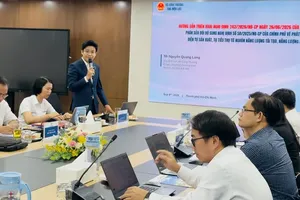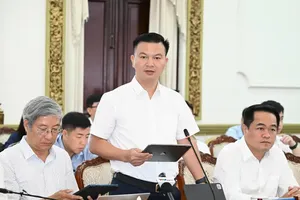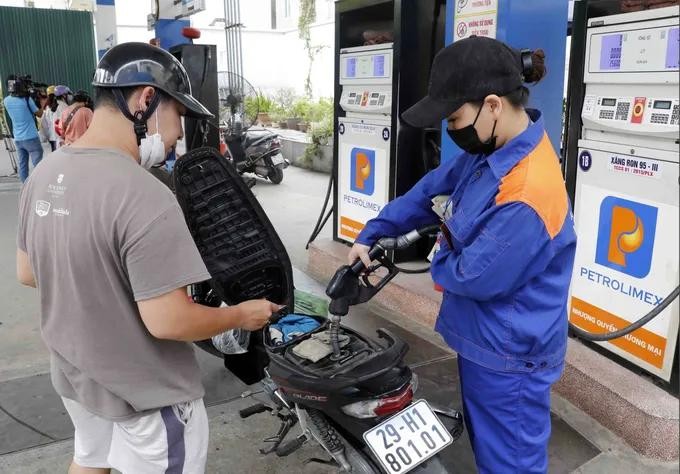
At a press briefing organized by the Central Propaganda and Mass Mobilization Commission this morning, Deputy Minister of Industry and Trade Nguyen Sinh Nhat Tan stated that the Ministry of Industry and Trade and the Ministry of Finance are developing plans to stabilize fuel prices, including reducing environmental protection tax and tapping the Fuel Price Stabilization Fund.
According to Deputy Minister Nguyen Sinh Nhat Tan, the military conflict between the US and Iran is escalating seriously. The entire world, especially the Asian region and Southeast Asia, including Vietnam, is predicted to be heavily impacted due to its significant dependence on imported energy from the Middle East.
The Deputy Minister of Industry and Trade stated that in Vietnam, total domestic fuel consumption in 2025 is expected to reach approximately 28.6 million cubic meters per ton. Despite having two refineries, Nghi Son and Binh Son, the country remains significantly dependent on imports. The risk of localized fuel shortages in some areas is entirely possible.
In recent days, the Ministry of Industry and Trade has developed plans and strategies to control the situation. Currently, the Ministry of Industry and Trade and the Ministry of Finance are developing and submitting to the Prime Minister price stabilization plans, including the use of the Fuel Price Stabilization Fund. The Ministry is also actively coordinating with other ministries and agencies and reporting to the Government to implement other measures, such as proposing a reduction in environmental protection tax and other effective measures to ensure the supply of fuel for the economy.
A representative of the Ministry of Industry and Trade has proposed several measures to help reduce fuel consumption. These include limiting the use of personal vehicles when unnecessary and prioritizing carpooling, public transport, or bicycles for short trips.
Regular vehicle maintenance can also significantly improve fuel efficiency. Checking tire pressure, changing engine oil on schedule, and turning off the engine during prolonged stops can help reduce fuel consumption by around 10–15 percent. Drivers are also advised to adopt fuel-efficient driving habits, such as maintaining a steady speed, avoiding sudden acceleration or braking, and limiting unnecessary high-speed driving.
In addition, motorists are encouraged to consider switching to electric vehicles, hybrid vehicles, or vehicles using E5 and E10 biofuels, in line with the roadmap set to take effect from June 1, 2026.
For businesses, the Ministry of Industry and Trade suggests that they establish fuel consumption standards for each production and transportation process and apply an energy management system according to ISO 50001 standards. Along with that, they should optimize logistics, arrange transportation routes rationally, increase the payload per shipment, and reduce the number of empty vehicle runs.
Businesses also need to invest in energy-saving technologies, upgrade machinery and production equipment, and switch to renewable energy (solar and wind power) for auxiliary activities. Notably, the Ministry of Industry and Trade encourages businesses to organize remote work whenever possible to reduce travel and transportation needs.
Deputy Minister of Industry and Trade Nguyen Sinh Nhat Tan said petroleum products are strategic commodities with limited supply. Amid instability in the global energy market caused by the US–Iran conflict, every liter of gasoline saved is a practical contribution to national energy security.
He called on both citizens and businesses to share responsibility with the State by avoiding panic, refraining from hoarding, and using energy economically and efficiently.