Following the latest adjustment, effective from 3 p.m. on March 7, the maximum retail price of E5RON92 gasoline rose to VND25,226 per liter, up VND3,777 from the previous period. The price of RON95-III gasoline increased to VND27,047 (US$1.03) per liter, up VND4,707. Prices of oil products also continued to surge. Diesel 0.05S climbed to VND30,239 (US$1.15) per liter, up VND7,207. Kerosene rose to VND35,091 (US$1.33) per liter, an increase of VND8,490, while mazut 180CST 3.5S reached VND21,327 (US$0.81) per kg, up VND3,831.
According to the Ministry of Industry and Trade, the global fuel market during the pricing period from March 5 to March 6 was influenced by multiple factors. The market has been affected by several developments, including heightened tensions in the Middle East, military conflicts involving the United States, Israel and Iran, Iran’s closure of the Strait of Hormuz, and reduced operations at refineries in the Middle East, China and India.
In addition, some countries such as China, Japan and Thailand have restricted fuel exports to prioritize domestic demand. These developments have significantly tightened global fuel supply and driven prices sharply higher.
Data from the regulatory authority shows that the average global prices of refined petroleum products between the two pricing periods increased substantially. RON92 gasoline averaged US$109.730 per barrel, up 23.44 percent, while RON95 reached US$116.165 per barrel, up 26.37 percent. Diesel 0.05S averaged US$ 153.485 per barrel, up 35.94 percent, kerosene reached US$180.880 per barrel, up 36.12 percent, and mazut 180CST 3.5S averaged US$624.385 per ton, up 27.17 percent compared with the previous period.
Promoting diversification of fuel import sources
From a macroeconomic management perspective, the Ministry of Industry and Trade said that it has developed contingency scenarios to respond to volatility in global energy markets.
According to the ministry, after the Government issued Resolution No. 01/NQ-CP and Resolution No. 23/NQ-CP, the ministry introduced Plan No. 1081/BCT-KHTC to implement assigned tasks in a coordinated manner. The plan aims to both promote economic growth and maintain market stability amid growing risks in the global economy.
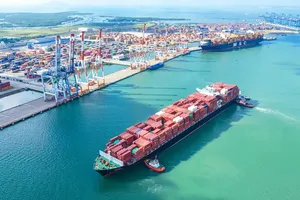
Deputy Minister of Industry and Trade Nguyen Sinh Nhat Tan said that to mitigate the risk of supply disruptions caused by international shipping volatility, the ministry is promoting the diversification of fuel import sources to avoid dependence on a single geographic region. Key petroleum traders are encouraged to sign long-term contracts with partners in Southeast Asia, Australia, and the United States to supplement supply in case shipping routes through the Middle East are disrupted.
Regarding market management, the Ministry of Industry and Trade is coordinating with industry associations, local authorities and businesses through the Domestic Market Management Task Force to closely monitor supply and demand developments, particularly for essential commodities such as fuel, electricity, gas, and steel.
Deputy Minister of Industry and Trade Nguyen Sinh Nhat Tan noted that if unusual developments arise, the task force will hold urgent thematic meetings to assess the situation and agree on appropriate regulatory measures to ensure that shortages, sudden price spikes, or ripple effects on the overall price level will not occur.
Meanwhile, Mr. Nguyen The Hiep, Deputy Director of the Hanoi Department of Industry and Trade, said that the department has requested key traders and distributors to proactively balance supply from imports and domestic refineries to ensure adequate distribution across the city.
According to him, businesses in the supply chain should establish reasonable benefit-sharing mechanisms so that retail agents and fuel stations can maintain stable operations amid market volatility.
In case import prices fluctuate sharply or supply fails to meet planned orders, key traders are required to promptly report to the Ministry of Industry and Trade so that appropriate adjustments can be made.
Many residents stock up on fuel
According to reporters from Sai Gon Giai Phong (SGGP) Newspaper, before 3 p.m. on March 7, the number of vehicles arriving to refuel at several stations in Ho Chi Minh City increased significantly compared with normal days. At Tong An Khuong Gas Station in Tan Hung Ward and Petrolimex Gas Station No. 4 in Cho Quan Ward, long lines of motorbikes and cars formed at the pumps waiting for their turn.
At peak times, the queue of vehicles stretched to the entrance of the stations. Most customers said they were taking the opportunity to fill their tanks before the new fuel prices took effect later that afternoon.
In Hanoi, large numbers of motorbike riders were also seen lining up at gas stations. At a PVOil station on Thai Thinh Street and a Petrolimex station in the Thanh Cong area, dense crowds of motorbikes formed long queues spilling onto the roadway.
Even after 7 p.m., the situation had yet to ease at Song Hong Gas Station, 68 Le Van Luong Street and a Petrolimex station at 30 Nguyen Luong Bang Street. Hundreds of motorbikes lined up in four to five rows, slowly moving forward meter by meter to refuel.
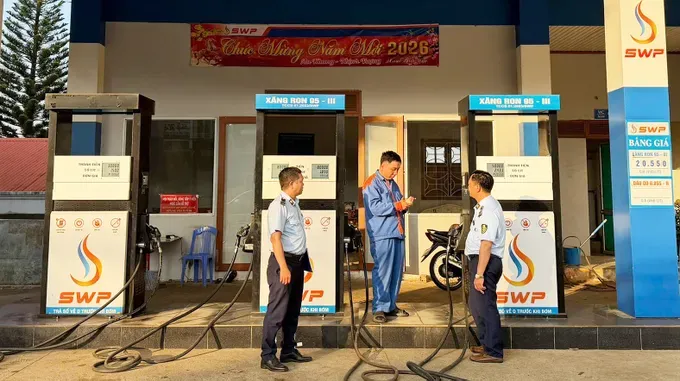
On the evening of March 7, reporters also observed unusual purchasing limits at three gas stations in Bao Loc City, including the station at 748 Tran Phu Street, Gas Station No. 7 at Bao Loc Pass, and another station in Ward 2. All belong to Nhan Nghia Trading–Service Company Limited. Customers were allowed to purchase only up to VND30,000 (US$1.14) per transaction for motorbikes and VND200,000 (US$7.62)–VND300,000 (US$11.44) for cars, prompting frustration among many drivers.
The Lam Dong Provincial Department of Industry and Trade said that the department had instructed the Market Surveillance Sub-Department to promptly detect and strictly handle acts such as hoarding fuel, creating artificial shortages, or suspending sales without legitimate reasons. Serious or complex violations beyond its authority would be reported to higher authorities and handled in coordination with relevant enforcement agencies in accordance with the law.
In Gia Lai Province, there are currently 10 fuel wholesalers, 11 distributors, three general agents, one agent and 730 retail fuel stations in operation. According to market surveillance forces, concerns over rising prices have led many residents to purchase and store fuel, particularly in containers and drums, raising the risk of localized supply shortages in some areas.
In response, Petrolimex Gia Lai has instructed its fuel stations to temporarily suspend fuel sales in containers or drums to help ease supply pressure.
Over the past two days, numrous fishing vessels operated by Ca Mau Province fishermen have confused to head out to sea due to a shortage of diesel fuel supplies at key seaports although it is the peak of the fishing season.
According to Mr. Do Van Su, Chairman of the People’s Committee of Song Doc Commune, information gathered from fishermen and inspection activities shows that over the past two days, the Song Doc rivermouth area has experienced a shortage of fuel, especially diesel.
Vietnam moves to prevent fuel and power shortages amid global uncertainty
On the afternoon of March 7, at the Government headquarters, Vietnamese Prime Minister Pham Minh Chinh presided over a meeting with the Prime Minister’s Policy Advisory Council to discuss the socio-economic situation in February and the first two months of 2026, new global developments affecting the country, and key tasks and solutions for the coming period.
At the working session, delegates focused on discussing and providing input on key policy issues to help Vietnam achieve 10 percent growth in 2026, while maintaining macroeconomic stability, keeping inflation under control, and ensuring major economic balances. They also examined measures to respond to external risks, ensure energy security and stable supply chains, particularly scenarios to deal with impacts from the Middle East conflict and oil price fluctuations, as well as ways to stimulate domestic consumption, boost exports and accelerate public investment disbursement.
Concluding the session, Prime Minister Pham Minh Chinh stressed the need to remain steadfast in the goal of maintaining macroeconomic stability, controlling inflation and achieving growth of at least 10 percent, while ensuring the major balances of the economy and strengthening its resilience to external shocks.
He noted that it is necessary to accurately assess the nature of current global developments and their impacts on major issues such as energy, macroeconomic management, production and business activities, people’s livelihoods, and relations with major countries. On that basis, authorities must closely monitor developments and adopt proactive, flexible, timely and effective policy responses.
Among the solution groups mentioned by the Prime Minister, in the energy sector, he emphasized that there must be no shortages of gasoline, electricity or energy.
PM Pham Minh Chinh assigned the Ministry of Industry and Trade and major state-owned groups to resolve a range of issues related to energy supply. The Prime Minister also said this presents an opportunity to promote the transition to green energy, including wind and solar power, and to adjust policies to attract investment in these areas.
He also called for the continued coordinated, flexible and effective management of macroeconomic policies, with particular emphasis on close coordination between fiscal and monetary policies. Monetary policy, he said, should be managed proactively, flexibly and in a timely manner in line with practical conditions, while stabilizing exchange rates and interest rates, strengthening national reserves, and contributing to macroeconomic stability, inflation control and economic growth.
The Prime Minister particularly emphasized the spirit of strategic self-reliance, first striving for energy self-sufficiency and independence in national resources. On that basis, greater decentralization and delegation of authority should be given to localities. Ministries, agencies and local authorities are required to develop plans for strategic self-reliance related to energy and resources, including both financial and human resources.