The Can Tho Hydro-Meteorological Station reported on March 17 that from March 16 to 22, salinity levels in local rivers will remain high during the first one to two days, then stabilize before rising again toward the end of the week.
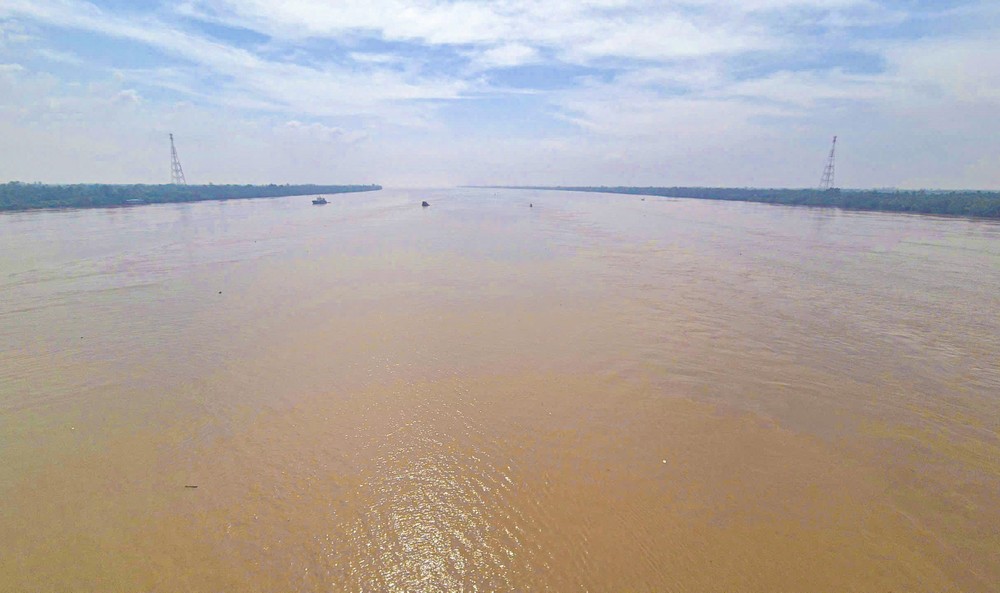
Earlier monitoring from March 9 to 15 at stations in Can Tho indicated that the 4-parts-per-thousand salinity boundary had penetrated 30–35km into the My Thanh River and 37–42km into the Hau River. From March 16 to 22, the 4-parts-per-thousand salinity front is forecast to advance further, reaching 39–44km along the My Thanh River and 40–45km along the Hau River.
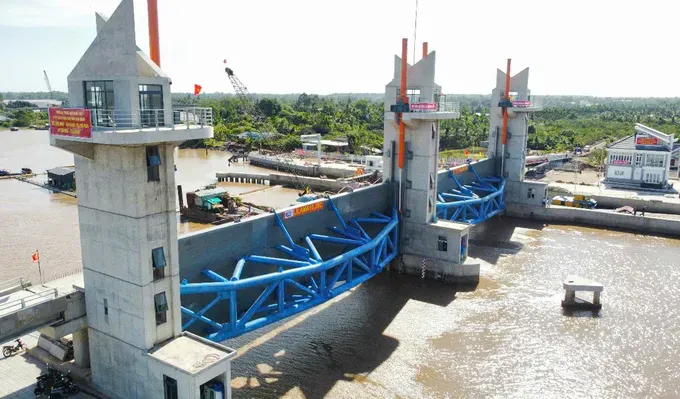
According to the Vinh Long Hydro-Meteorological Station, saline intrusion in rivers across the province is expected to remain high throughout March, with a sharp increase from mid-month. Vinh Long has issued a Level 2 natural disaster risk warning to enable proactive response measures.
Currently, the highest salinity levels are concentrated near river mouths, with salinity in the Cua Dai River recorded at around 20‰ and in the Ham Luong River at about 23.2‰. The 4-parts-per-thousand salinity boundary could penetrate more than 43km inland along the Cua Dai River, about 56km along the Ham Luong River, nearly 55km along the Co Chien River, and over 57km along the Hau River.
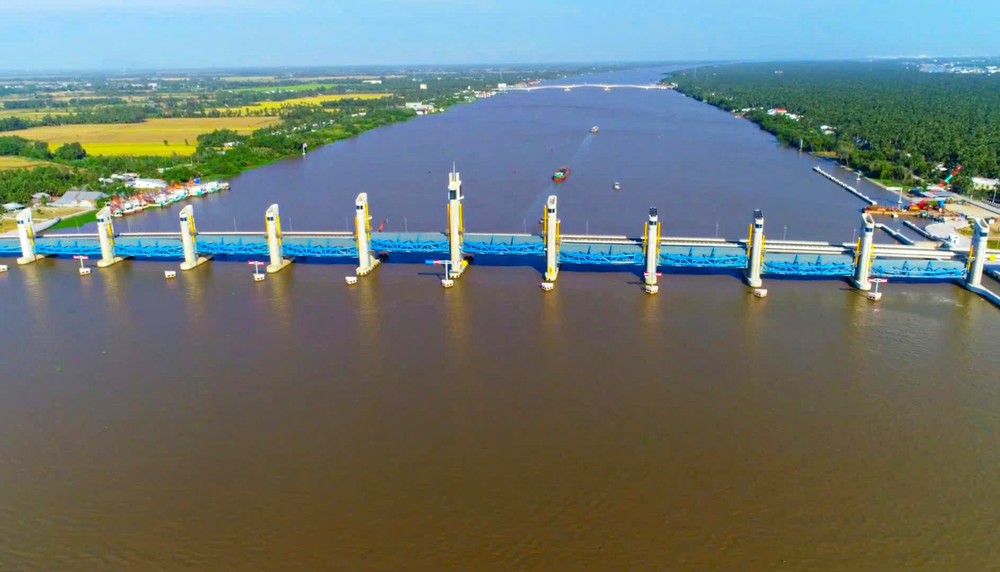
In An Giang Province, the provincial hydro-meteorological station said saline intrusion is expected to intensify from now until March 22, driven by a rising tide beginning March 21. The 4-parts-per-thousand salinity boundary is forecast to advance about 8–10km inland along the Cai Be River, 30–32km along the Cai Lon River, and around 6km along the Cai San Canal.
Meteorological authorities warned that saline intrusion could affect crops, livestock, freshwater supplies, and infrastructure in areas where salinity levels reach 0.5‰ or higher. Local authorities and residents are advised to adopt appropriate response measures based on the salt tolerance of crops and livestock. Relevant agencies are also urged to closely monitor developments, regularly update salinity intrusion forecasts, and operate sluice gates flexibly to ensure a timely response to unexpected situations.