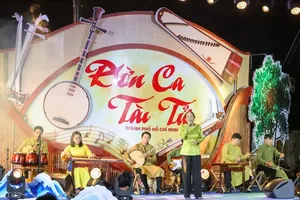
At the Thu Do Theater, home of the Ho Chi Minh City Hat Boi (Vietnamese classical opera) Art Theater, lies a special space dedicated to displaying and exhibiting the artistic heritage of the late People’s Artist Dinh Bang Phi. Alongside live performances, this space has helped introduce audiences to the history and evolution of Hat Boi in the Southern region.
A master’s legacy
The late People’s Artist Dinh Bang Phi (1938–2025) was a prominent artist who made significant contributions to the Hat Boi (Vietnamese classical opera) of Ho Chi Minh City. His life was deeply intertwined with the stage, academic research, teaching, and a steadfast dedication to preserving the professional standards of this traditional theatrical art form.
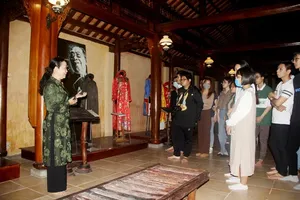
Following his passing, his family donated his entire collection of books, documents, and artifacts related to Hat Boi to the Ho Chi Minh City Hat Boi Art Theater. Utilizing these resources, the theater established a permanent exhibition and display space dedicated to People's Artist Dinh Bang Phi as part of an integrated operational model at the Thu Do Theater on Chau Van Liem Street, Cho Lon Ward.
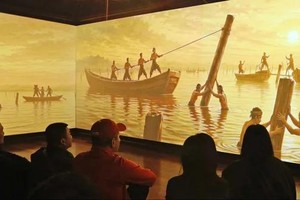
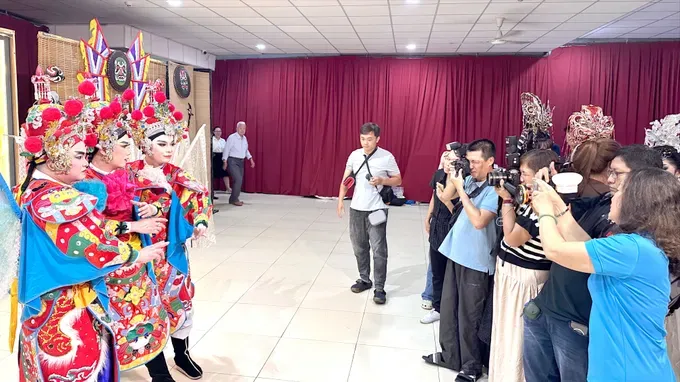
Within this exhibition space, audiences and visitors can engage with the art of hat boi not only through live performances but also through books, photographs, artifacts, and the creative footprints of multiple generations of artists. Viewers gain a deeper understanding of the artistic process, character systems, performance methodologies, and the rich cultural heritage accumulated across generations.
Recently, the family of the late People’s Artist Dinh Bang Phi contributed additional documents to this special cultural space. Among the newly added items is a portrait photograph of the pioneer artists who laid the foundation for Hat Boi in the historic Saigon-Gia Dinh region.
Dinh Thanh Tam, son of the late artist, shared that his father deeply cherished this photograph during his lifetime. His family hoped that the artist's passionate life's work will be preserved, properly leveraged for its true value, and passed down to younger generations. This can serve as a valuable reference for students, master's candidates, and researchers studying traditional national arts, including Hat Boi.
A journey of responsibility
For the theater’s artists, receiving this precious collection of documents is not only an honor but also a long-term responsibility. They face the task of preserving the marks of their craft, leveraging their true value, and presenting them to the public through suitable formats.
In that spirit, while passing down skills to the next generation, People’s Artist Huu Danh called for accelerating the digitization of Hat Boi materials. He suggested producing short video clips explaining iconic roles, costumes, and the art of traditional stage makeup, helping the public better grasp the defining features of this art form. These materials will contribute to expanding the exhibition space for Hat Boi heritage.
Receiving a legacy goes beyond a mere formal handover ceremony; it opens up a continuous journey of preservation, research, and dissemination. It serves as the theater’s way of expressing gratitude for the contributions of past generations while equipping the next generation with study materials and trade expertise to learn and create. Through this, the stories of Hat Boi are retold using modern approaches and a language that resonates with today’s audience.
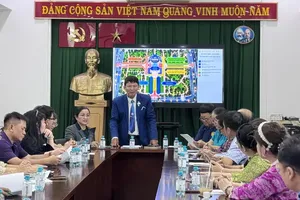
The theater is currently conducting an inventory, classification, and condition assessment of the documents to formulate appropriate preservation and digitization plans. Each stored item will be accompanied by clear identification details, explaining its origin, context, and significance to help visitors gain deeper insights into the artifacts' value.
When that happens, the exhibition space at the Thu Do Theater will serve not only as a monument to a great artist but also as an ‘open classroom’ on Hat Boi in the heart of the city, emphasized Associate Professor Dr. Nguyen Thi Minh Thai.
At a time when traditional arts face the pressure of shrinking audiences and disruptions in intergenerational skill transmission, democratizing research materials and integrating heritage into public spaces represent a direction that warrants encouragement.
Heritage only truly lives on when there are people to receive, study, and continue creating from it. Through the noble gesture of the late People’s Artist Dinh Bang Phi’s family, a bridge has been built between the past and the present, ensuring that the sound of the Trong Chau—a traditional Vietnamese musical instrument, the intricate makeup, and the craft lessons of Hat Boi continue to resound, Meritorious Artist Nguyen Hoang Vinh, Director of the Ho Chi Minh City Hat Boi Art Theater, said.