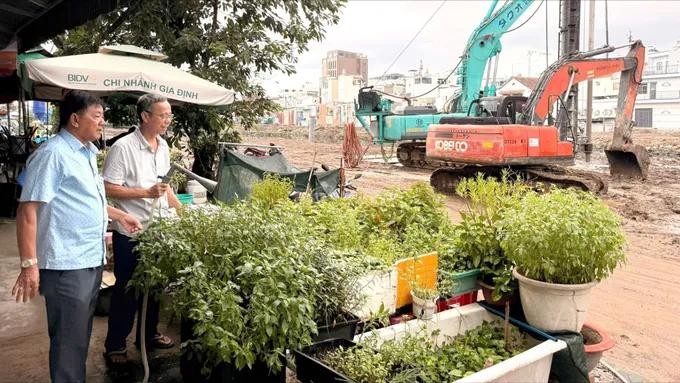
“Where are you heading so early, Phu? Come inside and have a cup of tea with me!” Mr. Bui Thanh Phat cheerfully called out upon seeing Mr. Le Huu Phu passing by. For Mr. Phat, a resident of Alley 220 on Nguyen Xi Street in Binh Thanh Ward, this friendly interaction is a daily occurrence with the local head of the Vietnam Veterans Association.
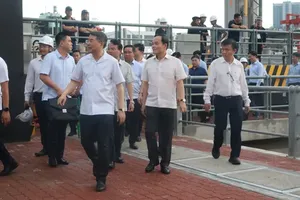
To the alley’s residents, Mr. Phu is undeniably a familiar face. Over a year ago, during the rollout of the Xuyen Tam Canal Infrastructure Upgrading and Construction Project, he consistently accompanied local cadres to every single household, disseminating information and persuading residents to hand over their land.
Mr. Phat’s family ultimately handed over nearly 100m2 of land for the project’s execution. He recounted that, initially, family members couldn’t help but feel profoundly anxious after hearing various conflicting reports, fearing that early land handover might jeopardize their compensation and related benefits.
Those pressing concerns were gradually alleviated through communal meetings and numerous visits from neighborhood officials, local police, and Phu himself, who came directly to their home to clarify compensation and support policies while breaking down the project’s environmental and socioeconomic benefits.
Once he thoroughly grasped the city’s policy, his family’s exact entitlements, and the anticipated benefits the project would deliver, Mr. Phat wholeheartedly agreed to hand over the premises. Furthermore, he proactively shared and explained these insights to surrounding households, essentially helping to forge a broader consensus within the community.
Mr. Phu shared: “If you genuinely want to mobilize citizens, you must first help them clearly understand the crux of the issue and decisively resolve their lingering questions. For massive hurdles, local party committees and government authorities must directly step in, orchestrating open dialogues to find a viable way forward.”
Over in Alley 159 on Do Luong Street of Phuoc Thang Ward, three households have recently dismantled their encroaching structures, returning over 240m2 of public land. Previously, several households hadn’t yielded due to lingering disputes regarding boundary lines and the exact land area to be returned; some didn’t even want to interact with state officials.
The local working groups persistently visited each house, cross-checking maps alongside the residents, cross-referencing current conditions, and thoroughly explaining the specific bottlenecks. Once they clearly understood the parameters of the violated land, the households compliantly dismantled their structures and handed over the sites.
Drawing from the practical reality of persuading residents to hand over land for local projects, Chairwoman Hoang Mai Quynh Hoa of the Vietnam Fatherland Front – Binh Thanh Ward shared that when citizens harbor lingering grievances, cadres must immediately listen and provide thorough explanations. Once solid trust is established, mobilizing the public to collectively execute communal projects becomes vastly smoother.
Since September 1, 2026, the advisory functions and mandates regarding the Party’s mass mobilization efforts in HCMC have been officially transferred to the Party Committee of the HCMC Vietnam Fatherland Front and mass organizations. This structural adjustment inherently demands an overhaul of advisory methods, strengthening the cohesion between the Party’s mobilization work and the operational activities of the government, the Fatherland Front, as well as socio-political organizations.
According to Head Nguyen Thi Tuyet Minh of the Party Building Commission under the Party Committee of the HCMC Vietnam Fatherland Front and Mass Organizations, the core of this renovation lies in proactively grasping situations, actively listening, and advising on resolving issues that truly matter to the public. Simultaneously, they’ll carefully track and monitor the outcomes of petition resolutions, genuinely promoting the citizens’ democratic rights and active participation.
This pressing mandate requires the Fatherland Front and mass organizations to elevate their roles in gathering opinions, capturing public sentiment, monitoring, providing social critique, and submitting recommendations to competent authorities.
The coordination process must ensure seamless information flow, clear reception focal points, designated response deadlines, and rigorous tracking responsibilities, thereby avoiding situations where citizens must complain repeatedly without knowing exactly where their petitions stand in the processing pipeline.
According to Deputy Head Phan Le Vu of the Party Building Commission under the Party Committee of the HCMC Vietnam Fatherland Front and Mass Organizations, the city will relentlessly continue revamping its mass mobilization efforts in the foreseeable future. This shift leans toward staying close to the people and the grassroots level, strictly prioritizing the effective resolution of the citizens’ practical issues.
Alongside the “Skillful Mass Mobilization” emulation movement, the municipality will sustain the efficacy of several programs, including “Month of Listening to Citizens,” “Digital Front,” and “Digital Mass Education.”