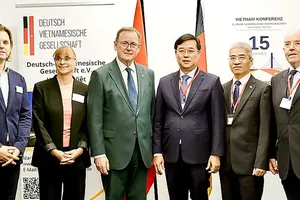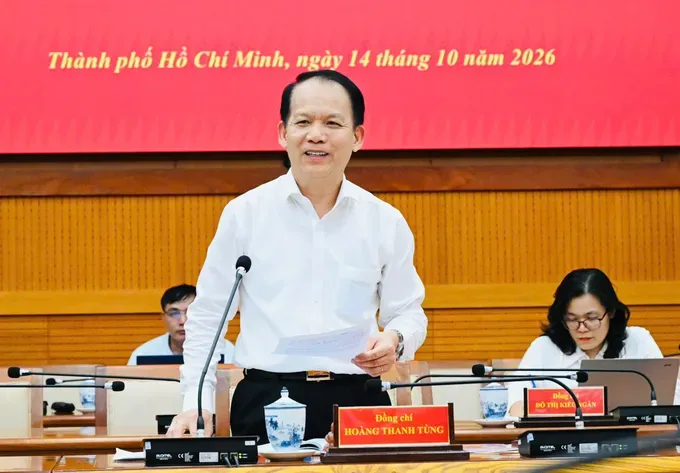
A delegation from the Ministry of Justice held a working session with the Standing Committee of the Ho Chi Minh City Party Committee on October 14 to review the status of judicial affairs, civil judgment execution, and administrative judgment execution monitoring in the city during 2025 and the first nine months of 2026.
The session was co-chaired by Mr. Hoang Thanh Tung, Member of the Party Central Committee and Minister of Justice, alongside Chairman of the Ho Chi Minh City People's Committee, Nguyen Van Duoc.
Also attending the meeting were Vice Secretary of the Party Committee and Chairman of the Vietnam Fatherland Front Committee of Ho Chi Minh City, Nguyen Phuoc Loc, and Vice Secretary of the Ho Chi Minh City Party Committee, Van Thi Bach Tuyet.
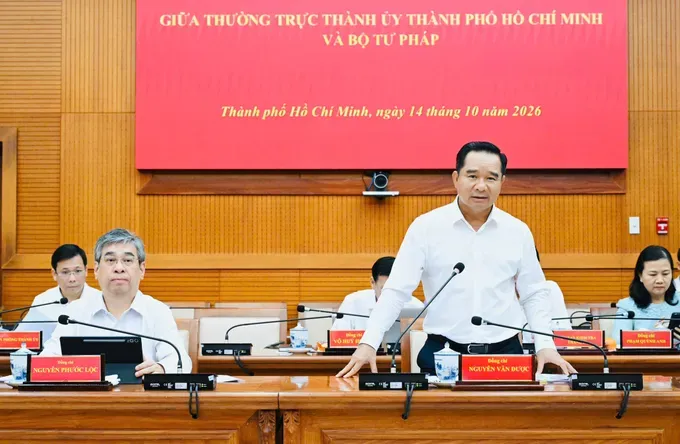
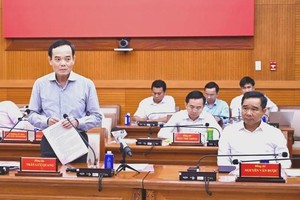
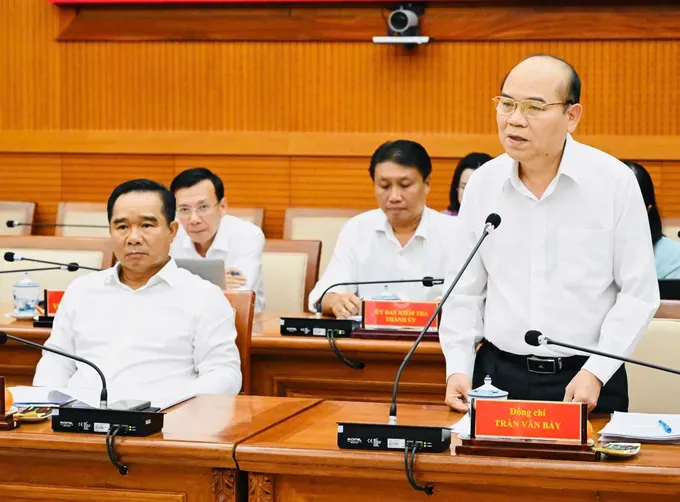
During the working session, Vice Chairman of the Ho Chi Minh City People's Committee Tran Van Bay presented a summary report on the status of judicial work, civil judgment execution, and administrative judgment execution monitoring in the city.
He noted that Ho Chi Minh City has actively and promptly implemented decentralization, delegation of power, and authorization within judicial administration and judicial support services, ensuring smooth state management following the operation of the two-tier local governance model.
In judicial support services and legal aid, Ho Chi Minh City has strengthened and stabilized the state management apparatus overseeing lawyers, notarization, property auctions, bailiffs, and judicial expertise, while piloting the public lawyer model.
Legal aid, legal dissemination and education, grassroots mediation, and the management and handling of administrative violations have continued to be carried out effectively, safeguarding the lawful rights and interests of residents and businesses.
Meanwhile, civil and administrative judgment enforcement, along with inter-agency coordination in handling major corruption and economic cases, has received due attention and yielded positive results.
Regarding the implementation of the Urban Development Law, immediately after its passage by the National Assembly, the Ho Chi Minh City People’s Committee issued a plan and organized briefings on the law, launching a “30-day-and-night campaign to remove institutional bottlenecks” and an emulation movement to accelerate institutional improvements. The Ho Chi Minh City People’s Council adopted 24 resolutions to implement the law.
Chairman of the Ho Chi Minh City People’s Committee, Nguyen Van Duoc, said the committee had directed the development of an implementation roadmap with phased timelines. It had also regularly urged relevant agencies to make progress and promptly address difficulties and obstacles to ensure the timely issuance of implementing documents and guidelines.
Ho Chi Minh City is also urgently completing the legal framework needed to implement special and breakthrough mechanisms and policies, improve urban governance and generate fresh momentum for the city’s development in the coming period.
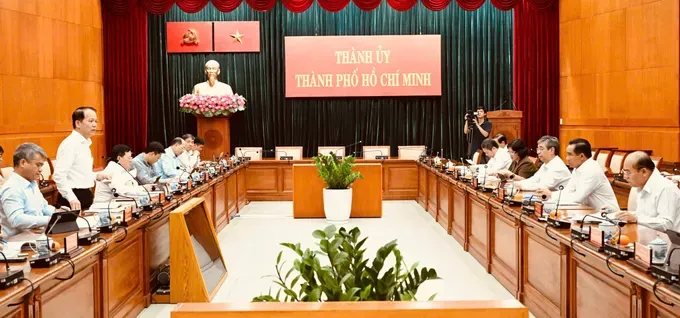
The Minister of Justice emphasized that implementing the Urban Development Law would be a challenging task. He therefore urged Ho Chi Minh City to urgently complete the legal framework for implementing special and breakthrough mechanisms and policies, ensuring that the law is swiftly translated into practice.
The Minister also discussed several issues, including policies to develop the legal profession, particularly the pilot implementation of the public lawyer model; inter-agency coordination in handling major corruption and economic cases; and the enforcement of administrative and civil judgments.
Following the administrative restructuring, Ho Chi Minh City has become the locality with the largest population, the greatest number of administrative units, and the heaviest state management workload in the country.
The city has completed the digitization and uploading of approximately 13.47 million civil status records to the Ministry of Justice’s specialized database, while cleaning up more than 400,000 records containing discrepancies with the National Population Database.
At the same time, the city has maintained an online public service delivery rate of approximately 99 percent and effectively implemented integrated public services, including birth registration, death registration, permanent residence registration, and funeral assistance.