After the transfer of numerous tasks and authority in the judicial and civil status fields to commune administrations, local execution capacity has become the decisive factor in operational efficiency. To ensure seamless operations, clear procedures are required, and specialists at communal people's council and people's committee offices in charge of judicial and civil status work (referred to as judicial-civil status specialists) must be proficient and receive maximum professional coordination and support.
Coordinated data verification helps specialists resolve complex applications
A late birth registration case for a 37-year-old man posed a unique situation for a judicial-civil status specialist in Hanh Thong Ward (Ho Chi Minh City). The man had been abandoned as a child, had no information about his parents, and lacked personal identification documents.
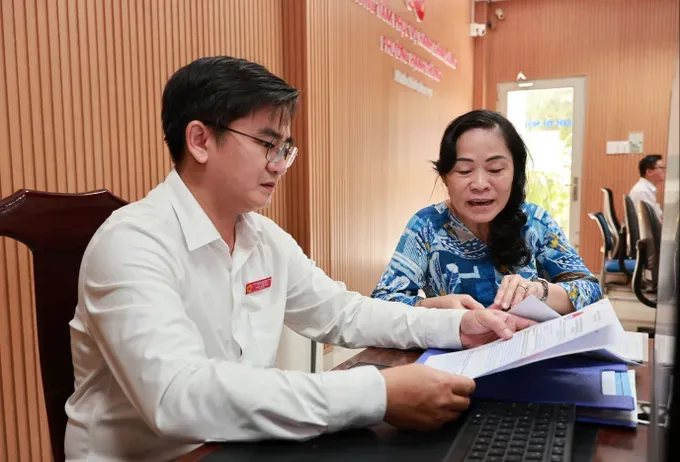
When he went to the ward to apply for birth registration, judicial-civil status specialist Nguyen Thi Lan Anh coordinated with the Hanh Thong Ward Police to search data and verify the situation based on the limited information provided. As a result, after 20 days, the man's birth registration dossier was resolved, three days ahead of the deadline prescribed by regulations.
This case shows that for special applications, the capability of judicial-civil status specialists lies not only in mastering procedures, but also in their ability to handle situation-specific cases, search data, coordinate with relevant units, and proactively solve problems.
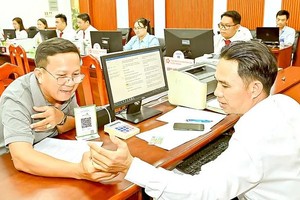
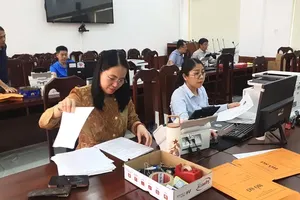
Hanh Thong Ward currently has three judicial-civil status specialists, with two receiving applications and one processing and resolving them. According to Hoang Xuan Thien, Deputy Director of the Public Administrative Service Center of Hanh Thong Ward, the standardized application process, combined with the use of online consultation tools and coordination with police agencies in data lookup and verification, helps judicial-civil status specialists resolve arising situations more effectively.
According to statistical data, in the first nine months of 2026, Hanh Thong Ward resolved 9,169 judicial applications, of which 8,784 were processed ahead of deadline, with public satisfaction reaching over 99 percent.
Some procedures are supported with home service by the ward for citizens aged 70 and older who face mobility difficulties, people with disabilities, women who are at least seven months pregnant, and severely ill individuals receiving home medical treatment. To date, 17 cases have received home assistance from the ward for signature attestation.
Implementing Resolution No. 29/2025/NQ-HDND of the Ho Chi Minh City People's Council, the Chair of the ward People's Committee has authorized judicial-civil status specialists to perform a number of tasks and powers.
The combination of specialized digital signatures enables smooth document issuance and electronic extract copy processing directly on the system. The ward also reviewed and cut redundant steps in the interconnected procedure, thereby shortening application processing time by about 20 to 30 percent.
To date, 100 percent of dossiers have been digitized, and electronic civil status data is maintained according to correct and sufficient criteria. All dossiers at the ward have been resolved ahead of deadline.
Flexible mechanisms ensure smooth execution across local governments
According to Associate Professor Cao Vu Minh, Head of the Department of Administrative and State Law, Faculty of Law, University of Economics and Law (Vietnam National University, Ho Chi Minh City), instead of applying the "everyone does everything" model, communes needs to shift to a model of specialization combined with flexible support.
For complex dossiers (such as those involving foreign elements or procedures related to multiple individuals and fields), experienced judicial-civil status specialists with strong legal capacity should be assigned. Routine, high-frequency dossiers (such as signature attestation, copies, birth registration, and death registration) can be assigned to younger specialists or support forces to receive and process.
In addition, a cross-support mechanism is needed so that when one work group is overloaded or a specialist is absent, personnel from another group can take over immediately, avoiding disruptions to the dossier processing workflow.
Following the rollout of the two-tier local government system, grassroots administrations encountered a range of initial challenges and operational bottlenecks. In line with the principle that "the Government stands alongside local authorities," the Ministry of Justice deployed officials to commune-level administrations to assess on-the-ground conditions and help address emerging issues. Meanwhile, the Ministry of Agriculture and Environment established 10 task forces to provide guidance and resolve obstacles related to land management, site clearance, and the issuance of land-use right certificates.
Two-way connectivity between central and local levels helps ensure policy adjustments are timely and aligned with reality.
The 2025 Law on Cadres and Civil Servants and Decree No. 173/2025/ND-CP permit contracting with experts, scientists, legal scholars, outstanding lawyers, and prominent, excellent entrepreneurs to perform one or several civil servant tasks in Party bodies, the Vietnam Fatherland Front, the State, and socio-political organizations at the central areas, provinces and communes.
This is a new, groundbreaking regulation that creates additional flexible methods to attract high-quality human resources into the public sector. As commune officials is the closest tier of government to the people, new issues will arise; therefore, province needs to provide practical guidance.
Associate Professor Cao Vu Minh proposed establishing a "Digital Legal Advisory Team" at the Office of provincial people's committees, leveraging expert networks and online channels to quickly support cases where laws lack clear regulations or lend themselves to varying interpretations. Under this model, when encountering complex legal situations, people's committees in communes can submit consultation requests to the Office of its provincial people's committees.
The people's committee office in provinces connects with experts from specialized agencies, such as the Department of Justice and the Department of Construction, to jointly provide opinions. Through this, commune people's committees gain an official channel to consult and resolve difficulties.
168 communes, wards, and special administrative zones currently have 503 justice and civil status officers
- 50 communes and wards are staffed with four or more officers.
- 45 communes and wards are staffed with three officers.
- 43 communes and wards are staffed with two officers.
- 30 communes, wards, and special administrative zones are staffed with only one officer.