Decentralization and delegation of authority mean granting additional powers while demanding higher execution capabilities. Realities across multiple localities reveal heavy pressures regarding personnel, professional skills, and data, while highlighting adaptive solutions that help officers in charge of judicial and civil status affairs within the Office of the People's Council and People's Committee at communes (referred to as judicial-civil status specialists) handle complex dossiers.
This raises pressing questions about resources and support mechanisms to ensure officers exercise their authority properly, comply with regulations, and serve the public more effectively.
Since July 1, 2025, numerous judicial and civil status procedures have been decentralized to commune administrations, facilitating public access to administrative services. However, in heavily populated areas, the volume of applications has surged while staff numbers remain unchanged, forcing judicial-civil status specialists to manage a significantly larger workload.
Densely populated areas face rising application pressure
Previously, marriage registration procedures involving foreign elements fell under the jurisdiction of provincial or district administrations; however, since July 1, 2025, authority over these procedures was transferred to commune administrations.
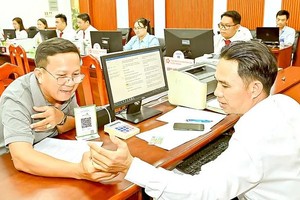
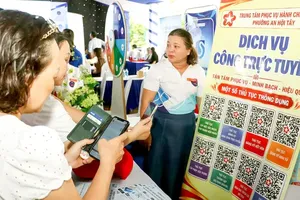
Ms. Nguyen Thi Cam Nhung (45 years old, Phuoc Thang Ward, Ho Chi Minh City) shared that registering her marriage with her husband (a Chinese national) directly at her local residence was highly convenient.
During the first 8 months of 2026, Phuoc Thang Ward processed 520 birth registrations, 211 marriage registrations, 137 death registrations, 726 applications for marital status certification, 1,370 requests for copy issuance, 116 civil status correction cases, alongside various other administrative procedures.
Since July 1, 2025, the ward has handled 11 marriage registration cases involving foreign elements. According to Ms. Le Thi Hong Ha, head of the Judicial Team of Phuoc Thang Ward, the team currently consists of 4 people. Following the official operation of the two-tier local governance model, the workload transferred to commune officials increased substantially, whereas personnel did not expand accordingly.
A single judicial-civil status specialist must cover broader duties—ranging from monitoring legal execution, judgment enforcement, legal dissemination and education, and grassroots mediation, to participating in reviewing legal documents and coordinating multi-agency cases.
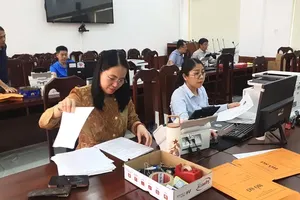
Following administrative restructuring, civil status applications in Saigon Ward (Ho Chi Minh City) doubled or tripled. On average, the ward receives 50 to 60 applications daily; during peak periods, the volume is even higher. Despite the surge in applications, the ward employs only one judicial-civil status specialist, who must still ensure processing deadlines are met according to regulations.
Ho Chi Minh City's Binh Duong Ward hosts a large population of workers and laborers from various regions, generating continuous demand for copy certifications, signature attestations, job application dossiers, and routine civil status procedures. Workload volumes have surged dramatically.
Prior to implementing the two-tier local governance model, commune administrations have been tasked with handling 155 administrative procedures. Currently, the number of administrative procedures under commune jurisdiction stands at 372, an increase of 217 procedures, or roughly 140 percent.
The Public Administrative Service Center of Binh Duong Ward currently assigns 4 specialists to direct execution duties. From July 1, 2025 to September 27, 2026, this department processed 58,749 applications, averaging approximately 14,687 applications per specialist.
Among those, 18,514 applications were received online, accounting for 31.51 percent. Pressure on judicial-civil status specialists has intensified across multiple dimensions: a higher number of procedures, a larger application volume, and elevated professional demands.
For complex job categories requiring specialized skills, judicial-civil status specialists must regularly update regulations, thoroughly verify application components, and cross-check information before processing.
Heavy workloads raise questions over capacity
Tan Vinh Loc Commune was created from the merger of Pham Van Hai Commune and Vinh Loc B Commune, reaching a population of 161,222 people as of December 31, 2025. While the geographical area and population nearly doubled, the number of judicial-civil status specialists remained at 2 people, unchanged from before the merger.
According to Vice Chairman Truong Ngoc Thanh Nhan of the Tan Vinh Loc Commune People's Committee, the 2 judicial-civil status specialists receive and process approximately 600 dossiers monthly, including about 200 dossiers that previously fell under district authority. The workload handled has increased by 2 to 3 times compared to before.
Additionally, difficulties arise from job title classifications. Under the new organizational apparatus, the former official civil servant title for judicial-civil status affairs no longer exists. Instead, tasks are assigned to the Office of the People's Council and People's Committee of the commune, which then assigns civil servants to execute them. These individuals must concurrently handle additional duties belonging to the office domain as prescribed.
For the immediate future, the Tan Vinh Loc Commune People's Committee prioritizes assigning civil servants with deep expertise, strong analytical capabilities, and effective task-processing skills. Work distribution has also been adjusted flexibly to grant judicial-civil status specialists time to focus on researching and resolving dossiers for residents.
Personnel concerns were similarly highlighted in Saigon Ward. Vice Chairwoman Ngo Hai Yen of the Saigon Ward People's Committee said that as a central ward with highly dynamic economic and administrative transactions, the ward receives and handles over 350 dossiers and more than 720 signature and copy attestations daily, alongside nearly 80 civil status requests requiring over 250 copies to be processed.
This reality requires judicial-civil status specialists to multi-task efficiently, ensuring continuous and smooth execution from direct intake, guidance, dossier verification, and data matching to online system processing.
To guarantee timely dossier resolution amid surging workloads and high professional requirements, leadership at the Saigon Ward People's Committee determined they must proactively reorganize work workflows rather than merely extending processing hours.
Simple applications are processed swiftly, while complex cases requiring verification or inter-agency coordination are tracked separately to avoid affecting processing deadlines.
The ward also emphasizes information technology applications, efficiently leveraging database systems and operational software while enhancing inter-departmental communication and coordination to streamline intermediate stages.
According to Director Pham Thi Thanh Hien of the Ho Chi Minh City Department of Home Affairs, the city does not allocate civil servants equally among communes, wards and special zones. Instead, staffing decisions are based on job positions, approved staffing quotas and the actual needs of each locality. Based on these positions and quotas, people's committees in communes proactively assign civil servants according to population size, application volumes, workload and local characteristics. Densely populated areas with large numbers of applications need appropriate staffing plans rather than a one-size-fits-all approach.
Reassigning personnel and strengthening professional expertise

The new requirements for judicial and civil status services are reflected in the individual applications officials must process. According to Tran Hai Doan, Chief of Office of the People's Council and People's Committee of Binh Phu Ward in Ho Chi Minh City, many cases require cross-checking data, verification between localities and processing through electronic systems. Officials are directly responsible for the outcomes of case resolution.
In the third quarter of 2026, the ward handled 7,235 administrative procedure applications, including 41 carried over from the previous period. Civil status services accounted for 1,396 applications, while notarization and certification services accounted for 5,195, bringing the combined total to 6,591.
Most applications were received and processed at the ward's Public Administrative Service Center, with an average of approximately 2,200 applications per month across the two service categories.
To meet these demands, Binh Phu Ward assigned two civil servants from the Office of the People's Council and People's Committee to advise on, monitor and carry out judicial and civil status duties. Two specialists at the Public Administrative Service Center are responsible for receiving applications, providing guidance and delivering results.
According to Doan, the staff generally meet requirements, demonstrate a strong sense of responsibility and receive training and professional development appropriate to their assigned positions.
However, data and processing systems remain major challenges. Some older civil status records have not been fully updated, forcing judicial and civil status specialists to retrieve paper documents or conduct manual checks.
Extracting birth, death and marriage registration data from software systems remains limited at times, while checking and confirming marital status is not always convenient. Synchronization of application statuses among the National Public Service Portal, interagency processing systems and specialized software is also occasionally unstable.
Ho Chi Minh City has organized training courses and provided professional guidance to help local officials update their knowledge of regulations and carry out their duties. However, Doan said many practical situations still require more specific guidance. The ward has proposed establishing dedicated professional and technical support channels to assist officials in handling complex cases.
At Phuoc Thang Ward, personnel have also been reassigned according to job positions and professional qualifications. According to Phan Trong Hanh, Vice Chairman of the Ward People's Committee, four specialists have been assigned to judicial and professional positions, with responsibilities and coordination arrangements clearly defined.
Their duties include civil status registration and certification; monitoring the drafting, inspection and review of legal documents and law enforcement; and handling citizen reception, complaints and denunciations.
Phuoc Thang Ward is also reviewing training needs in drafting legal normative documents, law enforcement, legal education and dissemination, technology and digital transformation.
Hanh said that as more responsibilities are transferred to the grassroots level, personnel arrangements must be aligned with the professional requirements of each task. Authorities must also identify the skills officials need to develop so they can effectively perform their assigned duties.
Judicial responsibilities transferred to commune administrations
According to the Ho Chi Minh City Department of Justice, since July 1, 2025, under Government Decree No. 120/2025/ND-CP and Ministry of Justice Circular No. 08/2025/TT-BTP, judicial and civil status specialists at commune administrations have taken over several groups of responsibilities which were previously handled by district justice divisions and civil status officials.
- Civil status: Commune authorities handle all procedures involving foreign elements, including birth, death and marriage registration and re-registration; guardianship; recognition of parent-child relationships; changes, corrections and supplements to civil status information; and determination of ethnicity, among other matters.
- Adoption: Commune authorities record in the adoption register adoptions that have been approved by competent foreign authorities.
- Certification: Commune governments certify translators' signatures, including those of translation collaborators working with justice divisions and translators who are not affiliated with those divisions.