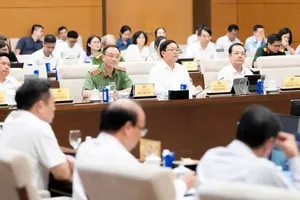
Presenting the draft law, Deputy Minister of Science and Technology Hoang Minh said the draft law centers on two major policy areas: further simplifying procedures and reducing business conditions, and transferring the management of rights to plant varieties from the Ministry of Agriculture and Environment to the Ministry of Science and Technology.
Key provisions include further simplifying administrative procedures and reducing business conditions to facilitate the registration and establishment of intellectual property rights, as well as abolishing procedures for registering contracts on the assignment of industrial property rights and rights to plant varieties.
The draft law also removes business conditions for intellectual property appraisal services, as the Law on Investment has excluded such services from the list of conditional business lines.
In addition, the draft law removes detailed provisions on dossiers and procedures for establishing rights to plant varieties and assigns the Government to issue detailed regulations, ensuring consistency with corresponding provisions on industrial property rights, which have previously been regulated in decrees.
Presenting the verification report, Chairman of the NA Committee on Legal and Judicial Affairs Phan Chi Hieu said the committee basically agreed on the necessity and scope of the proposed amendments and supplements to the Law on Intellectual Property, noting their political, legal and practical foundations.
The committee asked the drafting agency to continue reviewing relevant legal provisions, particularly those on State management of rights to plant varieties.
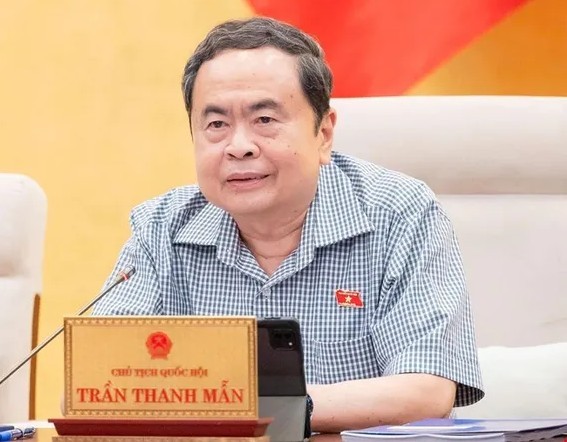
Speaking at the session, NA President Tran Thanh Man stressed the importance of the amendments, saying they should shift the focus from “protecting rights” towards “turning intellectual property rights into assets and commercializing them,” while adapting to the digital economy and artificial intelligence (AI).
The amendments should be linked to administrative reform and comprehensive digital transformation, he said, adding that adequate human resources and robust digital infrastructure, including AI systems to support examination and data connectivity, are also needed.
Regarding the promotion of the commercial exploitation and assetisation of intellectual property rights, the NA Chairman stressed the need to soon issue unified and transparent guidance on intellectual property, particularly for intangible assets such as software, data and digital brands.
Tax, credit and accounting policies should also be further improved to enable businesses to value, recognize, contribute or use intellectual property assets as collateral for loans. Clearer tax and credit incentives should be considered for businesses holding intellectual property, while training for accountants and auditors on intellectual property accounting should be strengthened to prevent situations in which assets exist but cannot be properly recognized, he said.
He also called for stronger responsibilities on the part of businesses providing intermediary services and operators of digital platforms in protecting intellectual property rights in cyberspace, as well as tighter control over the registration of trademarks containing national names.
Also at the session, the NA Standing Committee considered and commented on a draft resolution regulating the protection regime for judges.
Presenting a summary of the draft resolution, Chief Justice of the Supreme People's Court Nguyen Van Quang said the draft resolution sets out three groups of provisions on the protection regime for judges. These cover the protection of judges’ positions and the performance of their duties and powers, comprising four groups of issues; protection of their reputation, honor and dignity, as well as the confidentiality and security of their information and personal data, also comprising four groups; and protection of the life, health, property, and lawful rights and interests of judges and their relatives, comprising two groups.
During the morning session, the NA Standing Committee also discussed the draft revised Law on Implementation of Democracy at Grassroots Level.