The war has long receded into the past. Lands once violently churned by bombs are now blanketed in the green shoots of new life. Yet, deep beneath layers of the homeland’s soil, within martyrs’ cemeteries stretching from North to South, the remains of countless fallen individuals haven’t returned to their families. For over half a century, numerous mothers, wives, and children have languished, waiting for a single name to be etched onto a tombstone.
Within this extensive journey of grief, gratitude, together with responsibility, the “500-day-and-night campaign to accelerate the search, collection, plus identification of martyrs’ remains” is becoming a truly extraordinary race against time. In that race, science-technology, particularly next-generation DNA sequencing, is unlocking fresh hope to ultimately “return the names” to these heroes.
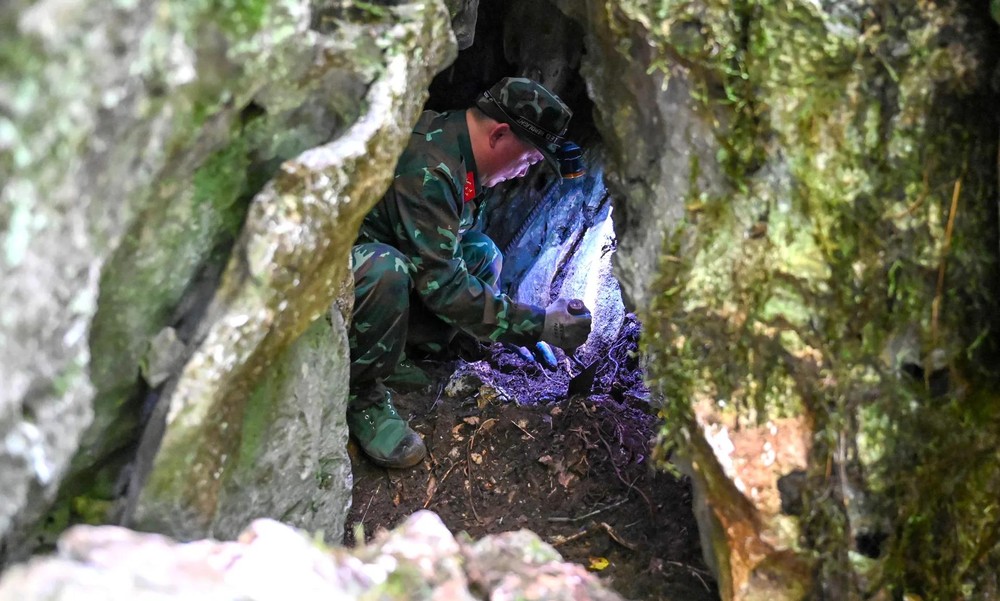
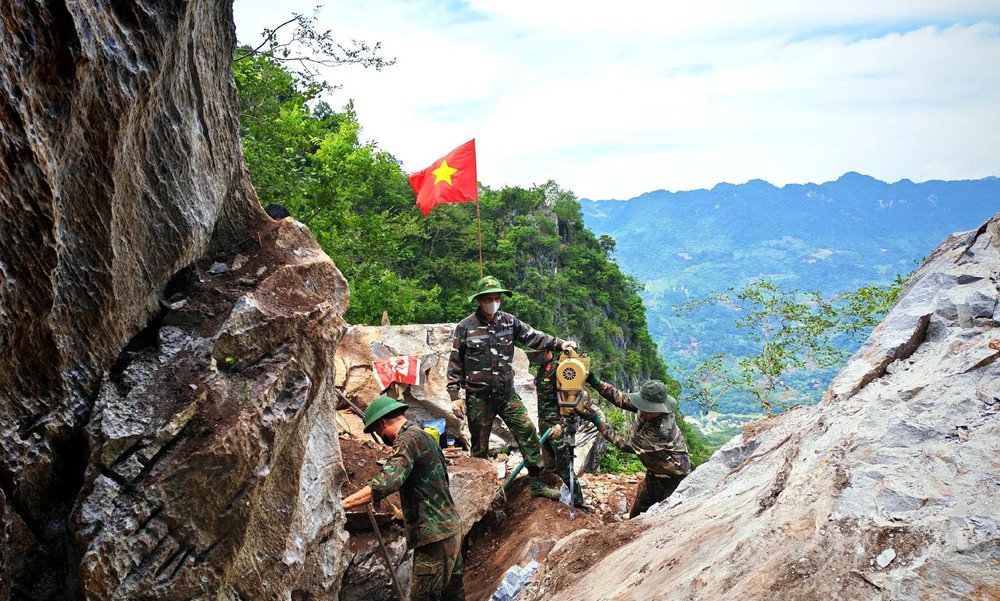

According to the Ministry of Defense, by June 2026, Vietnam still harbors approximately 175,000 martyrs whose remains haven’t been located, alongside roughly 300,000 unidentified graves. Behind those stark figures are hundreds of thousands of families who have waited in agonizing suspense across multiple generations.

Since the “500-day-and-night campaign” was launched in mid-March 2026 until September 15, 2026, the DNA Assessment Center has received over 37,610 martyr remains samples from eight provinces and cities of HCMC, Hanoi, Tuyen Quang, Dong Nai, Hue, Dong Thap, An Giang, and Tay Ninh.
The massive influx of samples exerts immense pressure on the machinery network as well as the specialized professional team. Facing this increasingly urgent demand, the nationwide martyr identification network was expanded from three to five units, comprising the National Institute of Forensic Medicine (Ministry of Health), the Military Institute of Forensic Medicine (Ministry of Defense), Vietnam Academy of Science and Technology (VAST), Vietnam Military Medical University, and the Institute of Criminal Sciences (Ministry of Public Security).
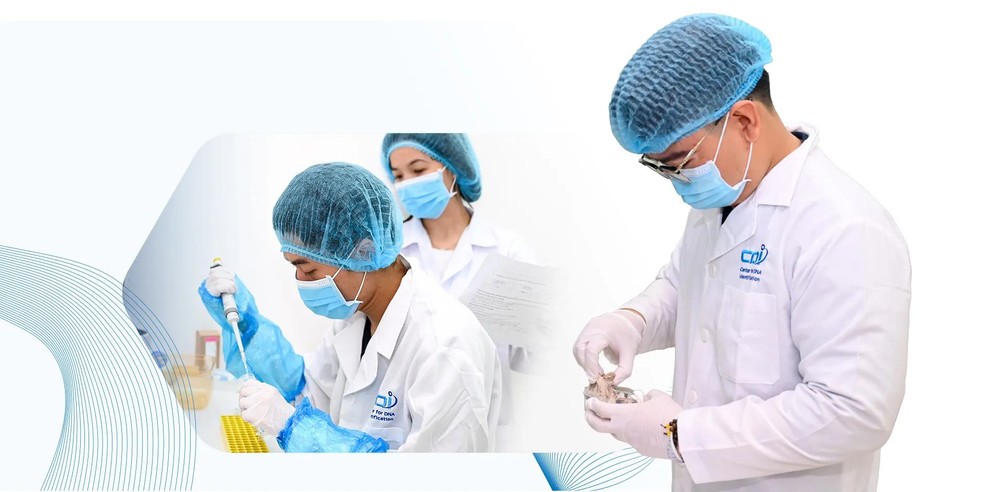
The problem of assessing and identifying martyrs’ remains in Vietnam is widely regarded as one of the most formidable challenges within the identification domain. Numerous unidentified remains were previously buried in rudimentary conditions, with certain cases having been relocated multiple times; coupled with the prolonged impact of the tropical environment, the DNA is severely degraded or being profoundly compromised.
Once the DNA has been extracted, the data gets fed into an analytical system to be cross-referenced against relative data provided by the Ministry of Public Security. To yield a conclusive result for a single sample, this meticulous process takes approximately 3 to 4 weeks.
Former Prime Minister Pham Minh Chinh previously emphasized: “If we don’t act swiftly, the relatives of these martyrs will also pass away before the information can be verified. We have absolutely no other choice but to race against time.”

During the sweltering summer days of 2026, inside the DNA Assessment Center (Institute of Biotechnology under VAST), the operational pace is perpetually frantic and highly intense. Behind those laboratory doors, molecular biology experts are racing against time to “snatch back” the final remnants of genetic codes lingering within bone fragments that have laid underground for over half a century.
Each sample brought here represents the culmination of a remarkably long journey. Out there, search forces must trek through dense forests or wade across streams, meticulously tracing every single tip to bring the martyrs home. Meanwhile, inside the lab, another distinct search commences, quieter but equally grueling: recovering identities from DNA sequences severely eroded by time plus nature.
There’re marathon shifts, sleepless nights, plus the silent tears of scientists working day and night on a special mission of helping to return names to these fallen heroes alongside martyrs.
Dr Tran Trung Thanh, Director of the DNA Identification Center, who has been dedicated to this work for many years, thoughtfully recounted the challenges the team faces. The hot and humid tropical climate, heavy rainfall, acidic soil pH, along with the intrusion of microorganisms, molds, and bacteria, have caused bone structures and DNA to degrade, break, and denature. Many samples upon excavation were crumbled, hollowed out, or almost completely weathered.
There’re bone samples that, after immense search efforts, were brought back to the center but ultimately bore no cellular traces for identification, forcing a handover back to the locality for burial. For DNA forensic officials, it’s a profound sense of helplessness and endless regret when the chance to identify another martyr must be temporarily closed.
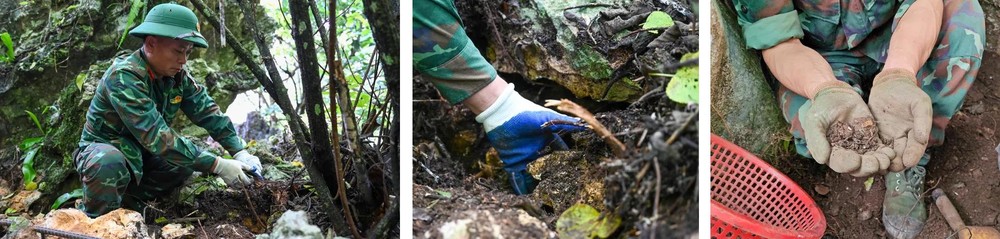

Faced with these challenges, DNA testing technology for martyr identification in Vietnam has made significant strides thanks to proactive international cooperation.
The year 2022 marked a notable milestone. Under the Government’s direction, the Ministry of Foreign Affairs and the Ministry of National Defense collaborated to send 100 of Vietnam’s most difficult-to-analyze martyr remains samples to the US for foreign experts to study and find suitable solutions.
At international laboratories, the professionals applied experience from archeology and Ancient DNA research, testing over 12 different biochemical extraction methods to select the two most suitable procedures.
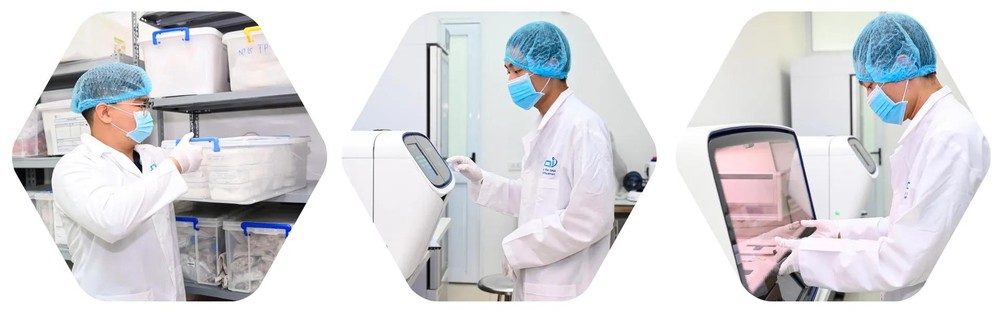
Through ODA funding from the US Government, VAST and the DNA Identification Center partnered with the International Commission on Missing Persons (ICMP) to further refine the molecular extraction process, parallelly applying specific enzymes to obtain both nuclear and mitochondrial DNA.
The results yielded a clear breakthrough: the extraction efficiency and ability to read DNA signals from heavily decomposed remains increased from 22 percent to over 80 percent.
ICMP DNA Analyst David Swanepoel highly appreciated the competence and dedication of Vietnamese scientists. They work in a high-pressure environment, not only regarding workload but also the requirement to maintain strict quality standards. The results from projects at the Tra Linh Martyrs’ Cemetery (Cao Bang Province) and Giong Rieng Martyrs’ Cemetery (An Giang Province) in 2025 demonstrated this capability.

David Swanepoel believes the project holds profound humanitarian significance. For martyrs’ families, the identification results can bring comfort, somewhat soothing the pain after many years of waiting, even for subsequent generations still longing to find their forefathers. On a broader scale, the project contributes to healing the wounds of war, promoting social equity, and helping the country continue moving forward.
ICMP Project Manager in Vietnam Nguyen Hoang Chau stated that Vietnam’s martyr remains samples are classified by the international forensic community as exceptionally difficult to process, having lain underground for over 50 years in a tropical environment, subject to the impact of diverse microbiomes, leading to humification.

“Over the past 3 years, ICMP has coordinated closely with VAST to develop a new procedure based on advanced scientific progress. The success rate in profiling genetics from these samples has reached over 81 percent. The new procedure also allows for cross-referencing with distant relatives, given that close relatives of many martyrs are no longer alive, with a reliability of up to 99.9 percent. This is a scientific miracle!” Ms. Chau shared.

Explaining this advancement, Dr Tran Trung Thanh analyzed the core difference between the two genetic information “repositories” in human cells: the mitochondrial genome and the nuclear genome.
Mitochondrial DNA (mtDNA) is located outside the cell nucleus, has a circular structure, and exists in thousands of copies within each cell. Due to its large quantity and stable structure, mtDNA has a better ability to survive the impacts of time and environment; therefore, extracting and sequencing it from martyrs’ remains often yields a high success rate.
However, mtDNA is only inherited maternally, so individuals from the same maternal lineage may carry identical mtDNA. When cross-referencing a database of hundreds of thousands of samples, the probability of duplication is high, necessitating additional biological evidence or supporting artifacts.
Conversely, nuclear DNA (nDNA) has a linear, very long structure and is highly susceptible to environmental impacts. After decades of burial, nuclear DNA strands can be cleaved and broken into very short fragments.
Previously, forensic science often utilized short tandem repeat (STR) amplification technology, but this method requires relatively intact nuclear DNA segments. With heavily decomposed remains samples, this presents a major obstacle.
In that situation, next-generation sequencing technology combined with single nucleotide polymorphism markers (NGS-SNP) opens up a new direction.

Dr Tran Trung Thanh explained: “Unlike mtDNA, which is prone to duplication, and STR, which requires relatively intact gene fragments, NGS-SNP technology doesn’t look for long repeats but focuses on detecting single variations in each nucleotide that makes up the DNA. Just a minuscule difference can create an individual’s identifying signature.”
The breakthrough of NGS-SNP is that it allows high-throughput sequencers to simultaneously scan and analyze thousands of genetic markers even on severely decomposed remains samples. This process can be visualized as piecing together a large puzzle from thousands of tiny fragments.
To date, with the support of ICMP experts, the DNA Identification Center and Vietnamese scientists have mastered this next-generation DNA identification technology.
However, along with technological advancement comes significant pressure regarding machinery capacity and investment costs. At the DNA Identification Center, the mtDNA identification line achieves a capacity of about 4,000 samples per year, while the nDNA identification system handles around 1,000 to 2,000 samples per year.
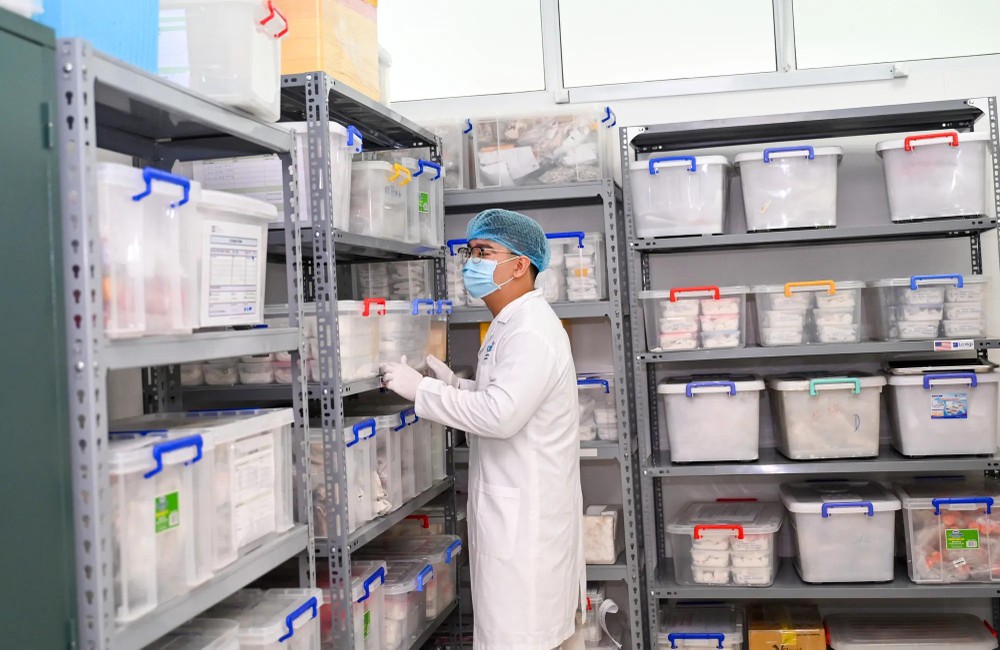
Even with experts taking turns to operate the machines continuously, a total capacity of approximately 6,000 samples per year remains very small compared to the hundreds of thousands of martyrs’ remains waiting to be identified and the hundreds of thousands of relatives’ biological samples needing cross-referencing.
According to Dr Tran Trung Thanh, for modern technology to truly be effective on a large scale, greater and more synchronized investment from the State budget is needed. After all, the ultimate destination of these genetic sequencing lines, genetic markers, and millions of DNA data points remains a name, a grave, and a long-awaited reunion.
As Deputy Prime Minister Pham Thi Thanh Tra shared: “Every martyr’s remains found gives another family the chance to close the years of waiting. Every identity confirmed allows another mother, father, wife, or child to light an incense stick in front of the exact grave of their loved one.”
Since the beginning of the year, by combining mitochondrial DNA technology with high-resolution NGS-SNP technology, the DNA Identification Center has established sufficient scientific and legal grounds to announce the identities of 10 cases of martyrs’ remains, concurrently handing over the identification results to the martyrs’ families.
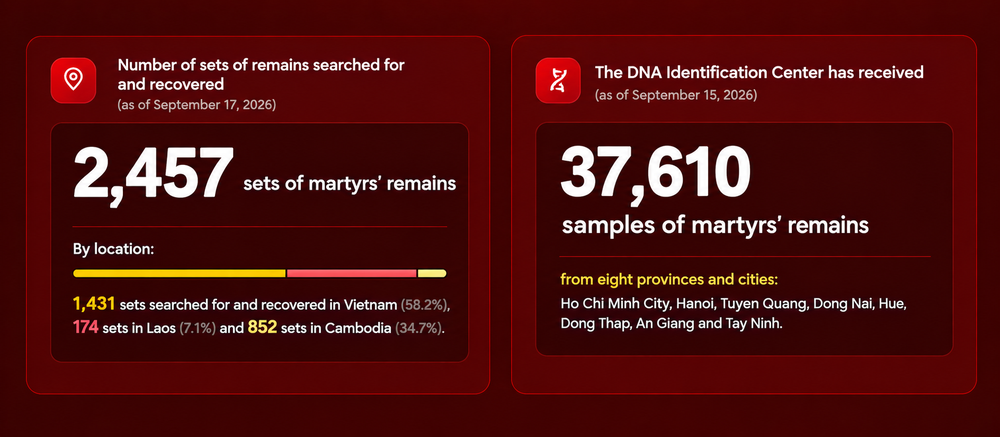
Relatives’ data – Indispensable link
Assoc Prof Dr Phi Quyet Tien, Director of the Institute of Biotechnology, stated that no matter how advanced and modern identification technology is, it struggles to be effective without relatives’ DNA data for cross-referencing. Many remains samples in several localities can’t be identified, primarily due to the lack of relatives’ DNA data.
As time goes on, the number of living direct relatives of martyrs diminishes; in many cases, only distant relatives remain, making cross-referencing more difficult. However, NGS-SNP technology significantly expands the comparison scope, reaching not only parents and siblings but also grandchildren, great-grandchildren, and distant relatives up to the fourth or fifth generation.
Notably, in collecting data for genetic cross-referencing, the entire country has mobilized 264 teams with approximately 3,500 personnel closely monitoring local areas to survey and collect martyrs’ remains samples.
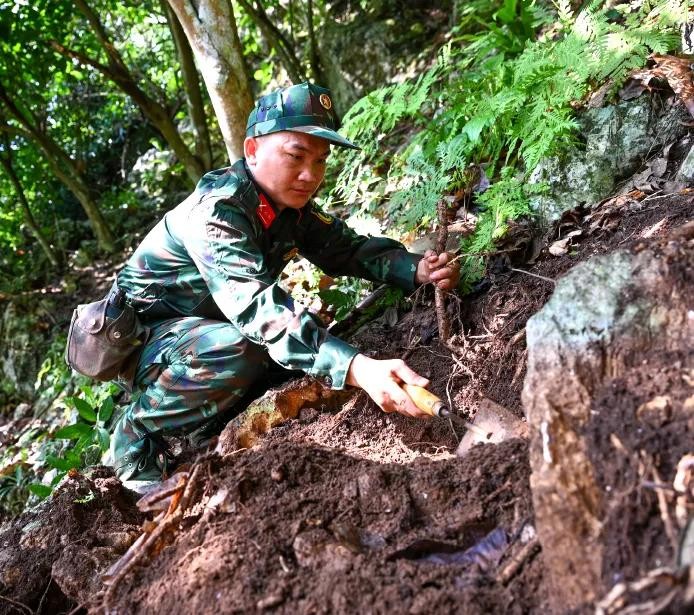
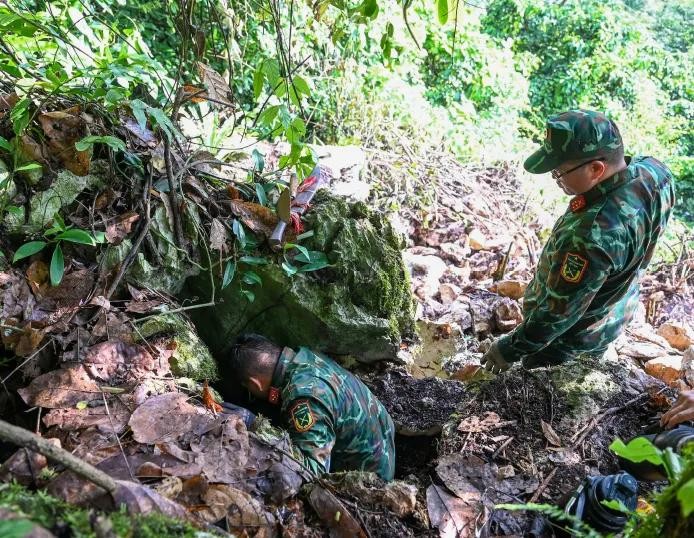
Through reviews, around 102,689 graves, accounting for 69.1 percent, meet the conditions for biological sampling; 11 out of 34 provinces and cities have completed sampling at martyrs’ cemeteries.
Alongside this, working groups have collected 265,761 biological samples from martyrs’ relatives. Among these, 71,102 samples were successfully sequenced and analyzed, and 66,909 genetic profiles have been digitized and synchronized into the national database.
This constitutes an invaluable “gene bank,” creating a foundation for NGS-SNP technology to cross-reference and find matches, thereby contributing to the prompt identification of martyrs and bringing information back to the anxiously waiting families.
Content: staff writers
Design: Huu Vi
Translation: Thanh Tam,Thu Huong