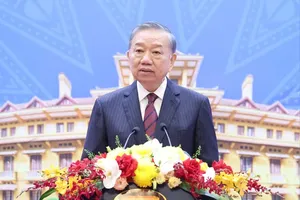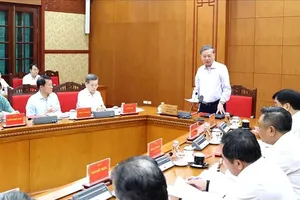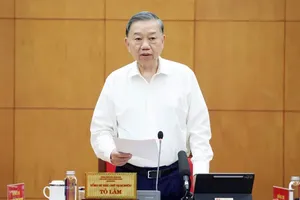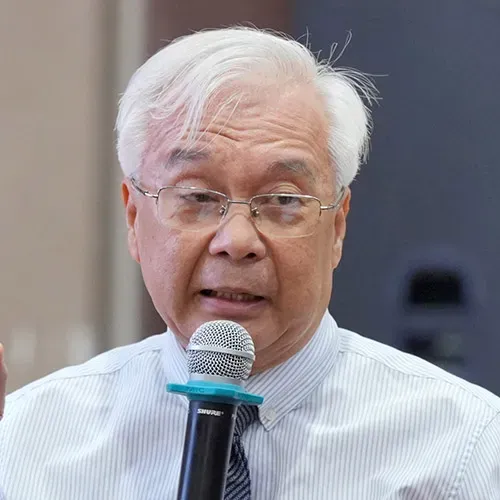
Assoc Prof Dr Phan Thanh Binh, former Chairman of the National Assembly’s Committee for Culture, Education, Youth, Adolescents and Children, gives positive comments on the three pillar resolutions on education and training (Resolution 71), science and technology (Resolution 57), construction and perfection of law (Resolution 66), calling them a logical and distinct policy ensemble.
He emphasized a development strategy built on human capital, growth drivers, and institutional perfection. A prosperous Vietnam is attainable if intellect leads and institutions serve as the “runway” for takeoff.
In HCMC, the nation’s “practical laboratory,” citizens expect the 14th Congress to refine strategic visions and resolve bottlenecks. This event signifies more than a political milestone; it marks a shift toward comprehensive innovation. Ultimately, the hope is for a constructive mindset to permeate the administration, replacing hesitation with action to propel the country forward.
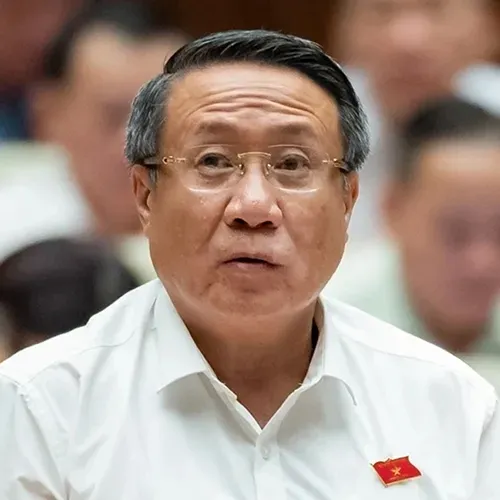
National Assembly Deputy for Quang Tri Province Ha Sy Dong (13th, 14th, and 15th terms) fully agrees with the assessment in the draft document, frequently affirmed by General Secretary To Lam, that institutions remain the biggest bottleneck but also the largest room for reform.
He emphasized that “institutions” must be interpreted broadly, citing the recent streamlining of the administrative apparatus as a decisive reform step. However, for years, slow institutionalization and overlapping processes have stifled vital social resources, causing significant stagnation in public investment and creating outdated planning hurdles.
He envisions a modern, integrity-based socialist rule-of-law state that shifts from a restrictive “licensing” approach to a proactive “service” mindset. To achieve this, he argues the State should actively lead innovation by boldly applying “sandbox” testing mechanisms for emerging fields like AI, digital finance, and energy.
Crucially, he advocated for substantive decentralization paired with strict accountability. Illustrating this with the rice land paradox, where Vietnam maintains over 7 million hectares despite only needing 3 million for food security. He noted that current rigidities keep farmers poor while starving the industrial sector of necessary space. Consequently, he proposed empowering local governments to autonomously adjust planning and allocate resources to prevent further waste of national assets.
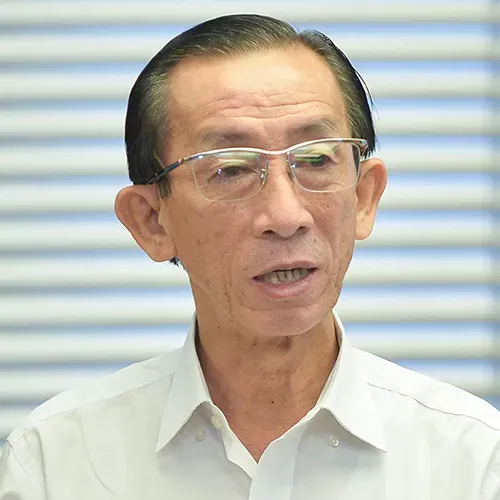
Assoc Prof Dr Tran Hoang Ngan, National Assembly Deputy for HCMC (13th, 14th, and 15th terms) shared that the draft document presented to the 14th Party Congress is a platform for action, crystallizing the wisdom of the entire Party and people, and the experience of 40 years of Doi Moi (Renovation). The draft is concise yet covers the key breakthrough points in the new era.
In 2025, particularly, the Politburo and National Assembly issued pivotal resolutions promoting decentralization, emphasizing local decision, local action, and local responsibility. He stressed that these orientations must now be concretized into specific regulations suitable for each locality.
Regarding human resources, he advocated for flexible mechanisms to attract talent to state agencies, moving away from rigid processes to prioritize quantitative results in official evaluations.
Finally, beyond transport and digital networks, he called for methodical investment in cultural infrastructure, such as theaters and studios, to drive tourism. Alongside this, upgrading healthcare and education facilities remains equally vital for the nation’s development phase.

President Ngo Thi Phuong Lan of the University of Social Sciences and Humanities (Vietnam National University-HCMC) pushes for international integration in education.
Politburo Resolution No. 59-NQ/TW on international integration in the new situation has set requirements for being more proactive, positive, and comprehensive in participating in global life. In this context, while education is not the sole focus, it plays a vital role in improving human resource quality, spreading knowledge, and promoting Vietnamese values to the world.
In the context of increasingly deep integration, Vietnamese education needs stronger connections with the international academic space. This is demonstrated by enhancing experience sharing, participating in global learning and research networks, effectively attracting international resources for educational development, and encouraging Vietnamese teachers and scientists abroad, as well as international experts, to participate in training and research in Vietnam.
At the same time, there is a necessity to create mechanisms for educational and cultural institutions to become centers for spreading knowledge, innovation, and humanistic values.

Assoc Prof Dr Pham Thi Kien from the Institute of Political and Social Sciences (University of Economics HCMC) informed that after 40 years of Doi Moi, the private economy has risen to become a key driver of the economy.
By 2025, this sector had comprised nearly 1.1 million enterprises, accounting for about 98 percent of total enterprises, contributing 46-48 percent of GDP, nearly 58 percent of total social investment capital, and attracting about 85 percent of the workforce. However, the private economy still lacks strong internal strength due to small scale, limited technological capacity, and a low position in the value chain.
Although labor productivity increased by 5.8-6 percent in 2025, it is only nearly 60 percent of Thailand’s and over 11 percent of Singapore’s. To lead long-term growth, the private economy needs to break away from the outsourcing role and penetrate deeply into regional and global value chains.
Following the implementation of Resolution 68, the expectation is that the 14th Congress will continue to deepen development thinking, taking the improvement of growth quality as the focus, demonstrated through enhancing labor productivity, technological mastery capacity, and the formation of a leading corps of private enterprises.