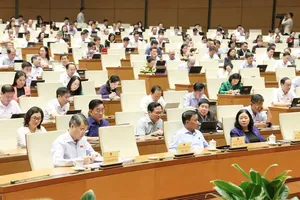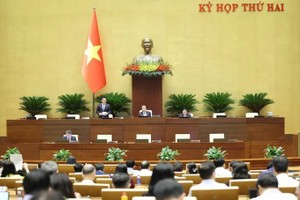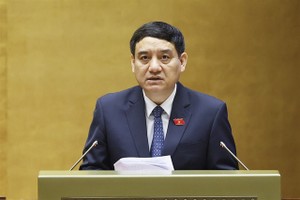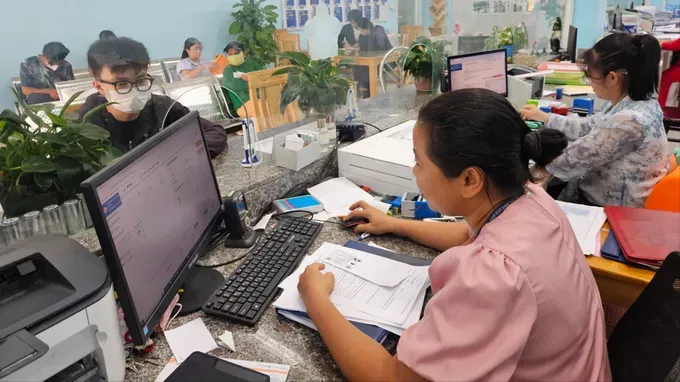
The Ministry of Home Affairs is collecting public feedback on a draft Government decree regulating the base salary and bonus policies for officials, civil servants, public employees, and the armed forces (the Draft). The ministry has proposed raising the base salary to VND2,530,000 (US$96) per month starting July 1, 2026, applicable to nine groups of beneficiaries. It also plans to review and amend regulations governing agencies and units at the central level that currently operate under special financial and income mechanisms.
Under Decree No. 73/2024/ND-CP, which took effect on July 1, 2024, the base salary is set at VND2,340,000 per month. If approved, the proposed adjustment would increase the base salary by VND190,000 compared to the current level.
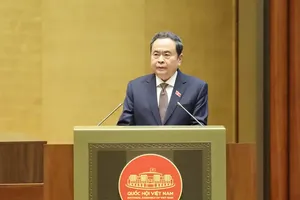
At a recent voter meeting in Lao Cai Province, Party Central Committee Secretary and Deputy Prime Minister, Pham Thi Thanh Tra, discussed the roadmap for salary reform, administrative reform, and several socio-economic issues of public concern. She noted that continued institutional streamlining, combined with growth model innovation and stronger economic expansion, would help improve state budget revenues and create conditions for further salary reform. As such, recent salary adjustments have been implemented cautiously, in a step-by-step and effective manner, in line with the economy’s capacity.
According to lawyer Bui Dinh Ung of the Hanoi Bar Association, the proposed increase remains modest given rising prices and living costs. Inflation has outpaced the proposed adjustment, and in some cases, consumer prices rise in anticipation of wage hikes. For workers, civil servants, and public employees who rely primarily on salaries, an 8 percent increase; for example, an additional VND800,000 on a VND10 million salary is still limited.
However, amid ongoing economic challenges, the proposal to raise the base salary is still seen as a positive signal, reflecting the State’s continued attention to wage earners. Ung noted that while the increase may fall short of expectations, salary recipients also need to recognize broader fiscal constraints and competing budget priorities.
According to Associate Professor Nguyen Thi Lan Huong, former Director of the Institute of Labour Science and Social Affairs under the Ministry of Labor, Invalids and Social Affairs (now the Ministry of Home Affairs), the base salary should be abolished in favor of a position-based pay scale. Under this proposal, the starting salary for university graduates would be set at VND10 million, with subsequent adjustments based on individual competency, performance, and job position. Notably, the job position criteria would account for 80 percent of the evaluation. However, she cautioned against over-reliance on this model during its implementation, particularly in the public sector.
Meanwhile, Associate Professor Nguyen Thi Lan Huong, former Director of the Institute of Labour Science and Social Affairs under the Ministry of Labor, Invalids and Social Affairs (now the Ministry of Home Affairs), said that with the proposed increase from VND2.34 million to VND2.53 million, the lowest starting salary for university graduates would be around VND5.9 million per month. This remains significantly below market rates, which average about VND10 million per month for graduates. As a result, even with the adjustment, base salaries still lag behind the market, despite the principle that wage increases should at least match market levels.