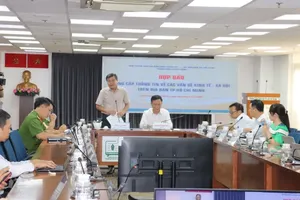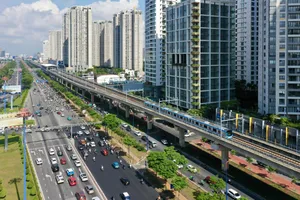
On the afternoon of May 30, the Ho Chi Minh City Department of Construction announced that, according to a proposal by consulting units, the city will implement a phased vehicle transition roadmap across different areas, with the goal that by January 1, 2040, all road vehicles operating within the city will run on electricity or forms of green energy.
The transition plan prioritizes environmentally sensitive areas, high-traffic zones, and localities with favorable conditions for early implementation.
In Con Dao Special Zone, the proposed transformation roadmap is set to proceed at the fastest pace.
Specifically, as of January 1, 2027, all buses will be required to operate on electricity or other forms of green energy. By June 1, 2027, the conversion of all motorcycles and mopeds is expected to be completed.
From December 31, 2027, all automobiles, except trucks with a payload exceeding one ton and certain specialized vehicles, must complete the transition. By January 1, 2030, 100 percent of road vehicles operating in Con Dao will be required to use electricity or green energy.
For the communes of Binh Khanh, An Thoi Dong, Can Gio, and Thanh An, the transition of intra-provincial bus services to electric or green-energy vehicles is expected to be completed by early 2027. By 2030, cars, motorcycles, and mopeds owned by residents and households, as well as commercial transport vehicles, will be required to switch to electricity or green energy, except for certain specialized cases. From 2035 onward, all vehicles operating within these communes must be green-energy vehicles.
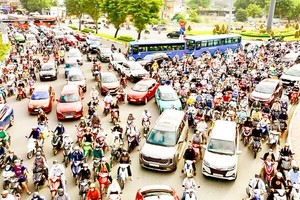
Another notable proposal is the establishment of a Low Emission Zone (LEZ) within the existing truck-restricted ring road area. This zone has been identified as an area with high vehicle density and significant emissions, necessitating stricter environmental control measures and emission-reduction policies.
According to the proposal, beginning in 2027, all intra-provincial buses operating within the Low Emission Zone (LEZ) must be powered by electricity or forms of green energy. For taxis, vehicles will be required to meet Euro 5 emission standards from 2028 and transition entirely to electric or green-energy vehicles by 2030.
Passenger transport vehicles under contract with fewer than nine seats will also be required to comply with Euro 5 emission standards from 2028 and complete the transition to green vehicles by 2035.
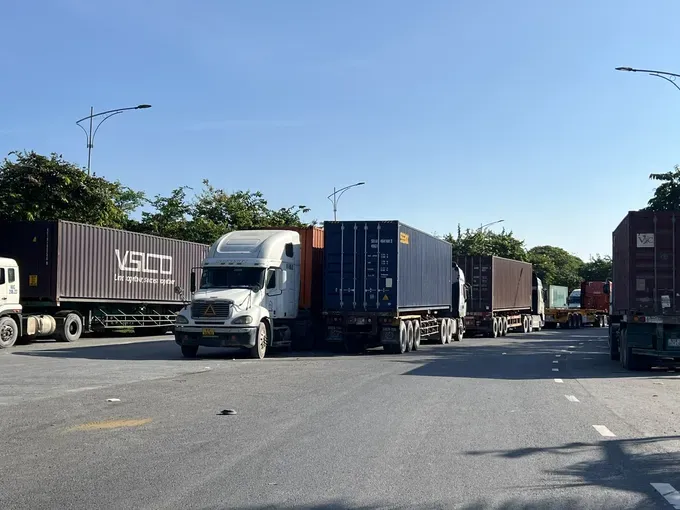
For coaches, contract vehicles with 10 seats or more, and trucks, the transition roadmap will be implemented in phases, combining stricter emission standards with time-of-day traffic restrictions on vehicles that fail to meet the required criteria. By 2035, all of these vehicle categories must be fully converted to electric or green-energy alternatives.
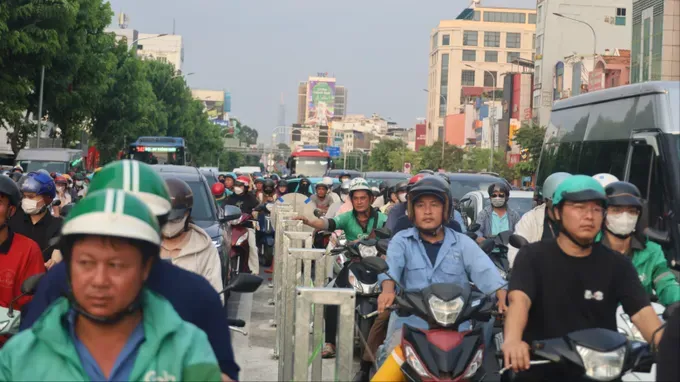
Ride-hailing two-wheel vehicles used for passenger transport and delivery services within the Low Emission Zone (LEZ) will be required to operate on electricity or other forms of green energy from January 1, 2028. Privately owned motorcycles and mopeds must comply with Euro 4 emission standards from 2029 and complete the transition to green-energy vehicles by 2035.
For the remaining areas of Ho Chi Minh City, the transition will be carried out in phases. Beginning in 2027, vehicles owned by State agencies and public service units that are due for replacement or newly procured must use electricity or green energy. By 2030, all vehicles operated by the state sector are expected to complete the transition to electric or green-energy alternatives.
Intra-provincial buses will be required to complete the transition to electric or green-energy vehicles from 2027, while interprovincial bus services operating in Ho Chi Minh City must complete the conversion before 2030. Taxis will be required to use electricity or green energy from 2030, and ride-hailing two-wheel vehicles must fully transition by the same year. For privately owned motorcycles, mopeds, and non-commercial passenger cars, progressively stricter emission standards will be applied before a full transition to electric or green-energy vehicles by 2040.
The proposal also includes a range of financial support measures for residents and businesses. Poor households would receive support covering 100 percent of the cost of an electric motorcycle, along with related fees and charges, equivalent to approximately VND20 million (US$761) per vehicle. Near-poor households would be eligible for support of around VND14 million (US$533) per vehicle.
For delivery drivers and workers who rely on motorcycles as their primary means of livelihood, the city plans to subsidize registration fees, vehicle licensing costs, and loan interest payments for vehicle purchases, with support estimated at approximately VND5 million (US$190) per vehicle.
In Con Dao, higher levels of financial support have been proposed to meet the accelerated transition timeline. Residents purchasing electric motorcycles could receive subsidies covering the full cost of the vehicle, while buyers of private electric cars may be eligible for support equivalent to around 10 percent of the vehicle’s value. Transport enterprises converting taxis, passenger coaches, and trucks to green-energy vehicles could receive subsidies ranging from 5 percent to 15 percent of the vehicle value, depending on the vehicle category.
To support the transition, the proposal calls for the development of more than 18,000 charging stations and over 33,000 battery-swapping units across Ho Chi Minh City. Within the Low Emission Zone (LEZ) alone, more than 3,300 fast-charging stations and 8,900 battery-swapping units are planned.
The city is also proposing to adopt incentives such as a five-year exemption from land rental fees for electric charging station projects developed on public land, along with preferential loans and interest-rate support to accelerate charging infrastructure development.
According to the consulting unit, the proposed roadmap would help reduce emissions, improve the urban environment, and support the development of a greener and more sustainable transportation system for Ho Chi Minh City in the years ahead.