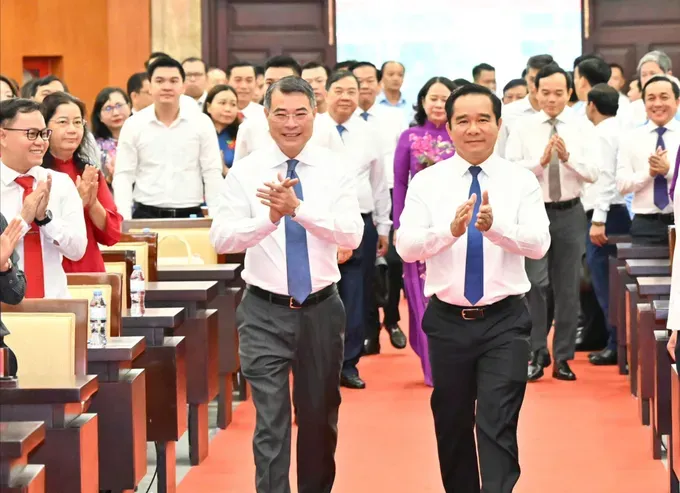
The meeting marked Prime Minister Le Minh Hung’s first official working visit to HCMC since the city entered a new phase of development characterized by a larger scale, broader scope, and greater responsibilities.
Sustaining the growth momentum
Despite facing numerous difficulties and challenges in the first months of 2026, Ho Chi Minh City continued to record positive socio-economic outcomes. Production and business activities showed solid recovery, while trade, services, tourism, investment attraction, and budget revenues all increased compared with the same period last year. These results demonstrate the resilience of the city’s economy and reflect the administration’s determined and proactive efforts to address long-standing bottlenecks, thereby channeling social resources into production and business activities.
In the first quarter of 2026, the city’s Gross Regional Domestic Product (GRDP) expanded by 8.27 percent, the highest first-quarter growth rate recorded in the past five years. Several indicators in trade, services, science and technology, digital transformation, and administrative reform continued to improve. Notably, Ho Chi Minh City successfully resolved, or provided directions and solutions for, all 838 backlogged projects across various sectors. This has helped unlock social resources and create additional room for economic growth.
In meetings with municipal departments and local authorities, Chairman of the Ho Chi Minh City People’s Committee Nguyen Van Duoc has repeatedly called on agencies and localities to focus on removing obstacles facing businesses, accelerate project implementation, and take responsibility for progress and outcomes. The city is making a strong shift from a management-oriented approach to a service-oriented administration, with the effectiveness of problem-solving and the satisfaction of residents and businesses serving as key measures of governance quality.
According to Dr. Huynh Thanh Dien, a lecturer at Nguyen Tat Thanh University, the city’s social resources have not been fully utilized over the years due to procedural bottlenecks, legal obstacles, and shortcomings in coordination mechanisms. The resolution of issues related to all 838 backlogged projects indicates that Ho Chi Minh City is moving from a phase of addressing bottlenecks to one of activating development resources. This provides a solid foundation for the city to pursue its goal of achieving double-digit economic growth in the coming years.
The city is preparing to operate under a special urban governance model with new management requirements, in line with plans to formulate the Law on Special Urban Areas. Ho Chi Minh City must not only address immediate challenges but also create long-term development capacity in infrastructure, institutions, human resources, science and technology, data systems, and economic space.
The decisive factor will be the city’s ability to swiftly transform newly unlocked resources into investment projects, production and business activities, strategic infrastructure works, and new growth drivers. If these efforts are carried out effectively, Ho Chi Minh City will have a solid basis for achieving double-digit growth in the near term while establishing a foundation for sustainable long-term development. This would further reinforce the city’s role as the nation’s leading economic hub and a key growth pole in the country’s new stage of development.
Socio-economic performance in the first five months of 2026 (year-on-year comparison):
. Total retail sales of goods and consumer service revenue increased by 12.8 percent.
. Tourism revenue surged by 78.9 percent.
. Exports rose by 5.3 percent.
. The Industrial Production Index (IIP) grew by 11 percent.
. State budget revenue exceeded VND401 trillion (US$15.2 billion), up 24.3 percent.
. Foreign direct investment (FDI) inflows reached more than US$3.8 billion, an increase of 20.3 percent.
. 24,784 new enterprises were established, up 29.14 percent.
. All 838 backlogged projects were either resolved or provided with implementation directions and solutions.
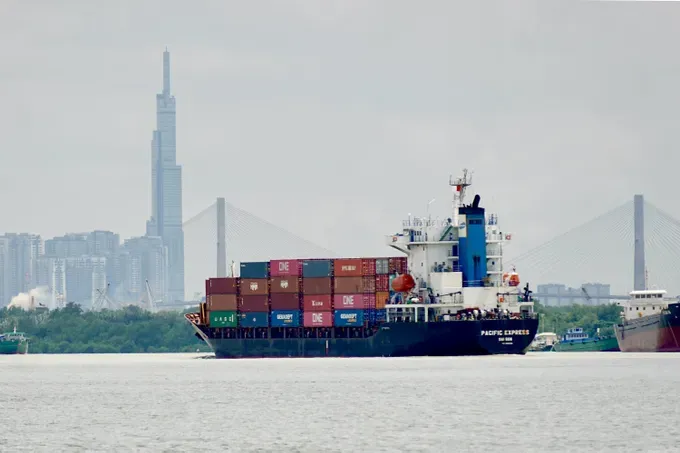
. Multiple strategic infrastructure projects were launched, with a combined investment capital of nearly VND520 trillion (US$19.75 billion).
. Approximately 6.25 million square meters of housing floor space were developed.
. The on-time resolution rate for administrative procedures reached 99.32 percent.
. The satisfaction rate among residents and businesses stood at 96.38 percent.
A people-centered government delivering effective public service
On a weekend morning, many residents visited the Public Administrative Service Center of Thoi An Ward in Ho Chi Minh City to complete administrative procedures. Behind the service counters, civil servants simultaneously searched information on the digital system, guided residents in supplementing required documents, and monitored the progress of applications. Outside, volunteer teams continued to assist residents in registering for public service accounts and submitting applications online.
After one year of operating under the two-tier local government model, Ho Chi Minh City has gained additional practical experience to assess both the strengths and shortcomings of the new governance structure. Multiple intermediate layers have been streamlined, the responsibilities of grassroots authorities have been enhanced, and several unnecessary administrative procedures have been eliminated. Residents can now handle a wider range of administrative matters directly within their local communities, while businesses have gained additional channels to engage with local authorities.
According to the Ho Chi Minh City People’s Committee, many tasks have been resolved more efficiently at the grassroots level. Commune-level authorities have become more proactive in handling a wide range of public affairs, reducing the need for applications to pass through multiple administrative tiers and enhancing their capacity to respond promptly to emerging issues.
Ho Chi Minh City has delegated and authorized more than 1,000 responsibilities to commune-level authorities across various sectors. The on-time processing rate for administrative applications has exceeded 99.5 percent, while the proportion of applications submitted online has surpassed 88 percent. The satisfaction rate among residents and businesses has remained above 96 percent.
The city has also announced and put into operation 100 percent of eligible administrative procedures that can be processed regardless of administrative boundaries, covering 2,065 administrative procedures. This has made it more convenient for both residents and businesses to access public services.
Despite these achievements, significant challenges remain at the commune levels. Workloads have increased sharply as local authorities have taken on responsibilities previously handled by various municipal departments and agencies. At the same time, there is a shortage of officials and civil servants with specialized expertise in areas such as information technology, digital transformation, healthcare, and education. In addition, sector-specific software systems and databases have yet to be fully integrated and interconnected.
Given these realities, many localities have proposed that the central government review and adjust staffing regulations for Party and mass organizations, raising current staffing ceilings to better reflect the population size, number of Party members, workload, and specific responsibilities of individual communes, wards, and special zones.
Accordingly, during its working session with Prime Minister Le Minh Hung, Ho Chi Minh City may seek approval or guidance on issues that fall beyond its authority, particularly those related to staffing, financial mechanisms, decentralization, data governance, and investment in digital infrastructure.

According to Associate Professor Dr. Tran Hoang Ngan, Chairman of the Advisory Council for Development Breakthroughs at Saigon University, the National Assembly and the Government are expected to soon institutionalize Politburo Resolution No. 09 on the development of Ho Chi Minh City in the new era, including the promulgation of the Law on Special Urban Areas specifically designed for Ho Chi Minh City. The proposed legislation is expected to provide a more stable legal framework and strengthen investor confidence, particularly among foreign investors. This will create favorable conditions for the city to attract greater social resources and promote public-private partnerships. It will also facilitate the effective management, utilization, and protection of natural resources, land, and public assets.
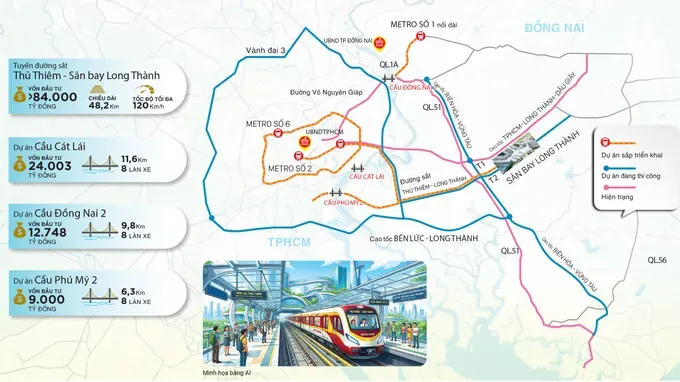
In addition, the law is expected to establish policy mechanisms to foster regional connectivity and development, including regulations governing investment and the management of interregional projects. In addition, it will help mobilize resources more effectively for investment in strategic infrastructure and key development projects, such as urban railways, ring roads, expressways, national highways, seaports, free trade zones, the International Financial Center, transit-oriented development (TOD) areas, housing projects, and urban renewal initiatives.
Mr. Le Trung Hieu, Director of Ewater Engineering Co., Ltd., proposed the introduction of policy mechanisms that prioritize the use of domestically developed technologies.
Technology enterprises hope that appropriate mechanisms will be put in place to enable domestically developed products to be introduced, tested, and evaluated by government agencies, public institutions, and businesses across the city. Public infrastructure projects, industrial plants, high-tech parks, manufacturing zones, and organizations with needs related to water treatment, energy conservation, and environmental protection could serve as pilot sites for the deployment of Vietnamese technological solutions.
Once these products have demonstrated their effectiveness and quality, policy mechanisms should be established to encourage and prioritize the adoption of domestic technologies. Such measures would not only serve as a catalyst for innovation but also help create a viable market for Vietnamese technology enterprises, enabling them to grow and compete successfully in their home market, he noted.