The move reflects the city’s determination to shift from a “treatment-centered” approach to comprehensive,population-wide health care.
The city’s health sector has developed appropriate solutions to standardize and systematize all health examination activities across the locality, ensuring consistency, efficiency, and broad accessibility for residents.
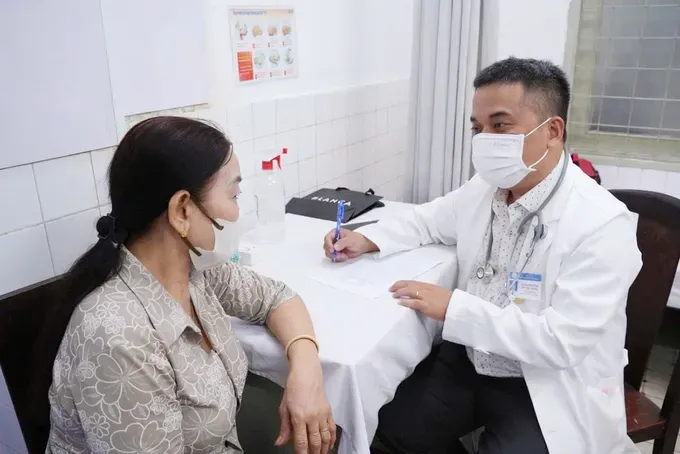
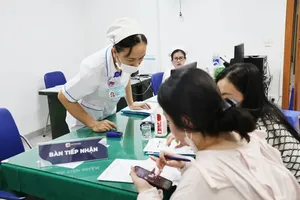
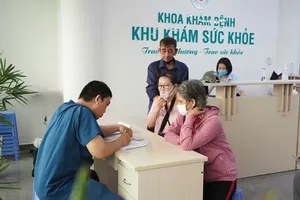
According to Associate Professor Dr. Tang Chi Thuong, Director of the Ho Chi Minh City Department of Health, following the recent health screening campaign launched in response to National Public Health Day, the city will continue to roll out a larger-scale health check program on April 17. The initiative will be implemented simultaneously across all 168 health stations of wards, communes, and special zones.
This expanded campaign will mobilize medical teams from 101 public and private hospitals, including six hospitals under ministries and central agencies, 69 municipal general and specialized hospitals, and 26 private hospitals.
Under the assigned plan, central-level hospitals as well as hospitals under ministries and sectoral agencies will be responsible for screening key diseases, including cardiovascular conditions, endocrinological disorders, oncology, musculoskeletal diseases, dental-maxillofacial conditions, and occupational diseases.
Municipal specialized hospitals will carry out targeted screenings in their respective fields, such as obstetrics and gynecology, ophthalmology, otorhinolaryngology, oncology, and mental health. Meanwhile, the city’s general hospitals and regional general hospitals will focus on the detection and management of non-communicable chronic diseases, as well as common internal medical conditions.
Private hospitals and regional medical centers will also take part in the program, helping to broaden coverage and improve access to healthcare services for residents. Notably, cervical cancer screening for female informal workers and female industrial workers will be prioritized in 16 wards and communes during this campaign.
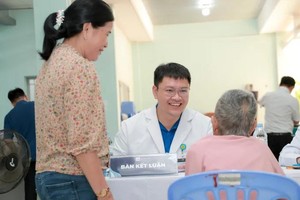
This health examination campaign not only enables residents to access multi-specialty medical services close to where they live but also places a strong focus on priority groups requiring greater attention, such as the elderly, people with chronic diseases, informal workers, vulnerable populations, and high-risk groups. The initiative helps facilitate early disease detection and ensures continuous community-based health management, Associate Professor Dr. Tang Chi Thuong said.
The city’s health sector has identified the health check-up program for 15 million residents in 2026 as the starting point of a new approach to public healthcare, in which each citizen’s health is managed throughout their lifetime, and the healthcare system takes a proactive role in protecting, caring for, and improving the health of the community, he noted.
HCMC implements comprehensive management approach
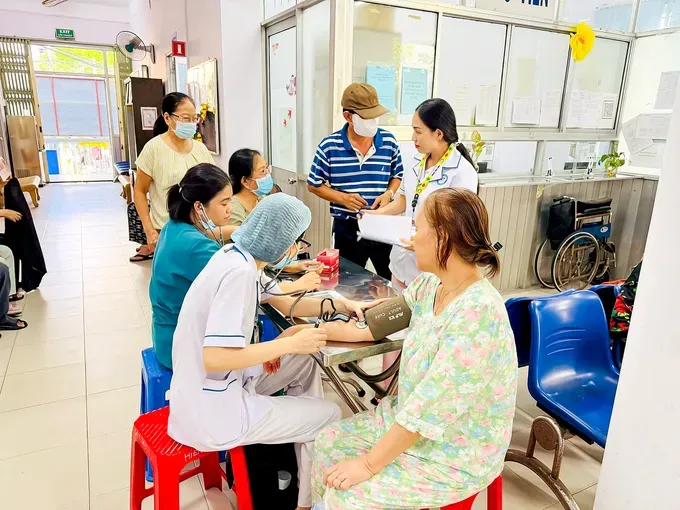
According to the Ho Chi Minh City Department of Health, the results of medical examinations and screenings will be updated and integrated into electronic health records, ensuring data quality that is “accurate, complete, clean, and live,” thereby serving long-term population health management.
Following examinations, health stations will receive the results, conduct classification, and establish lists for managing residents according to risk groups. They will also organize follow-up monitoring, issue invitations for re-examination, or refer patients to higher-level facilities when necessary, ensuring the principle of early detection, early intervention, and continuous care.
Associate Professor, Dr. Nguyen Anh Dung, Deputy Director of the Ho Chi Minh City Department of Health, stated that to achieve the target of health check-ups for more than 15 million residents in 2026 and the roadmap toward 2030, the city’s health sector will prioritize interventions that are cost-effective, address a high disease burden, are suitable for implementation at the primary healthcare level, and can be scaled up in 2026.
In the immediate phase, particularly in 2026, the city will focus on completing professional regulations, financial mechanisms, implementing a basic health check package, and developing electronic health records.
By 2027, a network of participating healthcare facilities will be established under a non-boundary-based model, ensuring full coverage across all levels of care and extending to densely populated residential clusters, industrial parks, export processing zones, schools, and social protection institutions.
By 2028, the city will roll out stable screening programs with strong evidence and high scalability, including hypertension, diabetes, cardiovascular risk assessment, cervical cancer, breast cancer, colorectal cancer, viral hepatitis, and tuberculosis targeted at risk groups.
By 2030, the system is expected to advance toward an electronic coordination platform with greater automation, enabling proactive invitations for citizens to undergo health check-ups and screenings based on digital health data infrastructure.
The Ho Chi Minh City Department of Health will implement large-scale screening programs covering major disease groups, including hypertension and diabetes (high-risk groups and individuals over 40 years of age); cervical cancer (women aged 30–65, with a five-year screening cycle); and priority, campaign-based targeted conditions such as breast and colorectal cancer (people aged 50–70, using FIT testing and mammography); tuberculosis and hepatitis B and C (high-risk areas and populations prone to being missed by routine screening); as well as mental health, ophthalmology, and dental-maxillofacial conditions.
The city’s health sector will develop a population-wide health data system based on the principle of “one citizen – one unique identifier – one health record – one service utilization history.”
The system will operate under an integrated public–private model, allowing residents to access services across multiple healthcare facilities while ensuring unified management of benefits and medical data. This approach is expected to enhance transparency, optimize healthcare resources, and prevent duplication and waste.
The health check-up program is aimed at all people currently living, studying, and working in Ho Chi Minh City, Associate Professor Dr. Nguyen Anh Dung said.

According to Dr. Diep Bao Tuan, Director of Ho Chi Minh City Oncology Hospital, early screening is essential to reduce risk. Currently, the most common cancers among men include liver, lung, stomach, colorectal, and prostate cancers, while in women, the most prevalent are breast, lung, colorectal, stomach, and liver cancers.
Cancer screening aims to detect abnormal or cancerous cells at an early stage, before symptoms appear, with the objective of enabling more effective treatment and reducing mortality rates.
High-risk groups for screening include individuals with a personal or family history of cancer; genetic mutations; and exposure to risk factors such as tobacco smoke, chemicals, blood clots, and older age. All women are currently considered at risk of breast cancer, with risk increasing with age, as well as with additional factors such as genetics, medical history, and lifestyle.
Meanwhile, ultrasound plays an important role in breast cancer screening. It can be performed at primary healthcare facilities at low cost, is easy to implement, non-invasive, does not involve X-ray radiation, and helps increase participation rates in screening programs.

According to Associate Professor Dr. Hoang Thi Diem Tuyet, Director of Hung Vuong Hospital, cervical cancer is a significant public health issue. If not detected and treated promptly, the disease can lead to severe consequences, while treatment costs are substantial—particularly in late-stage cases, which can reach up to VND1 billion (US$38,000) per patient.
Cervical cancer screening is therefore a key factor in early detection and effective treatment. Early diagnosis not only saves the lives of many women but also significantly reduces treatment costs.
With its strong determination and available resources, Ho Chi Minh City is fully capable of becoming a national leader in achieving the World Health Organization’s 90–70–90 targets (90 percent of girls vaccinated against HPV before age 15, 70 percent of women screened between ages 30 and 65, and 90 percent of patients receiving effective treatment), moving toward the elimination of cervical cancer and better protection of future generations of women.