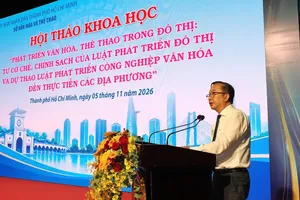
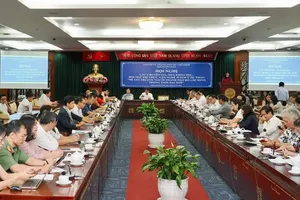
The Urban Development Law (Law No. 18/2026/QH16), which took effect on October 1, 2026, together with the draft Law on Cultural Industries Development, now being finalized, opens up a new legal framework for Ho Chi Minh City to turn culture and sports into drivers of development. However, there remains a gap between the city's rich cultural resources and the creation of competitive cultural products. Bridging that gap will require the city to address bottlenecks at every level, from governance thinking to legal instruments.
A fragile link between cultural resources and development

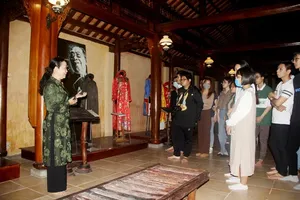
A few cities in Vietnam possess cultural assets as extensive as Ho Chi Minh City, which has 321 officially recognized heritage sites, including four special national relics, 99 national relics and 25 museums.
According to the Ho Chi Minh City Department of Culture and Sports, the city's cultural industries currently contribute approximately 5.7 percent of its gross regional domestic product (GRDP), with more than 17,670 businesses and nearly 97,000 workers. The city aims to raise this contribution to 7–7.2 percent of GRDP by 2030.
However, Associate Professor Dr. Lam Nhan, Rector of Ho Chi Minh City University of Culture, said that for a long time, culture had been viewed primarily as a sector serving people's spiritual and cultural needs rather than as a resource directly contributing to urban development. Modern architectural structures can be built in a relatively short time, he noted, but urban memories cannot be created overnight.
According to Dr. Nguyen Thi Hau, General Secretary of the Ho Chi Minh City Historical Science Association, these collective memories are embedded in three heritage corridors with the potential to be transformed into resources for the cultural industries, including the historical Saigon–Cholon axis, with its theaters, museums and long-established markets; the industrial and river-port heritage along the Ben Nghe, Binh Dong and Ba Son areas; and the waterways and ecological landscapes of Can Gio and Cu Chi.
Preserving only a handful of prominent structures while neglecting the spaces connecting them risks turning heritage sites into isolated “islands of memory", detached from everyday life or reduced to mere backdrops for photographs. However, not everything old automatically qualifies as heritage; its value must first be inventoried and assessed before investment decisions are made.
In the sports sector, the most significant gap lies in data. Dr. Nguyen Thi Hien Thanh, Director of the Center for Sports Training and Capacity Development at Hoa Sen University, cited figures showing that 36.7 percent of the city's population regularly engages in physical exercise and sports. The 13th Ho Chi Minh City International Marathon 2026 attracted nearly 11,000 runners, approximately 26 percent of whom came from 75 countries and territories.
Yet no one has been able to quantify how much value an event of this scale actually generates and retains for the city. Dr. Nguyen Thi Hien Thanh proposed developing a three-tier measurement framework covering direct economic scale, the share of value retained locally, and socio-cultural outcomes. She also recommended piloting an urban-level sports satellite account and restarting the Rach Chiec Sports Complex project.
The night-time economy presents another challenge. According to Dr. Vo Trung Tin of Ho Chi Minh City University of Law, national technical regulation QCVN 26:2025/BNNMT sets a noise limit of 55 decibels (dBA) in areas with restaurants, theaters, dance clubs and parks between 10 p.m. and 6 a.m. This makes it virtually impossible for dance clubs permitted to operate until 2 a.m. to benefit from any corresponding increase in allowable noise levels.
Nguyen Hue Walking Street, where residents gather to count down to the New Year and cheer on national sports teams, is located opposite the headquarters of the Ho Chi Minh City People's Committee, in an area where quiet must be maintained. Meanwhile, Bui Vien, the city's well-known backpacker street, is interspersed with residential neighborhoods.
In light of these practical challenges, the author proposes that the city develop its own local technical standards on noise control for the night-time economy, accompanied by automated monitoring systems and mechanisms for dialogue with residents.
A legally compliant trial
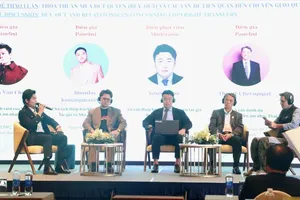
According to Le Huu Phuoc, MA, of the Ho Chi Minh City Campus of the Academy of Public Administration and Governance, one of the longstanding bottlenecks in the cultural and sports sectors is the concern over legal risks.
An event featuring ticket sales, sponsorships, outdoor advertising, food and beverage services, and the use of public spaces must navigate multiple regulatory requirements, including performing arts, advertising, public order and safety, fire prevention, construction and land management.
When a new model falls into a regulatory grey area, officials responsible for processing applications often choose to wait for further guidance. Article 12 of the draft Law on Cultural Industries Development, which provides for a controlled pilot mechanism, addresses the issue. However, it does not yet clearly specify the competent authority, the maximum duration of a pilot, or the roadmap for scaling up after the trial period.
Mr. Le Huu Phuoc proposed limiting pilot periods to no more than 24 months, with a single extension of up to 12 months. He also recommended that Ho Chi Minh City establish a dedicated point of contact at the Department of Culture and Sports, initially pilot the mechanism with 10–15 applications, and publicly disclose the selection criteria and results.
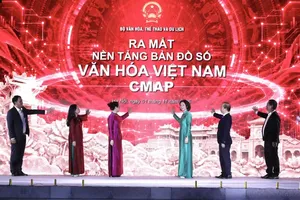
On digitalization, Dr. Chu Tien Dat, Chairman of the Members' Council of VTC Digicom under VTC Corporation, pointed to fragmentation across different stages of the process. Heritage assets are digitized through separate projects, with data scattered across individual institutions. A film studio or video game developer seeking to use images of heritage artifacts must negotiate separately with each institution. Meanwhile, ticket sales through multiple disconnected channels make it difficult for museums to determine the value generated by commercial exploitation of their heritage assets.
He proposed establishing a citywide digital heritage repository as part of the shared database envisaged under the Urban Development Law, with connectivity to the National Digital Cultural Data Repository. Heritage institutions would retain ownership of their data while being entitled to share in the revenue generated from its use. A shared ticketing platform, meanwhile, should operate on an open-access, non-exclusive basis.
The city could pilot this interconnected model between museums under the Ho Chi Minh City Department of Culture and Sports and one special national relic during 2026–2027, Dr. Chu Tien Dat suggested.
Associate Professor Dr. Hoang Van Dung of Ho Chi Minh City University of Technology and Engineering proposed that the city develop a platform called “Saigon Digital Experience.” The platform would feature 3D digital replicas of prominent landmarks, including the Saigon Central Post Office, Nha Rong Wharf, Ben Thanh Market, the Cholon area, and the Cu Chi Tunnels.
Each location would feature a storyline through which users could “decode” historical events. Points accumulated through the experience could be redeemed for museum admission, race entry, or vouchers for environmentally friendly products. The core concept is to place the city's history, revolutionary traditions and the values of a compassionate and solidarity-driven city at the heart of the content, with technology serving as the means of delivering it to the public.
Ho Chi Minh City has no shortage of cultural and sporting resources that could become drivers of economic growth. What remains missing is a coherent institutional framework to bring these resources together.
With the Urban Development Law now in effect and the draft Law on Cultural Industries Development gradually nearing completion, this is an opportune moment for the city to take the lead, in line with the spirit of Resolution No. 80-NQ/TW on cultural development, ensuring that every step forward by Ho Chi Minh City bears the distinctive imprint of the Southern region's culture of compassion, solidarity and community spirit.
According to Pham Cao Thai, Director of the Department of Legal Affairs under the Ministry of Culture, Sports and Tourism, when the department was assigned to draft the Law on Cultural Industries Development, Ho Chi Minh City was the first place that came to mind, given its position as an economic and cultural hub.
The draft law is therefore designed to allow intellectual property assets to be valued and appraised and used as collateral for bank loans, even before they have been developed into actual products.
Notably, Article 23 of the draft law also stipulates that cultural industry products must embody Vietnamese cultural identity.
Director of the Ho Chi Minh City Department of Culture and Sports, Tran The Thuan said the department has identified four key areas of focus, including developing preferential policies for cultural creative centers and clusters, while making effective use of surplus public assets; restructuring grassroots cultural and sports institutions under a tiered model; building a cultural industry ecosystem and piloting public-private partnerships in the management of theaters, museums and sports centers; and attracting and making effective use of talent across all three generations.
Most importantly, the development of cultural industries must go hand in hand with the preservation and promotion of cultural values while avoiding excessive commercialization.